ieExplains: What is the Mercosur trade deal and why is it important?

Vote on the key trade agreement comes down to the wire
ieExplains: What is the Mercosur trade deal and why is it important?

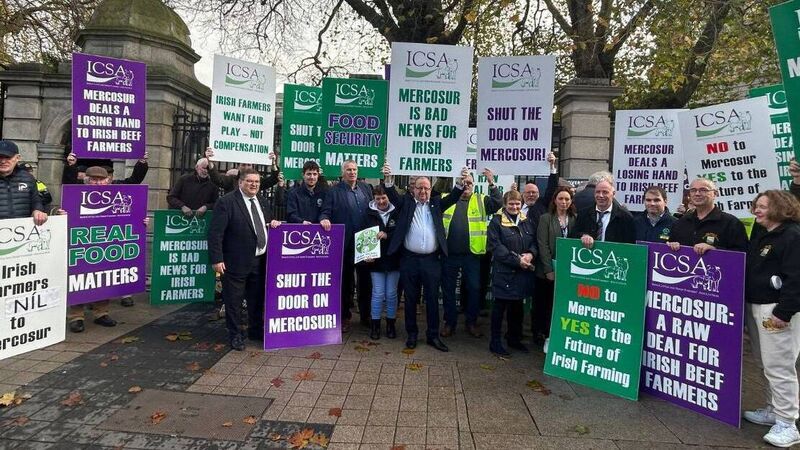
ICSA protest against the Mercosur Trade Deal outside Leinster House.

What is Mercosur?

The Mercosur trade deal is a proposed trade agreement between the European Union and Mercosur.

Mercosur (Mercado ComĂșn del Sur) is a South American trade bloc formed in 1991 by founding members Argentina, Brazil, Paraguay and Uruguay.

Full members, ‘State Parties’, of Mercosur include the founding members and Bolivia, which recently joined as a full member in 2024. Venezuela was a full member in 2012 but is currently suspended from Mercosur due to non-compliance.

With 25 years in the making, the trade agreement would be the EU’s largest in terms of tariff cuts. Some EU member states say it will boost exports, which were hit by the tariffs imposed last year by the US, and reduce reliance on China in the securing of minerals.

Other EU member states that oppose or criticise the current proposed deal are worried that it could lead to an influx of cheap commodities that could hurt European farmers.

Why is it important?

The EU is Mercosur’s second largest trading partners in goods, after China but ahead of the US, with exports of €57bn in 2024.

The EU accounts for a quarter of the total Mercosur trade in services, with EU exports to the region amounting to €29bn in 2023. The EU is also the biggest foreign investor in Mercosur with a stock of €390bn in 2023.

The key benefits of a trade agreement for EU companies would equate to €4bn in customs duties per year saved for EU exporters once the high Mercosur tariffs are removed, easier customs procedures facilitating exporting, EU firms gaining the ability to bid for public contracts on equal terms with Mercosur companies and exclusive, preferential access to some critical raw materials and green goods.

Current tariffs on car parts, machinery, chemicals and pharmaceuticals between the two regions are 35%, 20%, 18% and 14%, respectively.

What is the timeline and current situation of this deal? 

Trade agreement negotiations began in 1999, stalled and regained momentum in 2016. On December 6, 2024, the European Union and the four founding members of Mercosur reached a political agreement for an ambitious Partnership Agreement.

On September 3, 2025, the European Commission adopted proposals for Council decisions on the signature and conclusion of two parallel agreements, the EU-Mercosur Partnership Agreement (EMPA) and the interim Trade Agreement (iTA). The iTA will be repealed and replaced by the EMPA once it is fully approved and enters into force.

The free trade deal was meant to be signed in December 2025; however, it was postponed and rescheduled to January of this year following concerns expressed by Italian Prime Minister Giorgia Meloni, who requested more time to review.

Who's for and who's against?

Strong supporters of the EU-Mercosur trade deal within the EU are Spain, Germany, Sweden, Denmark, and Finland. This is due to the boost the deal would give to industrial exports such as cars, machinery, or chemicals, as well as diversifying trade away from China.

Opponents to the deal, France, Poland, and Ireland, have signalled intentions to vote against the deal, while Italy, the Netherlands and Belgium have raised concerns but have not yet confirmed their stance on their vote.

What is the Irish stance?

As of January 8, the Irish Government has announced it will be voting against the revised trade agreement.

Currently, Irish sectors are divided when it comes to the potential EU-Mercosur trade deal.

Chambers Ireland and the International Chamber of Commerce (ICC) urged MEPs back in November to back the Agreement to prevent further delays of trade deals coming into effect.

Chief Executive of Chambers Ireland and ICC Ireland, Ian Talbot, said: “The opportunities are significant, and ratification will create one of the world’s largest free-trade areas at a time of global uncertainty. Let’s be clear - any delay will harm our economy and undermine our credibility as a champion of free trade,” he said.

Farm organisation warns of the difficulties of the Mercosur Deal

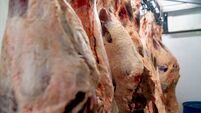
The most vocal sector in Ireland opposing the deal is the farmers and representative organisations. Beef farmers in particular are concerned about the impact of the quota of 99,000 tonnes of beef, which is proposed in the revised agreement with Irish farmers, maintaining that it will drop the prices of beef in the EU. These 99,000 tonnes of beef correspond to 1.5% of the EU’s total production.

The usual tariff on beef imports from Mercosur is around 40% to 45%, with the revised Agreement, a tariff rate quota of 7.5% will apply to a limited amount of beef.

There will be two different quotas on imported beef. 55% of the quota will consist of fresh or chilled meat, and 45% of lower-value frozen meat. Irish beef farmers are particularly concerned about the fresh beef quota, as these imports will affect high-value cuts.

There are safeguards in place as part of the deal in an effort to protect EU farmers against any sudden increase in imports. These safeguard clause was dubbed “purely cosmetic” and “a political fig leaf” by Irish Farmers’ Association (IFA) President Francie Gorman.

There is also a financial safety net set aside to support farmers if imports negatively affect the markets.

In October 2025, Mr Gorman said: “Regrettably, it is very difficult to see how this so-called safeguard clause will be of any help. It requires there to be a threat of ‘serious injury’ to the sector before an investigation is even launched.” 

Other farming organisations, such as the Irish Creamery Milk Suppliers Association (ICMSA) and the Irish Cattle and Sheep Association (ICSA), have also called out the Government’s inaction in opposing the agreement.

“Even at this late stage, the Irish Government could – and should - stand up for Irish farmers and the principles, standard and science that we have all operated under for 20 years. They could – and should - call out Mercosur for what it demonstrably is: a complete sell-out of sustainable farming and declare that Ireland will reject Mercosur in its current format,” said ICMSA president Denis Drennan.

The trade deal also specifies that Mercosur imports, such as beef, will have to comply with EU standards of consumer protection and sanitary and phytosanitary standards.

However, farming organisations have highlighted the lack of antibiotic control in Mercosur countries such as Brazil and have staunchly opposed imports due to hormone use in those countries.

Recently, Brazilian beef imported into Europe was found to contain banned hormones and was confirmed this week to have entered the Irish food chain and is now subject to an official recall by the Food Safety Authority.

Is meat from Mercosur countries safe?

It is important to note that meat, particularly beef, is already imported to the EU from Mercosur countries; the trade deal would just allow these imports to have a lower tariff applied going forward.

There are significant worries surrounding the imported meat due to the use of hormones or past cases of contamination in beef finding its way into the market.

The trade deal also specifies that Mercosur imports, such as beef, will have to comply with EU standards of consumer protection and sanitary and phytosanitary standards.

Food that is imported into the EU must comply with the existing rules, including those related to genetically modified organisms (GMOs) and compliance with maximum residue levels for pesticides, veterinary medicines or contaminants set by the EU.

However, farming organisations have highlighted the lack of antibiotic control in Mercosur countries such as Brazil and have staunchly opposed imports due to hormone use in those countries.

Recently, Brazilian beef imported into Europe was found to contain banned hormones and was confirmed this week to have entered the Irish food chain and is now subject to an official recall by the Food Safety Authority.

There are also significant environmental concerns attached to agriculture in Mercosur countries due to agricultural practices and expansion lending deforestation and the removal of areas of the Amazon.

A French farmer drives his tractor to block a main road during a protest against the Mercosur trade deal Dec. 18, 2025 in Portet-sur-Garonne, southwestern France. (AP Photo/Fred Scheiber)

Going forward?

On January 9, there will be a vote for member states to agree or oppose the trade agreement.

In the case of a mixed agreement, the deal will still need to be ratified via qualified majority voting by at least 15 Member States, representing 65% of the EU population.

If the deal is to be blocked, it will require a minimum of four countries that make up at least 35% of the population of the EU.

Ireland represents about 1% of the EU population, making relations with fellow opposition countries such as France, approximately 15%, Italy at roughly 13%, Poland at 8%, Hungary with 2%, and Austria with a further 2% vital.

The Taoiseach and Tånaiste confirmed on January 8 that Ireland would be voting against the deal. 

More in this section

Farming

Newsletter

Keep up-to-date with all the latest developments in Farming with our weekly newsletter.

Cookie Policy Privacy Policy Brand Safety FAQ Help Contact Us Terms and Conditions

© Examiner Echo Group Limited