Challenges aplenty in 2026 with Mercosur the first in line
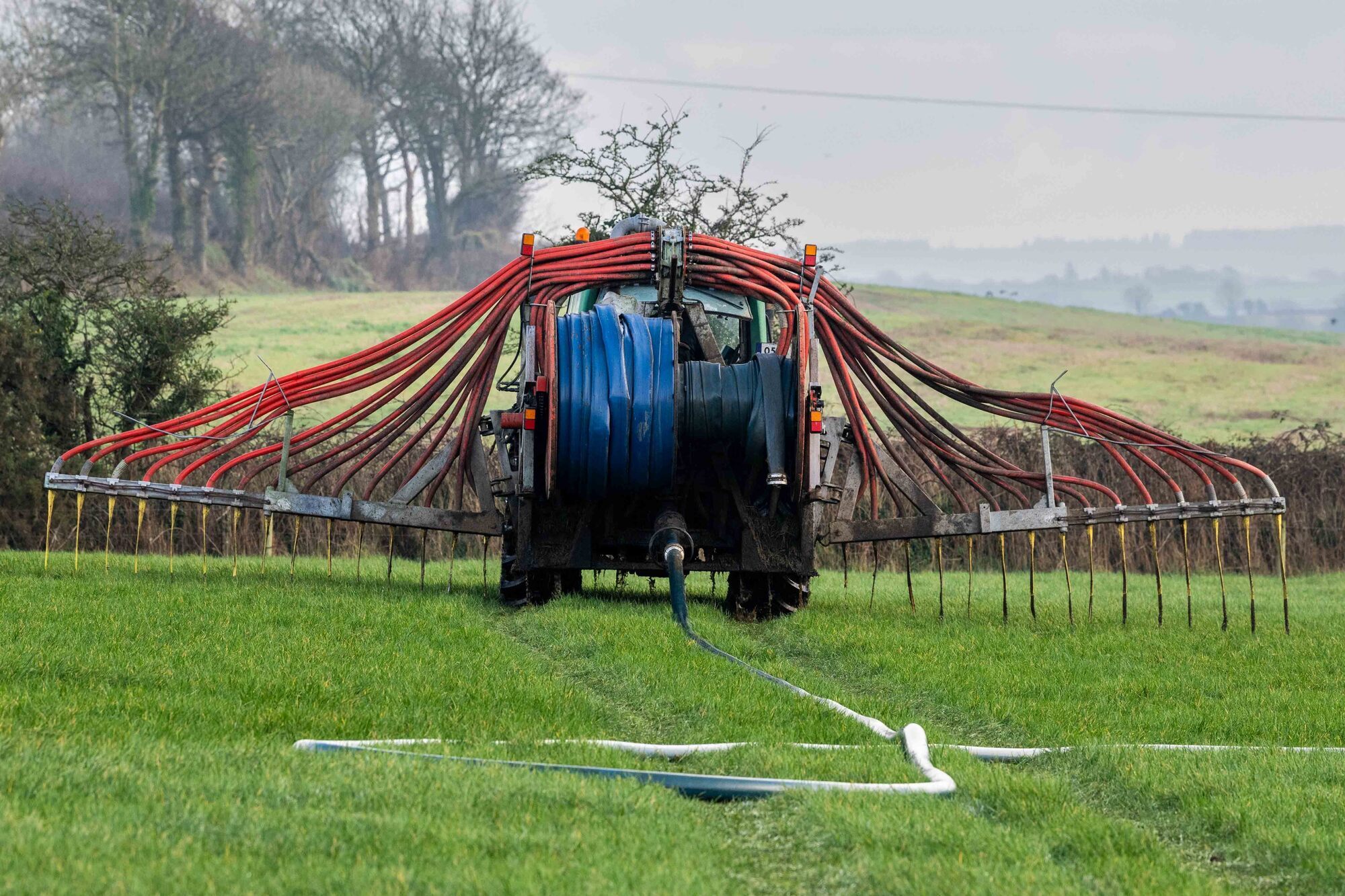
It is important that strategies are put in place to get the very best use of slurry on your grazing ground in conjunction with efficient use of bag fertiliser. Picture: Andy Gibson.

Happy New Year and all the best for 2026. As we start off a new year, the challenges facing livestock producers will continue unabated.
We are all hoping for a repeat of the almost ideal weather that we had in 2025. Another excellent grass-growing season would help to offset the drop in milk price on dairy farms by reducing production costs. The CBAM on fertiliser is also a concern that hasn’t been explained properly to the end user just yet.
With the huge uncertainty surrounding the Mercosur agreement and its potential to do huge damage to the Irish beef industry, high costs are the last thing that calf rearers, finishers and the suckler herd need in the coming year. Any deal done by Ms Von Der Leyen to sell German cars to South America will not only hit the beef trade but, in the long run, will also adversely affect the dairy producers as they will end up with little or no outlet for their calves. I just hope our government haven’t already sold us out over the last few months.
Will passing a Board Bia audit be worth the bother if our government signs off on the import of substandard beef with zero traceability and potentially laced with substances banned in the EU? Time will tell!
January is always very busy on suckler and dairy farms as calving begins, along with all of the regular winter jobs.
Preparing from the spring never stops, and jobs around the farmyard and around the rest of the farm must be sorted well in advance. All going well, the grazing season is not too far away. Most dairy herds will be targeting some grazing in February, while beef farms will be targeting a turn-out date in early to mid-March or thereabouts, this will all depend on land type and weather. So, 5 to 10 weeks or less from now, stock will be grazing again, fingers crossed.
It may be a bit away, but plans need to be put in place in order to have sufficient grass at the turnout. Repairing fencing when conditions allow should be high on the to-do list. Ground is in great order after the recent dry spell and frost, so travelling may be possible without doing much marking. Clearing fence wire of any fallen debris and fixing any breaks will mean that turnout can happen when it is suitable to do so, rather than the panic to get a few paddocks ready the day before opening the doors.
For those who dosed cattle at housing: don’t forget that if you used products that only control mature fluke and worms then you should have at this stage dosed for a second time to target the remaining fluke. Lice also seem to be fairly common in sheds at present and need to be controlled.
It is important that strategies are put in place to get the very best use of slurry on your grazing ground in conjunction with efficient use of bag fertiliser. We must all treat slurry as an important nutrient and try to use it wisely to reduce your overall production costs. Regarding fertiliser it is important that you use the most appropriate products based on the nutrients required by your land. If you have recent soil results, use these to devise your fertiliser, slurry and dung spreading strategy. Learn from fertiliser responses from recent years. If you have soil results, does your land need lime? It’s the cheapest fertiliser available and often the one that gets ignored most! The earlier you get lime out, the more benefit you will get from it in 2026.
After a very good 2025 grazing and silage growing season many are looking at increasing silage quality 2025. As well as a good grazing and silage season, it was also an excellent year for Maize Silage, Whole Crops and Beet and as a result for many it will mean growing more or introducing these their farm in 2026. These forages/feeds continue to be produced cheaper than grass silages per 1000 UFL utilised, meaning production costs in dairy and beef systems can be reduced. They also represent a significant opportunity to get more value from each unit of Nitrogen purchased. Obviously, a forage production strategy that includes alternative feeds will also make sure that you do not put all your eggs in the one basket in the form of grass silage. Whatever you are considering base your decisions on solid facts and figures. Maize Silage and Whole crop will provide more energy for every euro you spend than grass silage in a 2-cut system will. Those figures hold through on both owned and rented ground. Anyone that has introduced forages other than grass silage to their winter-feeding strategy have seen improved animal performance as total energy intakes have been increased significantly. More energy consumed means more milk, better solids, improved fertility, along with faster weight gain, earlier finish and better growth in weanlings. If you use less nitrogen per tonne of dry matter or 1000 UFL to produce feeds such as Maize, Whole Crop or Beet etc then you will use less nitrogen over the year or in fact have more nitrogen available to produce grass on your grazing platform.