Finishing cattle: How to conduct a mid-winter review
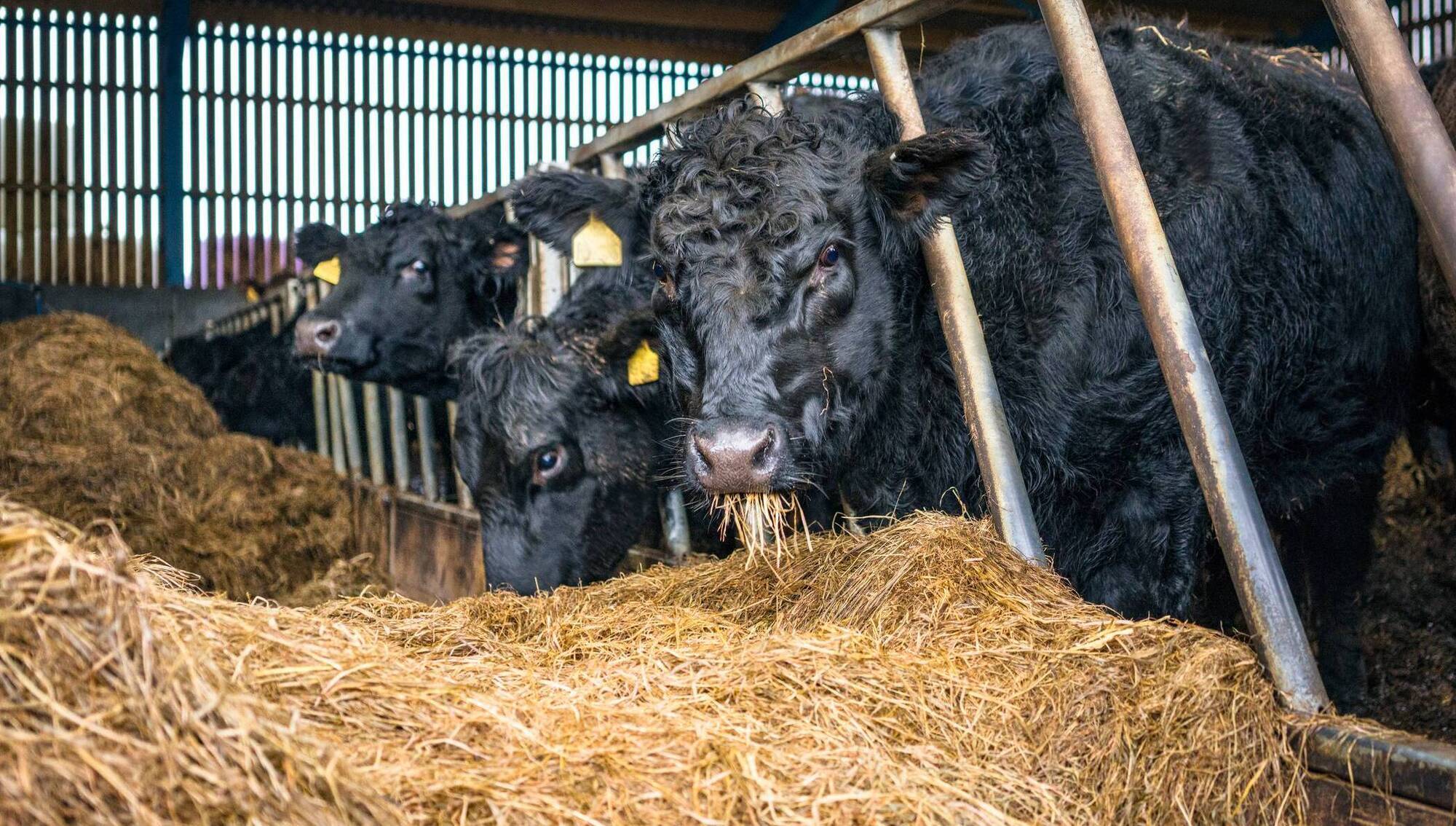
Buyers really need to know their full costs before purchasing stock, particularly in the current climate, writes independent ruminant nutritionist Brian Reidy.
Profitability from finishing cattle requires many variables to be got right. The buying or rearing costs and selling price of the cattle are obviously significant factors in this equation.
Buyers really need to know their full costs before purchasing stock, particularly in the current climate:
- Are you weighing stock to measure current performance?
- Have you built in all the costs associated with finishing animals?
- Forage costs: Cost per unit of energy utilised, not per acre, per tonne or per tonne
- Dry matter
- Concentrates — UFL or ME must be valued
- Minerals
- Parasite control: Rely on farm history and use dung testing also
- Vaccinations: What issues have you had on farm?
- Bedding: What has worked best on your farm?
- Associated housing costs, associated feeding costs, diesel etc.
- Mortality rates and causes.
The challenge, as always, is to get weight on animals as quickly and cost-effectively as possible. This involves many issues such as:
- Maintaining good animal health
- Keeping mortality to a minimum
- Supplying a good quality, high-energy diet consistently throughout the finishing period.
- Achieving a good, consistent weight gain throughout the allotted finishing period
- Providing a comfortable environment
Efficient weight gain is the priority when finishing cattle.
Obviously, feed costs are very important, but more importantly, it must be the correct feed.
Once you begin to finish cattle, it is very important to keep them on the same diet throughout.
Changing your feed supplier to give someone a turn may seem like a good idea but each formulation is slightly different and may reduce digestive efficiency in stock.
Try to buy your concentrates based on their energy value, rather than their protein content. Energy is what gets flesh on animals.
As is a common occurrence each winter, in the last few weeks, there has been a lot of finishing cattle in sheds with either very loose dungs and/or with a lot of grain passing through in the dung.
The reason for these issue is hardly ever because the grain is not rolled, it is more likely to be because the diet is not balanced correctly.
Another reason for this is that all animals cannot eat at the one time if meal is being put on top of silage.
In TMR (total mixed ration) diets, if the mix is very dry individual animals will attempt to sort out the meal from the forages.
This will lead to animals having variable dung consistency when it is assumed that they are on the same diet.
Some cattle will have runnier dungs than others — these are usually the ones eating too much concentrates and less forage.
Cattle with firmer dungs are mostly the ones forced to eat a much higher proportion of forage.
In order to reduce the issues causing variable dung consistency and undigested material, it is important to take the variability out of feeding your stock.
This will involve providing access to feed for all animals when concentrates are fed on top of silage.
While in a TMR, it may require the mix to be made moister in order to prevent sorting.
Water, liquid feeds and molasses are being used to sort this problem on many farms this year.
Many silages, particularly second cuts are very dry this year and cattle on many farms are finding it easy to sort out TMRs as a result.
Many still associate loose dung with feeding too much protein. This is very seldom the case, and in actual fact, some are underfeeding protein even to finishers.
This is very likely to be the case if maize silage, Whole crop and/or beet are included in the diet.
Cattle thrive best when they are fed the same diet at the same time each day.
As I mentioned above, changing feed supplier may seem like a good idea.
However, each time you change your concentrate you cause the animals to have to change their rumen bug population to suit the new mix. This results in reduced performance during the transition.
If you are feeding straights through a TMR, then it is also very important that you construct your mix each day with the same proportion of each ingredient.
If you have a silage result, then don’t ignore the information that it gives you.
Address any shortcomings that it may have by formulating your mix to supply sufficient energy for the gain that you are targeting from your stock.
The energy and protein required for your stock will be based on sex, weight, breed and target market/finishing date.
- Brian Reidy is an independent ruminant nutritionist at Premier Farm Nutrition