Ireland's new veterinary medicine rules to tackle antimicrobial and antiparasitic resistance
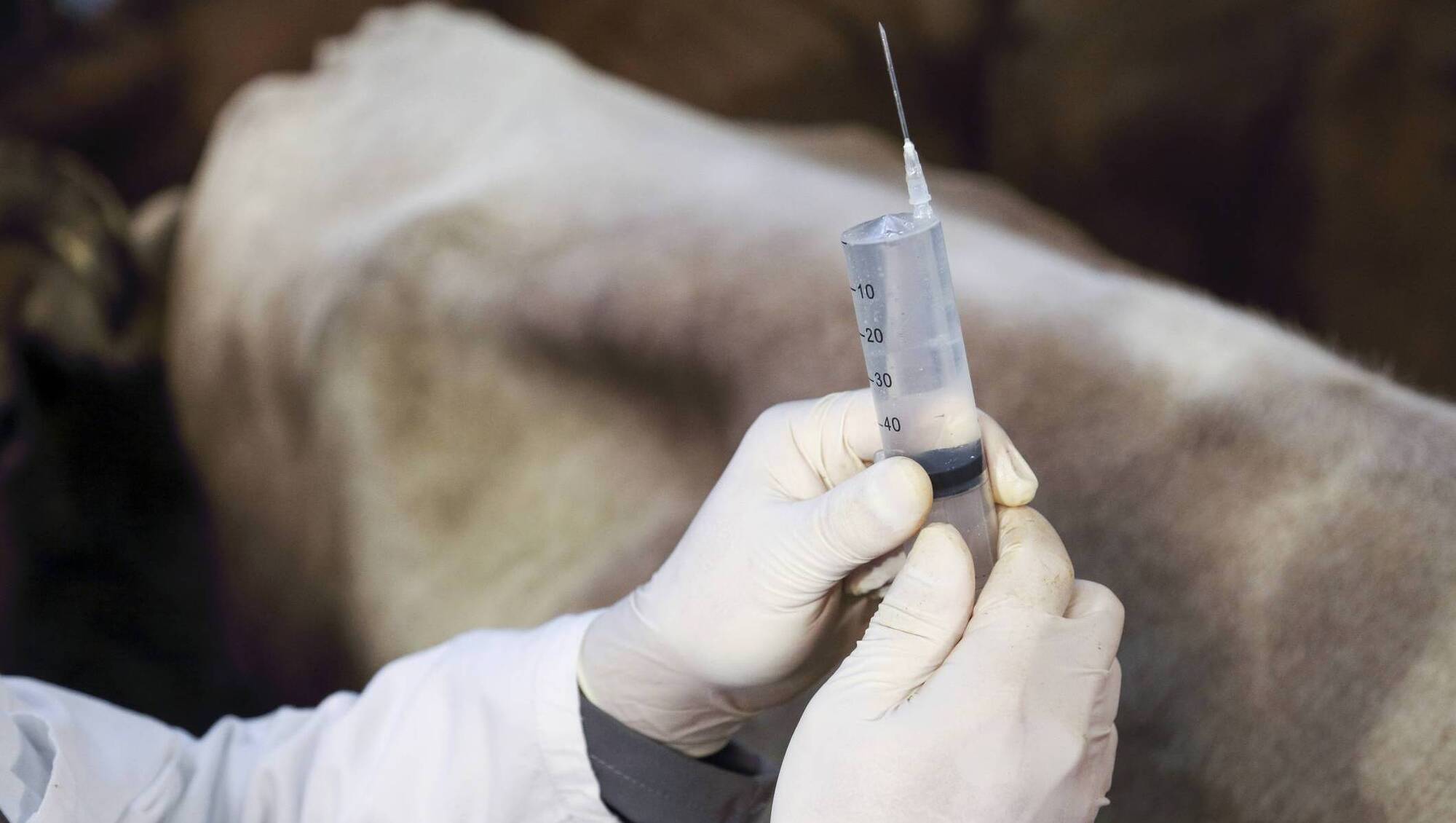
'Vets really have to justify why they're prescribing an antimicrobial in particular, especially in relation to metaphylactic and prophylactic use.'
The new hoops that Irish farmers have to jump through to get medicines for their livestock have been explained.
But the timing is unfortunate, after investigations revealed Brazil had no effective controls on medicine usage in farm animals.
Ireland must compete in the EU market with hundreds of thousands of tonnes of extra meat coming from Brazil and three other South American countries if, as expected, the Mercosur deal is signed.
Here in Ireland, since December 1, following a clinical examination of an animal, the vet will prescribe appropriate medical products using the National Veterinary Prescription System (NVPS). The farmer then gets a SMS text message for any undispensed products.
This is a 16-digit prescription ID code which the farmer will bring to a retailer (or veterinary clinic) to get their product dispensed. They can show the code on their phone, or write it down.
“Once the retailer dispenses the product, the farmer gets an email of their dispensed prescription through to them”, explained Rebecca Fitzpatrick, superintending veterinary inspector with the Department of Agriculture.
She discussed the legislative changes with Catherine Egan and Ciaran Lynch of Teagasc on a recent joint Beef Edge and OviCast podcast.
Ms Fitzpatrick said if the farmer does not have an email address, the retailer can print a copy of the dispensed prescription. Farmers can also shop around as they wish.
“If they don't need the full amount, they can partially collect one of the products and when they go back, they can also get the remainder of that product filled out in another retailer. The NVPS will automatically update the quantity that was dispensed initially”, she explained.
“There are two ways that farmers are going to be able to get prescriptions now. One is by going to the vet that they normally use, the vet that treats their farm. In that case, they can ask that vet for a prescription.
"The other option then is what's been brought in in the national legislation on Veterinary Medicinal Products, a proper assessment protocol.
"What this means is that a retailer can work with a vet, and the farmer can go into the retailer, and they can give information through this protocol.
"This will cover things like the category of animals that they have on their farm, husbandry practices, previous antiparasitic use, any evidence of antiparasitic resistance, any faecal count scores, things like that. They can give this information to the responsible person in the retailer.
"Or they can fill out the form themselves and hand it into the retailer, and this will pass on then to the vet that's working with the retailer, which will allow them then to prescribe a product for the farmer.
"Obviously, the vet can contact that farmer as well, if they need any further queries answered, or have any further questions in relation to any of the information provided,” Ms Fitzpatrick explained.
An antimicrobial prescription remains valid for only five days, whereas antiparasitic or other prescription medicines will remain valid for six months.
Farmers can view their prescriptions on the NVPS portal on their MyAgFood site. “When a vet goes out on-farm, and administers or dispenses a product themselves, this will also be on the NVPS, and you will get an email of your dispensed prescription," Ms Fitzpatrick explained.
If a farmer has a prescription for a particular product which the retailer does not have in stock, a comparable medicine can be purchased instead.
“When the retailer logs into the NVPS, they can click a drop-down box to view comparable products," Ms Fitzpatrick said.
“They can dispense that product in its place. And the NVPS then will update in terms of quantities if there's a different strength and withdrawal period”, she said.
The department has set up an email (nvps@agriculture.gov.ie) and phone number (01-5058832), Monday to Friday, 9am to 5pm for those needing more information on the NVPS. “You’ll go straight through to the NVPS admin team. You won't be passed around to different numbers," Ms Fitzpatrick said.
The new rules on veterinary medicines are part of Ireland's and the EU's strategy to tackle antimicrobial and antiparasitic resistance.
“There's a significant and rising threat to public and animal health and the environment in relation to antimicrobial resistance,” Ms Fitzpatrick said.
“What that means is it's compromising the ability to treat infections. And so it's essential to preserve the effectiveness of these products. And the same with antiparasitics”, she said.
And since December 1, antiparasitic medicines are also prescription-only. Ms Fitzpatrick said: “It includes all your dosing, your drenches, your injectables, your ectoparasites, your endoparasites, including antiprotozoals.”
The rules for Ireland contrast sharply with Brazil, where a team from the IFA and travelled 3,000km across four states, and were able to walk into ordinary agri-stores and purchase prescription-only injectable antibiotics, including the highest-priority critically important antimicrobials, without any prescription, questions, or recording of buyer details.
Visits to farms, marts and slaughter plants revealed cattle with no official tags, removable tags freely on sale with applicators and removers, and no functioning national database of animals or holdings.
IFA said there was no credible means to certify beef from Brazil as meeting EU import requirements. But the EU has agreed EU access for 99,000 tonnes of beef from Brazil, Argentina, Paraguay, and Uruguay at 7.5% duty, phased in over five years (Brazil's portion is 42,000 tonnes).
In addition, all duties will be immediately removed from the 58,500 tonne Hilton beef quota already available in the EU to Mercosur countries, currently at a 20% duty rate.
The EU will also allow a quota of 180,000 tonnes of poultry to be imported duty-free.
Meanwhile, there is an active recall of Brazilian beef allowed into the EU, containing the carcinogenic Oestradiol 17ß hormone, used to make cattle grow faster.
European Commission chief Ursula von der Leyen has planned to fly to Brazil for a trade deal signing ceremony on Saturday, December 20, unless remaining opponents can shoot down the deal, including five of Ireland's 14 MEPs, members of an anti-Mercosur group of 150 MEPS.