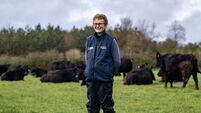
Kieran Coughlan: Your options for reducing your tax bill ahead of year-end

Fix the leaking tap, hang the sagging gate, replace the sluggish battery and ditch the dodgy starter, get to grips with new tyres for your beloved tractor or loader that’s balder than yourself — all of these expenses will save you tax at your marginal rate
Kieran Coughlan: Your options for reducing your tax bill ahead of year-end

It's very difficult to spend one’s way entirely out of a tax bill.

Dairy and beef farmers have, in the main, made decent profits in 2025, albeit the outlook for the two sectors could not be more different for 2026. 

Farmers should, in the first instance, ensure they have enough cash flow to carry themselves through until the next period of positive cash flow. 

For dairy farmers, many will be receiving their last milk cheque for 2025 in the next couple of weeks, and may not see their next significant milk cheque until the back end of March. 

Spending heavily at this time of year to pull down the taxable profits of 2025 can inadvertently burn up too much liquidity and leave a farmer cash-strapped as bills roll in over the coming few months. 

Priority must be given to servicing existing debt and paying existing creditors within their normal credit terms ahead of discretionary spending. 

A quick look at the bank statements for December 2024 and the few three months of 2025 will help jog the memory on the bills and expenses, repayments, and personal living costs that need to be funded.

Apart from the outgoings of next spring, farmers should be conscious it is very difficult to spend one’s way entirely out of a tax bill. 

The key point here is that farmers should brace themselves for some level of tax to be paid by next October, and in the case of dairy farmers, there may be little opportunity to build up cashflow to meet that tax bill next year if milk price continues to fall toward the cost of production. With that in mind, one should consider the merit of banking away some existing savings toward meeting that tax bill. 

If financial resources are strong enough to meet the commitments of the next few months, and sufficient funds are retained to cover next year's tax bill, then farmers looking to reduce their tax bill should consider investing where they get the most bang for their buck in terms of tax deduction. 

Expenditure on day-to-day consumables and repairs, and maintenance can be claimed as an expense, fully deductible for the present year. 

Most farms have plenty of small niggly problems that could be fixed for relatively small money, but cumulatively fixing these issues ahead of year-end is both doable and deductible. 

Fix the leaking tap, hang the sagging gate, replace the sluggish battery and ditch the dodgy starter; get to grips with new tyres for your beloved tractor or loader that’s balder than yourself — all of these expenses will save you tax at your marginal rate, which can be more than 52% for sole traders. 

There's little point in talking about reseeding presently, but resurfacing farm roadways is doable, as is hedge-cutting and the annual replacement of broken fencing posts. Carrying out soil testing at this time of year is generally advised, and perhaps this is the year to do it if you’re looking to get good bang for your buck. 

Spending money on assets is trickier. The general rule of thumb is that machinery is allowed for tax purposes over eight years, whereas buildings are allowed over seven years. 

Accelerated allowances are available for certain farm building works, including covered slurry storage, and if you have incurred that type of expenditure already in 2025, then it is worth highlighting this to your accountant so collectively a decision can be made as to whether you wish to claim a deduction for the expenditure much quicker than the standard seven-year period. 

Better still, some other types of capital expenditure qualify for 100% accelerated capital allowances, meaning there is a full write-off of the cost of the asset against the profits of the year. 

The types of equipment that can qualify under this scheme can even include electric cars used for business purposes (albeit a restriction of €24,000 applies), along with lighting, refrigeration and cooling, heating and energy-efficient motors. 

One strategy farmers might also wish to consider is the advance purchase of fertiliser and feed for next year. This will have the double benefit of qualifying for stock relief for 2025 while not burning up cash flow on unnecessary expenditure — in effect, farmers just bring forward the expenditure to this side of Christmas. 

The tax savings here are not quite as good as direct expenditure relevant to 2025 or 100% allowances, but nonetheless are worth considering, particularly where preservation of cashflow in the medium term is high priority. 

Finally, it might be worthwhile preparing a rough and ready interim farm accounts ahead of year end just to get an indication of where farm profits are at — this can be done relatively cheaply as much of the work will form part of preparation of the full set of accounts in due course, and armed with facts of where farm profits are at, a farmer can make a better-informed decision of what level of discretionary expenditure they wish to make. 

People should obtain professional advice appropriate to their own specific circumstances.

More in this section

Farming

Newsletter

Keep up-to-date with all the latest developments in Farming with our weekly newsletter.

Cookie Policy Privacy Policy Brand Safety FAQ Help Contact Us Terms and Conditions

© Examiner Echo Group Limited