Why beef prices are not falling anytime soon
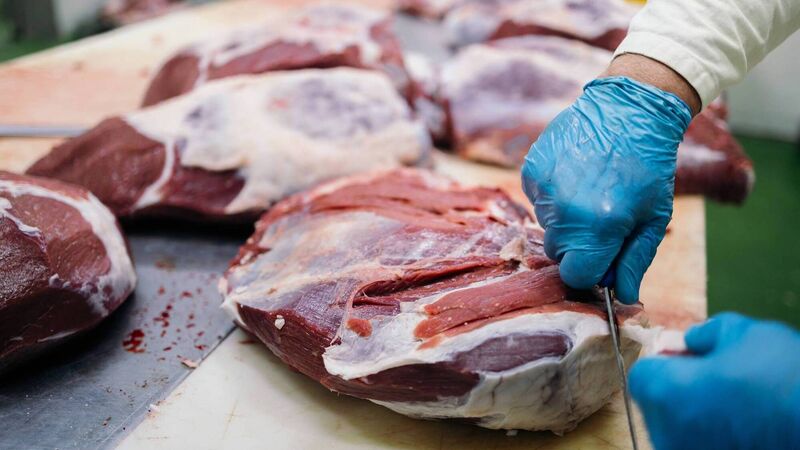
'The reality is that we’re tight, not just for beef supply globally, but for all meat.'
High beef prices are not a short-term blip, according to Rupert Claxton, meat and livestock director at GIRA, a consultancy that provides strategic expertise and analysis for the global meat and livestock industry.
"These prices are here, maybe not to stay exactly the same level, but they are going to stay at a profitable level into the mid-term”, he told Teagasc Beef Edge podcast host Catherine Egan.
“The world is tight for food supplies. The demand around the world is phenomenal and growing”, said Mr Claxton.
“The reality is that we’re tight, not just for beef supply globally, but for all meat. So although there is more pork and a little bit more poultry in the world at the moment than there was last year, it’s not enough for where we see the demand going around the world.Â
"So that increase in demand to meet the slight tightness in supply means that we’re seeing all meats go up, and it’s allowed the beef prices to really boom”, said Mr Claxton (who also addressed the recent Teagasc National Beef Conference).
“There are within-sector specific drivers. For me, the key is that the US is really tight for beef today. They’re prepared to pay more. So that tightness in the US, caused by three years of drought, led to a big import surge into the US.Â
"It didn’t start this year, it started last year. It’s certainly scaled up this year. That creates more tightness around the world. So that’s been a really positive story for beef prices.
“Within Europe, not just Ireland, but the UK and the mainland of Europe, is short for beef production. We see that’s fallen again this year. It’s structural. We don’t see it recovering in the short or mid-term, to be honest. So those prices are driven by a shortage of supply and good underlying demand for meat”, he said.
Looking beyond 2026, Mr Claxton said the "key message" was that the prices should stay strong.Â
"Whilst expectations are that they might back off a little bit in the first quarter, just as we come away from Christmas, and consumers look at their spending and think about how expensive beef is, and the European retailers think about what products they want at what prices on their shelves, I think as the year goes on it’s positive," he said.
Â
"We’ll be able to put cheap feed into cattle, expensive cattle to be fair. That’s good news across the industry”, Mr Claxton said.
He added: “Mercosur is almost certainly going to happen. Our expectation is that it will be signed in some form by the end of the year. It will see beef under that entering Europe in the second half of the year.Â
There’s still a lot of work to be done on the South American end of that, as to which countries have how much access and use of that 100,000t quota. It doesn’t enter immediately. It’s going to come.Â
"The reality for me is that Europe, over the last seven years, has lost over 800,000t of beef production across the EU-27. When you factor that in, you can understand that we’re going to need some products to support the market. That product will fit into the market. I don’t think it’s going to flatten the price back to where it was five years ago.
"We think it might take a slight edge off the price. But the reality is it’s going to be a small drop. Probably prime cuts, spread across the European market. It’s likely to compete, not in the UK because the UK is outside that Mercosur deal, but it will compete to some extent with Irish beef in mainland Europe.
"I don’t think there’s enough of it to seriously undermine the prices as it stands,” Mr Claxton said.
Asked what changes were needed for Irish beef farmers to remain competitive, he added: “The reality is that we know that Irish beef isn’t going to compete with Brazilian on a straight price fight. It’s not about price, it has to become about the service, the quality, the authenticity and the supply chain and the pieces around that.Â
"You have to tell the story of why people should buy Irish over other origins. That’s being done very well.”