IFA president Francie Gorman says Mercosur safeguards are 'absolutely meaningless'
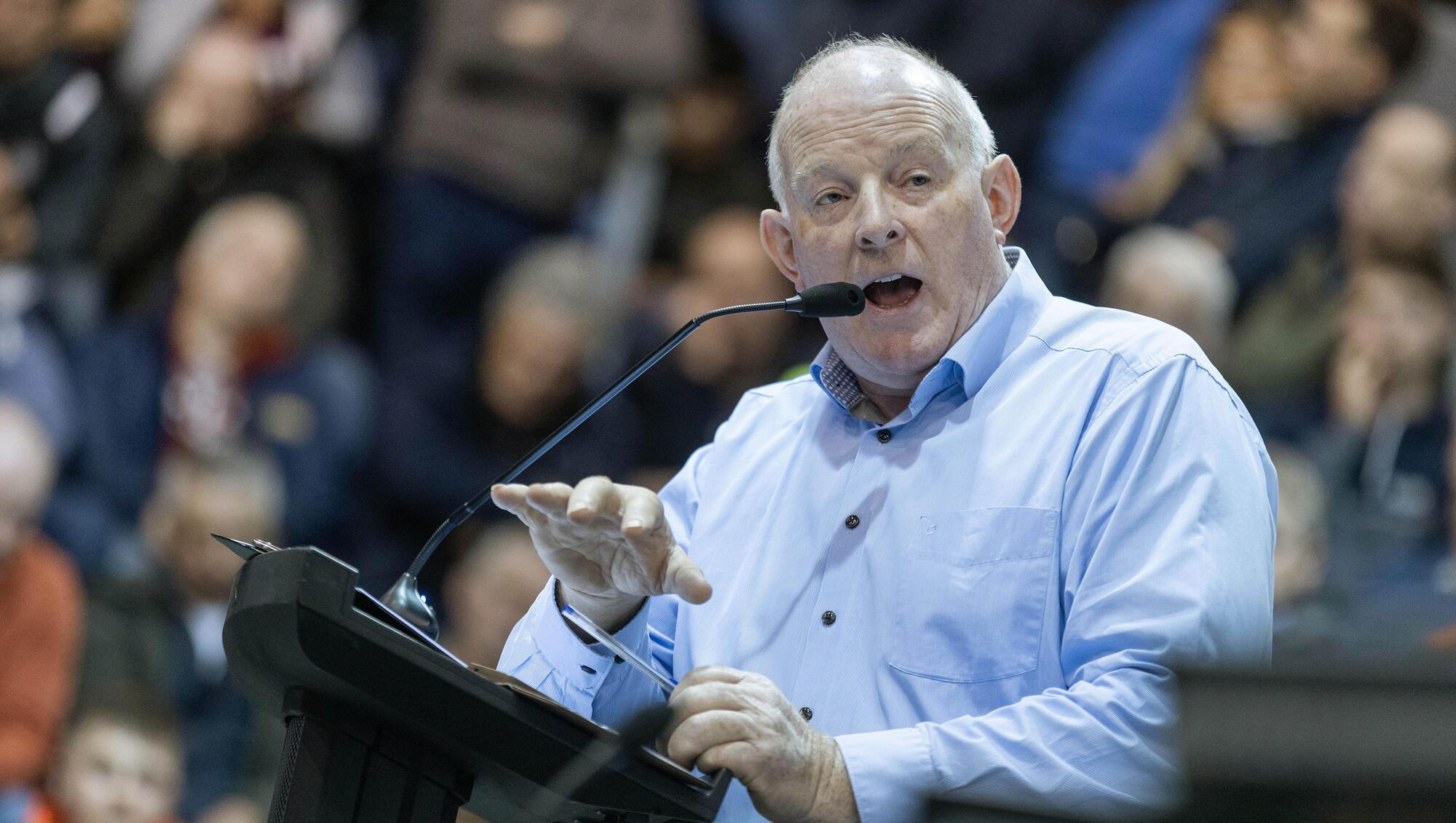
IFA president Francie Gorman has urged the Government to honour its Programme for Government commitments after declaring safeguards for Irish beef in amendments to the Mercosur trade deal as "absolutely meaningless".
IFA president Francie Gorman has urged the Government to honour its Programme for Government commitments after declaring safeguards for Irish beef in amendments to the Mercosur trade deal as "absolutely meaningless".
The Mercosur deal between the EU and Argentina, Brazil, Paraguay, and Uruguay could save save EU companies €4bn in export duties annually and give Irish businesses access to reduced tariffs in sectors like pharmaceuticals, machinery, food, and beverages.
Chambers Ireland has called for the Mercosur deal to be implemented and highlighted the benefits but a deal would also see tariffs removed on 92% of imports into the EU. Agriculture remains the biggest bone of contention, with agreement bringing 99,000 tonnes of beef into Europe at reduced tariffs.
The European Commission has put forward a bilateral safeguard clause in the EU-Mercosur Partnership Agreement and the EU-Mercosur interim Trade Agreement which would mean the EU could temporarily suspend Mercosur tariff agreements on agricultural imports if EU producers were harmed.
But Mr Gorman said a recall of Brazilian beef by European authorities due to the presence of hormones banned in the EU shows the implications of Mercosur go beyond trade, and is a matter of public health for Irish and European citizens.
“The safeguards being proposed are absolutely meaningless. This latest revelation shows they are redundant. The so-called safeguards make no reference to public health," said Mr Gorman.
He cited the investigation carried out by the IFA and the last month where a delegation were able to purchase antibiotics in 14 agri stores across Brazil without prescription, ID, or herd number. Mr Gorman said this highlighted a complete lack of controls in the production systems in Brazil.
"The EU authorities cannot have any faith in the control systems in Brazil. Ignoring this is putting public and consumer health at risk,” Mr Gorman said.
"To be clear, we in the IFA are pro-trade, and 90% of our produce is exported. But agriculture should not be used as a bargaining chip to get a deal. Agriculture must be taken out of the deal."
Talks on a Mercosur deal with the EU first began 25 years ago, and proponents of the deal warn it could be set back by two more years if it was referred to the European Court of Justice.
In order to become law, the deal needs to be ratified by at least 15 member states, representing 65% of the EU population and must negotiate its way through the European Parliament. France, Italy, and Poland have been centres of opposition to the deal.
The European Parliament's International Trade (INTA) committee is due to vote next Monday, December 8 on implementing the safeguard clause on Mercosur. If the deal negotiates its way past the INTA committee, a full plenary session of the European Parliament will vote on the amendments to the deal on Monday, December 16.
If successful on December 16, a formal signing ceremony between European Commission president Ursula von der Leyen and Brazilian president Luiz Inácio 'Lula' da Silva could take place in Brazil on December 20. Following this, a further European Parliament vote in the new year would be the last step for full ratifcation.
"It's going to be a challenge to stop this but it's a pretty divided parliament," said Mr Gorman.
Mr Gorman called on Tánaiste and Fine Gael leader Simon Harris to clarify where his party stands on the Mercosur trade deal. "There is an obligation on the Fine Gael leader to re-affirm his party’s position as set out in the Programme for Government,” said Mr Gorman.