Prime land at risk: The delay in new solar farm guidelines is transforming the Irish landscape
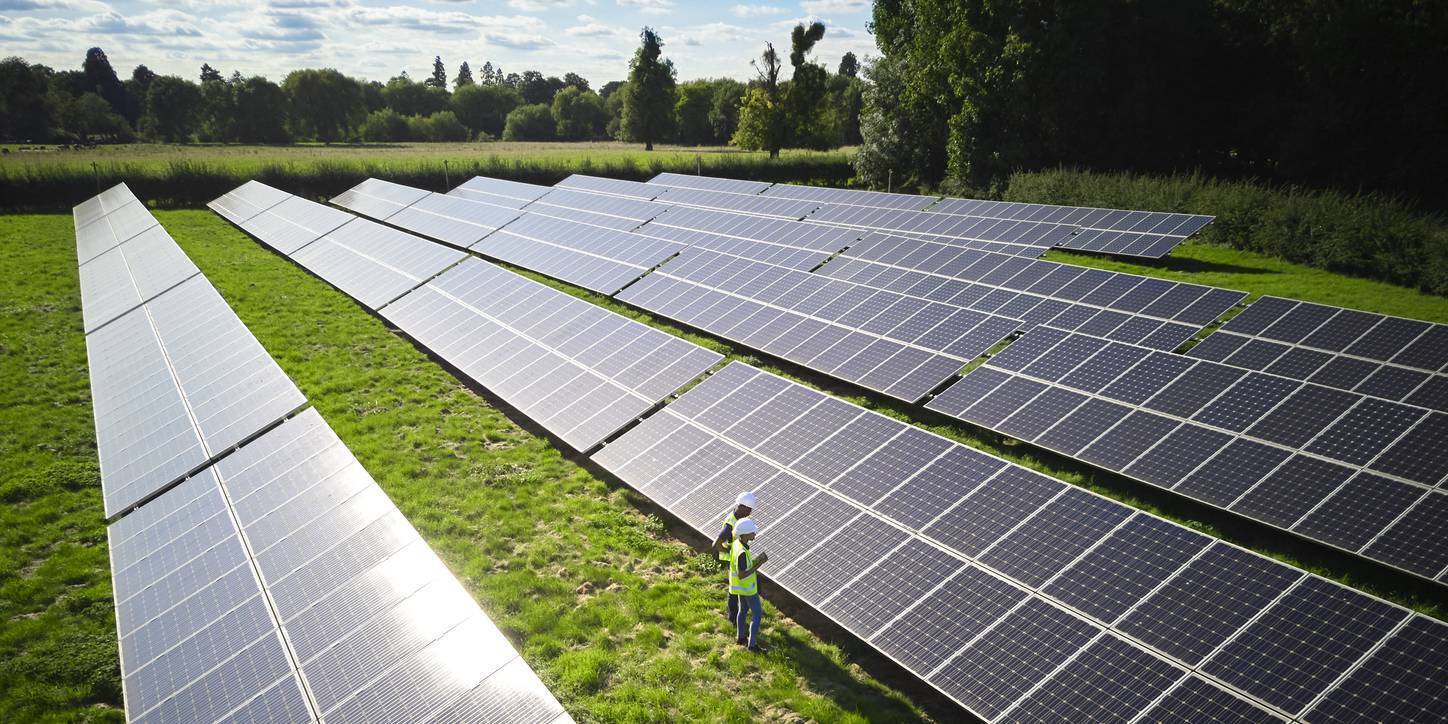
'We cannot have development of large solar farms on prime agricultural land take place in what is essentially a legislative and guidance vacuum.'
THE development of solar energy farms on prime agricultural land was criticised in the Senate.
Calls were made for the introduction of effective planning controls and guidelines for such projects.
Galway East Senator Anne Rabbitte (FF), who raised the issue, said she knows of farms of 1,000 acres of arable land being used for solar farms.
“When we do not have regulation, they go rogue,” she said, claiming many areas around the country are being scourged by the conversation around the regulation of solar farms.
“I accept there is a real need for an increase in energy capacity. The issue concerns the conversation around solar farms, the lack of regulation and the review of wind farm guidelines,” she said.
Senator Rabbitte called for a debate with the Minister with responsibility for regulation and provision.
“We need energy but maybe we need a conversation about small nuclear reactors.
“We are bringing in power generated by nuclear power through the interconnector so we need a grown-up conversation about what the solution might be as opposed to killing our countryside.
“I am by no means an advocate for nuclear power, but I see how communities are being split, divided and torn apart and this is wrong,” she said.
Leader of the House Senator Sean Kyne (FG), Galway West, said public meetings would be packed whether they were about solar, wind, or even nuclear power if it came to it.
People are not happy with the impact of such projects whether they are onshore or even offshore, he said, promising to request a debate with Climate Minister Darragh O'Brien on the issue.
Cork East TDs James O’Connor (FF) and Noel McCarthy (FG) also sought updates in separate Dail questions on when solar farm guidelines will be published.
Minister of State John Cummins (FG), Waterford, said there is a commitment in the Programme for Government to introduce planning guidelines for solar energy developments.
The Department has begun an initial scoping process to identify the component factors relevant to the preparation of planning guidelines for solar energy projects.
These include any appropriate environmental reporting and public consultation requirements, and the possible timeframe for publication of the guidelines.
Minister Cummins said the scoping process remains at an early stage.
Guidelines, once completed, will issue as a National Planning Statement, following the commencement of the relevant provisions of the Planning and Development Act 2024.
“In the interim, there are currently no specific planning guidelines in place in respect of solar energy development,” he said.
The Minister added that proposals for individual solar energy developments are subject to the statutory requirements of the Planning and Development Act 2000, as amended.
These are in the same manner as other proposed developments, with planning applications made to the relevant local planning authority, or An Coimisiún Pleanála on appeal.
Meanwhile, the focus on using good land for solar farms has increased in recent months.
Deputy Pádraig O'Sullivan (FF), Cork North Central, noted in the Dail in July that large solar farm proposals are now being seen in the absence of any guidelines or any instruction from the Government.
“The Minister has said it is in the programme for Government that we will be bringing forward guidelines.
“They cannot come soon enough. There is concern that some communities are being swamped by these.
“Nobody here is saying we do not need solar farms. They are indisputably part of what we need to do in generating energy for the future.
Deputy O’Sullivan, who raised the issue on the back of a question from his Cork East colleague James O’Connor, said the nature of the developments is erratic and concerns are being expressed by communities.
“There are multiple applications. These farms are transforming the landscape from largely agricultural to what we would argue is a commercial enterprise,” he said.
Deputy O’Sullivan said the landscape is being transformed by these developments in front of their eyes.
“We are not saying we are against solar farms; we are clearly not. They are as necessary as wind energy,” he said.
Mr O'Sullivan said the Minister’s concern should be about the knock-on effects on the agricultural and food sectors.
There is a scoping exercise and there will be a public consultation on the guidelines, but that will take two or three years.
Meanwhile, there will be dozens more of these applications with essentially no guidelines in place. That is the most concerning thing for us, he said.
Deputy Conor D. McGuinness (SF), Waterford, said the issue of solar farms on prime agricultural land is a critical one in parts of his county.
“We all see the advantage of solar power, including solar farms and solar on rooftops.
“Farmers in rural communities are in favour of this and see the advantages and benefits of it.
“However, we cannot have development of large solar farms on prime agricultural land take place in what is essentially a legislative and guidance vacuum.
“We need to see guidelines, and they need to be based on consultation with stakeholders in rural communities.
“We need to understand the impact this will have on agriculture as a sector, but also on the family farm into the future,” he said.