Many young farmers make the pilgrimage to Australia or New Zealand to do their 88 days of work and to experience the sunshine down under.
These days, it’s almost a rite of passage to bid farewell to the parents for a time and jet off to the other side of the world. With plenty of farm work to be done, agricultural students are at an advantage to their town-dwelling peers when it comes to snagging a job abroad, as long as they don’t balk at a bit of hard work that is.
Here are three young farmers who have returned from their stints abroad with stories, sunburns, and some serious skills to help guide the next wave of Ags on their adventures.
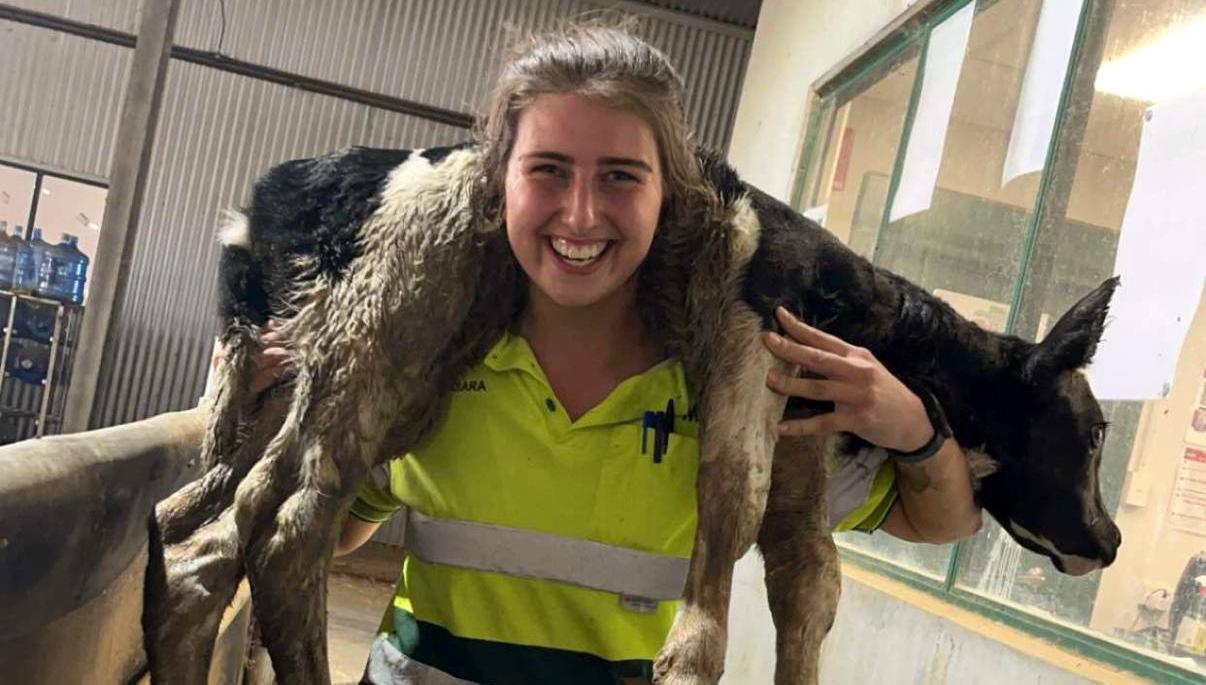
Ciara Byers: Dairy farmer, Co Cavan
Ms Byers hails from a dairy farm in Cavan, where she is currently back home milking and managing 160 high-yielding Holstein-Friesians on a spring and autumn calving system with her father.
A recent graduate from UCD studying animal and crop production, Ms Byers got the itch to head to Australia after spending time on a dairy farm in South Dakota as part of her work placement in her third year.
Ms Byers and her boyfriend, Dathal Kent, secured their first job through a friend at Moxey Farms or Australian Fresh Milk Holdings (AMFH) in Australia.
AMFH boasted a herd of 10,000 milking cows in the summer of 2023 when Ms Byers worked with them, and has since expanded.
With the whole production indoors, three rotary parlours going at the same time, and 100 acres worth of concrete to house everything, the experience was “absolutely wild” for Ms Byers.
She worked there for five months alongside the health team, helping to manage the maternity ward and the dry cows, working 12-hour shifts.
With a farm so big there were several herds to monitor and asses daily, as well as the calving groups and antibiotic herds, Ms Byers with a team of five others were kept busy.
“If you’re in maternity, you’re doing constant walks every 20 minutes in a shed that was nearly a kilometre long, with a couple of 100 cows all coming close to calving,” Ms Byers recounted.
Although the scale was dizzying in comparison to back home, she took it in her stride.
Due to sheer numbers, Ms Byers explained, although incidences were low relative to herd count, there were more instances of difficulties amongst the herds compared to back home, such as abnormal births, LDA’s, nutritional deficiencies, and the like.
Although there was always a vet just one phone call away, Ms Byers and the rest of the team were all encouraged to try first, “you always gave it a stab yourself”.
“And well, it’s not your own farm, so you’re more willing to kind of be like, ‘oh I’ll just give it a go’,” she said.
“I found myself very confident by the end of my time there, being able to do any difficult calvings and general animal and herd management,” Ms Byers concluded, as she explained she is now able to apply her skills and knowledge to the home herd, helping to cut costs on vet call-outs.
“I’ve seen and done things now. And I haven’t just learned it in a book,” she explained.
Now that she is helping manage her cows at home, any drenching, pinging, or difficult calvings, Ms Byers barely bats an eye.
Ms Byers also worked for three and a half months seeding and three months on a travelling harvest from the New South Wales-Queensland border to Victoria.
For the seeding, Ms Byers and Mr Kent worked with CC Cooper & Co and experienced back-to-back 12-14 hour shifts, with Mr Kent usually taking the night shift and Ms Byers seeding during the day. Together, they sowed over 10,000 hectares of a variety of crops such as wheat, barley, canola, and some oats.
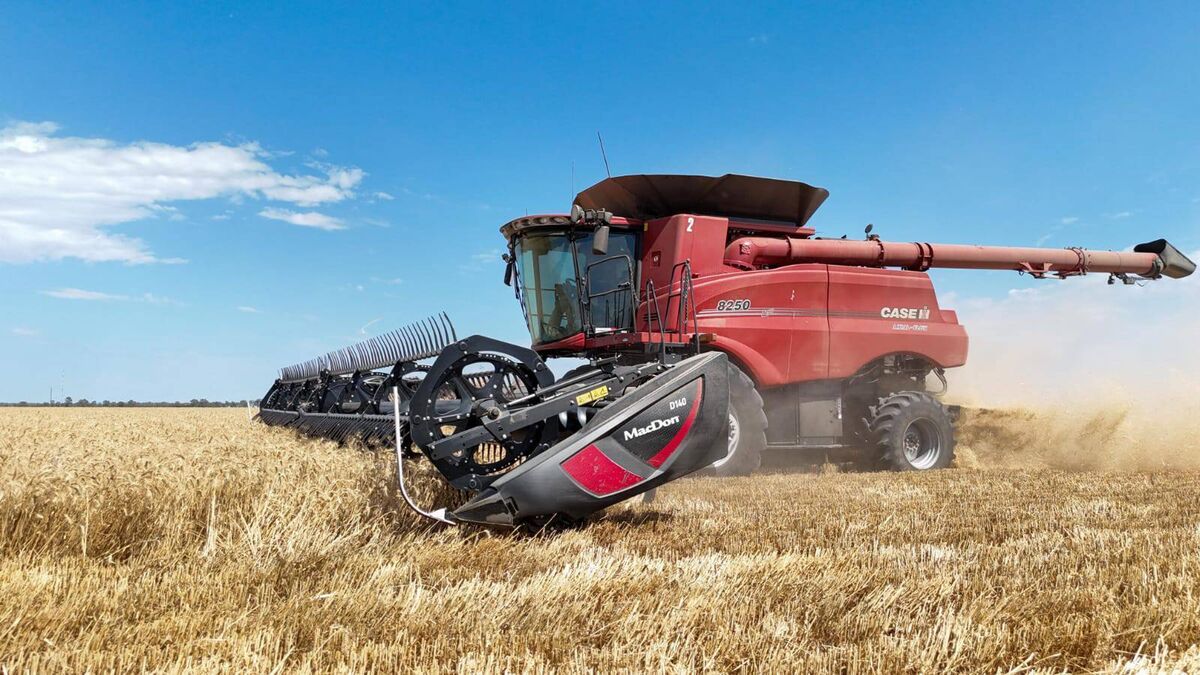
Ms Byers split her time between a 40-foot New Holland seeder and a 60-foot Case quad-track seeder.
“I had never used GPS, so that was a great learning curve for me,” Ms Byers said, who wouldn’t be a stranger to long hours in a cab after spending many a summer with contractors hauling silage at home.
“In the morning, I’d rock up at 5am, and Dathal would be falling out of the tractor. He’s wrecked, he wants to go to bed, so usually I take over and I’d fill up with diesel, seed, and fertiliser again and I’ll check everything over,” she recounted.
“You’d just set your GPS up and you went up and down the field until you had to fill up with seed and fertiliser again… Some people might find it boring, but I thought it was pretty interesting,” she said.
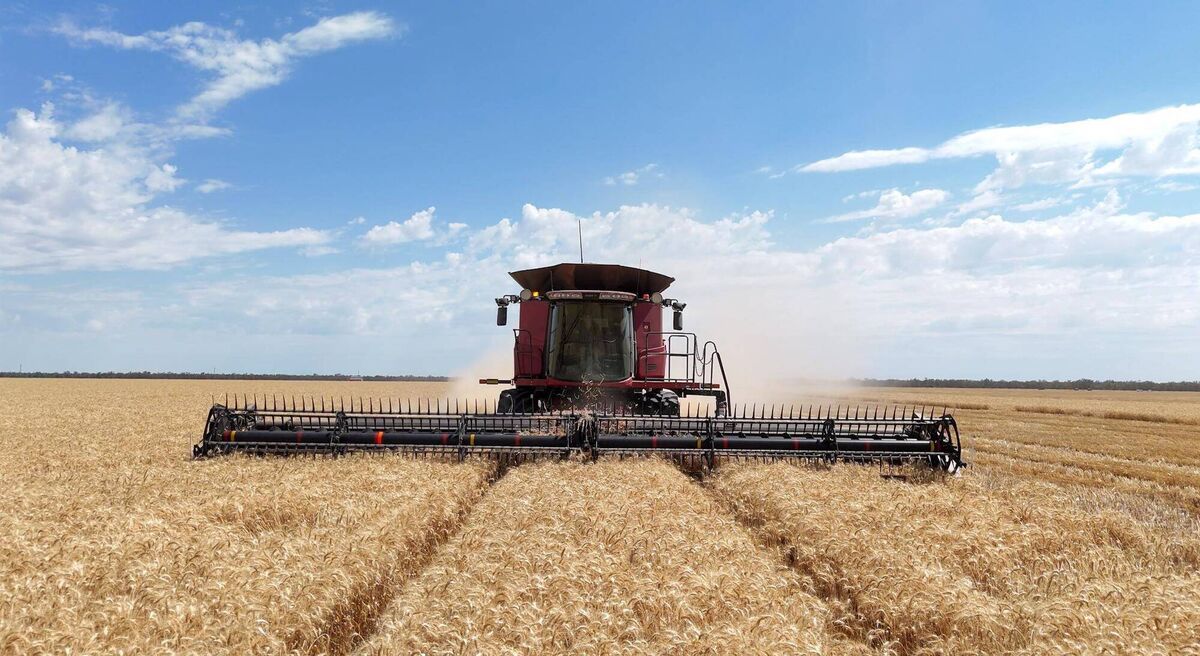
For harvesting, Ms Byers explained that each person got their own combine and that was their sole responsibility. Ms Byers was responsible for a Case IH axial flow 8250. Once maintenance checks were done, harvesting would commence at 8am and end at around midnight, depending on the moisture. After the long day, Ms Byers would then blow down the combine to ensure no dust smouldered overnight.
Ms Byers recounted a particularly stressful day and a half of harvesting chickpeas.
“I never thought about how chickpeas grew. It turns out, chickpeas are highly flammable because the dust that comes off the plant is really, really fine and dry. Because of the risk of fire, we had to blow down all the dust off the combine every hour. So I was on edge the whole time.”
Discussing the differences compared to home, Ms Byers stressed the importance of sun safety.
“Between the heat and getting burnt, it just is not like the sun back home, it’s next level dangerous,” she explained, mentioning how she was always stocked up with electrolytes, sun screen, and water.
A culture shock she experienced while down under was an Aussie Christmas. Mentioning that she upheld the Irish tradition of turkey and ham on Christmas day, Ms Byers was shocked to find Aussie families having Christmas day barbeques and salads for their meals.
Ms Byers highly recommends any young farmer who has an inkling to get out to Australia and New Zealand to do so before the responsibilities start building up. She suggests looking for job ads in Facebook groups, as many farmers across the world would post notices looking for seasonal workers; however, keeping an eye out for scams should always be at the back of your mind.
Since returning from abroad, Ms Byers has embraced a new appreciation for home after experiencing the sheer scale of Aussie agriculture.
Vincent Ward: Dairy farmer, Co Meath
Mr Ward’s home farm originally milked 90 Holstein Friesians with spring and autumn calving blocks.
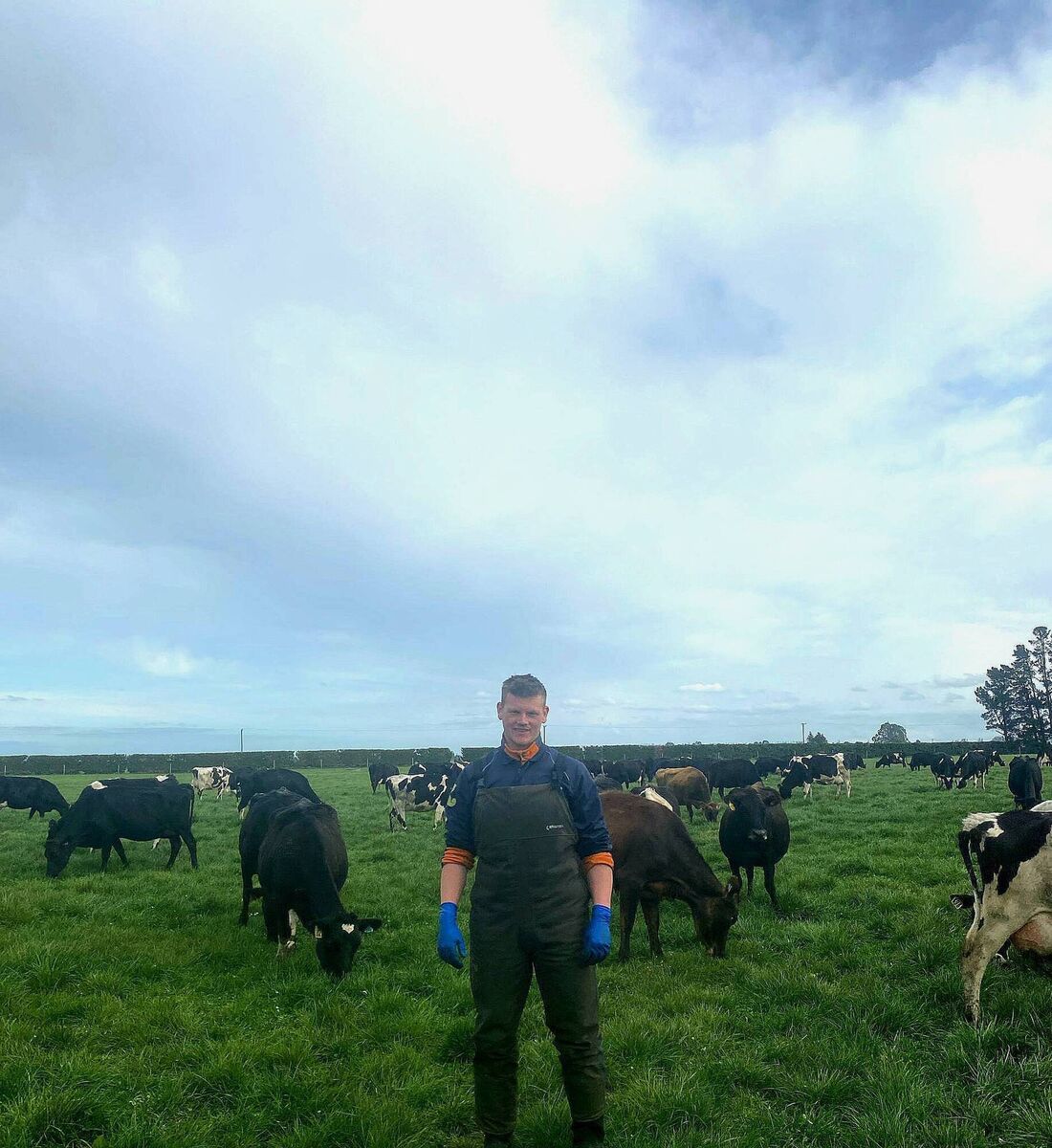
Now in a registered partnership with his father, Mr Ward has overseen the 100% expansion of their herd to 170 animals calving down this spring. Now, a mixture of Holstein Friesian and Jersey crosses since his return from New Zealand in 2023, with plans for 500% expansion in their five-year plan.
Mr Ward spent 10 months in New Zealand after completing his farming management degree in SETU, while also balancing an online animal Master’s degree from UCD with his eight-day-on, three-day-off rota.
Mr Ward worked on a farm with 2,250 Jersey cross cows in the Canterbury region in New Zealand with a team of 12.
The herd is split into four herds of roughly 550 based on parity, with Mr Ward managing herd one, which was third and fourth lactation cows. Under Mr Ward’s management, herd one was producing 5.2% protein and 4.1% fat.
As an incentive, a bonus was awarded to Mr Ward if he could keep the herd’s cell count under 80.
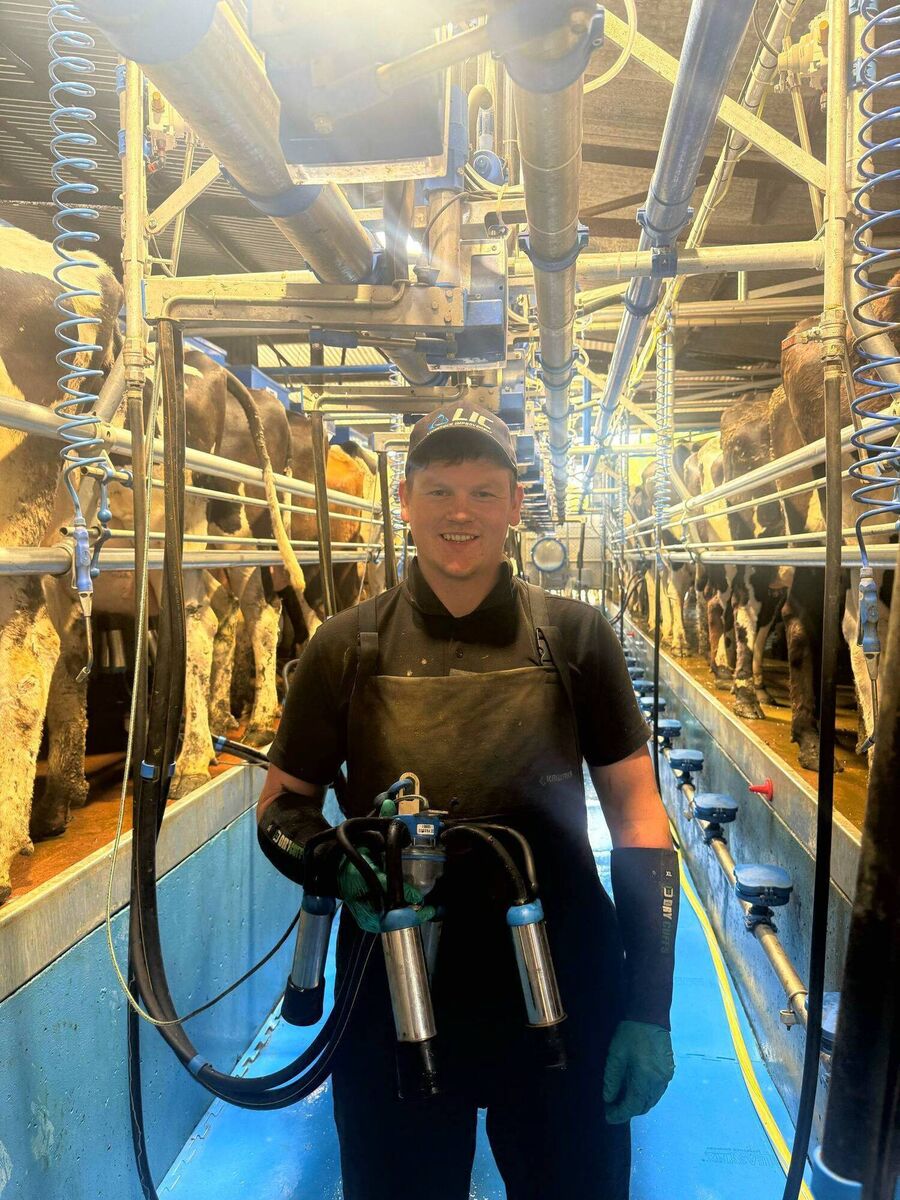
“I thought going out would be incredibly hard to do, but I did it. That was worth €7,000 to me. I was able to keep the cell count under 80 for the whole season,” he stated.
Mr Ward touched down in New Zealand in July, which was the Irish equivalent of early February, and was thrown straight into the deep end.
“The first morning of work, I went out with the team and I picked up about 60 calves that calved that night,” recounted Mr Ward.
His advice for young farmers heading out is to aim to be working in June, similar to an early January back home.
It’s an early morning start for the team. At 3am, those rostered for herding were out getting the cows from their paddocks, milkers started at 4 am, and a late morning start meant wandering into the yard at 8 am. During calving, the team would go collect calves at 6 am to bring them
in, tag them, and the mothers were milked last in the parlour for their colostrum to stomach tube the calves with.
A lot of Mr Ward’s responsibility away from the animals revolved around grass management. Grass walks took three hours each time to cover the full expanse of the farm. With each paddock made up of around 10 hectares, Mr Ward had to split the paddocks appropriately to suit his herd.
“I had full responsibility for any sickness, mastitis, lameness, and non-cyclers within that group, which gave a lot of responsibility; it was daunting at the start, but the big thing was the grass management, managing the grass and allocating the right amount for each herd.”
Something Mr Ward had to wrap his head around was the irrigation systems, which are common on Kiwi farms.
“They make it rain with an irrigation system. When I got out there first, and I saw that, I thought ‘this is almost cheating’. It was just such an advantage to just put on the irrigators and they’ve got grass growth of 100kg a day, no problem at all,” he explained.
Another major difference between New Zealand and the home farm was the financial management.
“These farms are run without any of the EU subsidies. So profitability depends 100% on cost control and productivity. So like that mindset really influenced how I looked at margins back home.”
The financially savvy Kiwi mentality was a major upskill Mr Ward gained while working abroad, and helped to fund and keep the farming partnership with his father and their expansion going.
“Now we’re trying to utilise the value from the grass and maximising the cow’s potential to cover all costs and look at the single farm payments and any sort of funding or grants like that, just as additional,” Mr Ward explained.
Although Mr Ward looks back on his time in New Zealand fondly, two main points of contention for the young farmer were some practices that didn’t sit right with him.
“The only overshadowing effect of the experience — and I feel very strongly about this — was the animal welfare, the bobby calf [Jersey bull calf] management, and the environmental management on farms is deplorable, like it is shocking.”
The dark side of the New Zealand dairy industry meant Mr Ward saw bull calves shot by the end of the calving season and carcasses burnt in the same pit alongside the household rubbish.
“I don’t know how there’s not more being done about it either,” Mr Ward went on.
For young farmers who want to dairy in New Zealand, it’s important not to be disillusioned and know what to expect. Mr Ward also advised young farmers to “embrace the scale, the difference, and the team culture of the farm you’re on — you have to buy into the culture on the farm”.
Mr Ward also advises shadowing farm owners and managers as much as possible, explaining how some of the farmers he worked with became mentors of sorts, offering practical and science-driven points of view on situations and the industry that Mr Ward found invaluable.
Rachel Connolly: PhD student, Co Donegal
Ms Connolly doesn’t come from a farm herself, but her extended family is agricultural stock. She now has a modest flock of sheep of her own built from five original pet lambs she raised while on placement.
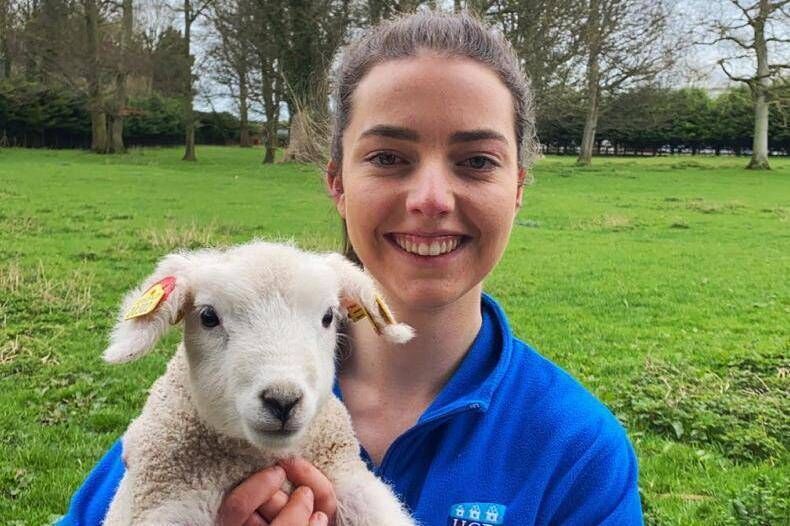
With her love for animals, Ms Connolly received a sustainable agriculture degree from Dundalk Institute of Technology, an agricultural extension and innovation Master’s in UCD, and is now partway through her PhD researching ewe and lamb performance on multispecies swards at UCD.
Ms Connolly went to New Zealand as part of her PhD, assisting sheep trials, spending seven weeks on the South Island at Lincoln University and five weeks on the North Island with Massey University, as well as visiting a few sheep stations.
The research flocks boasted numbers of 60-70 ewes with their lambs; however, the scale of the flocks at the sheep stations blew Ms Connolly away.
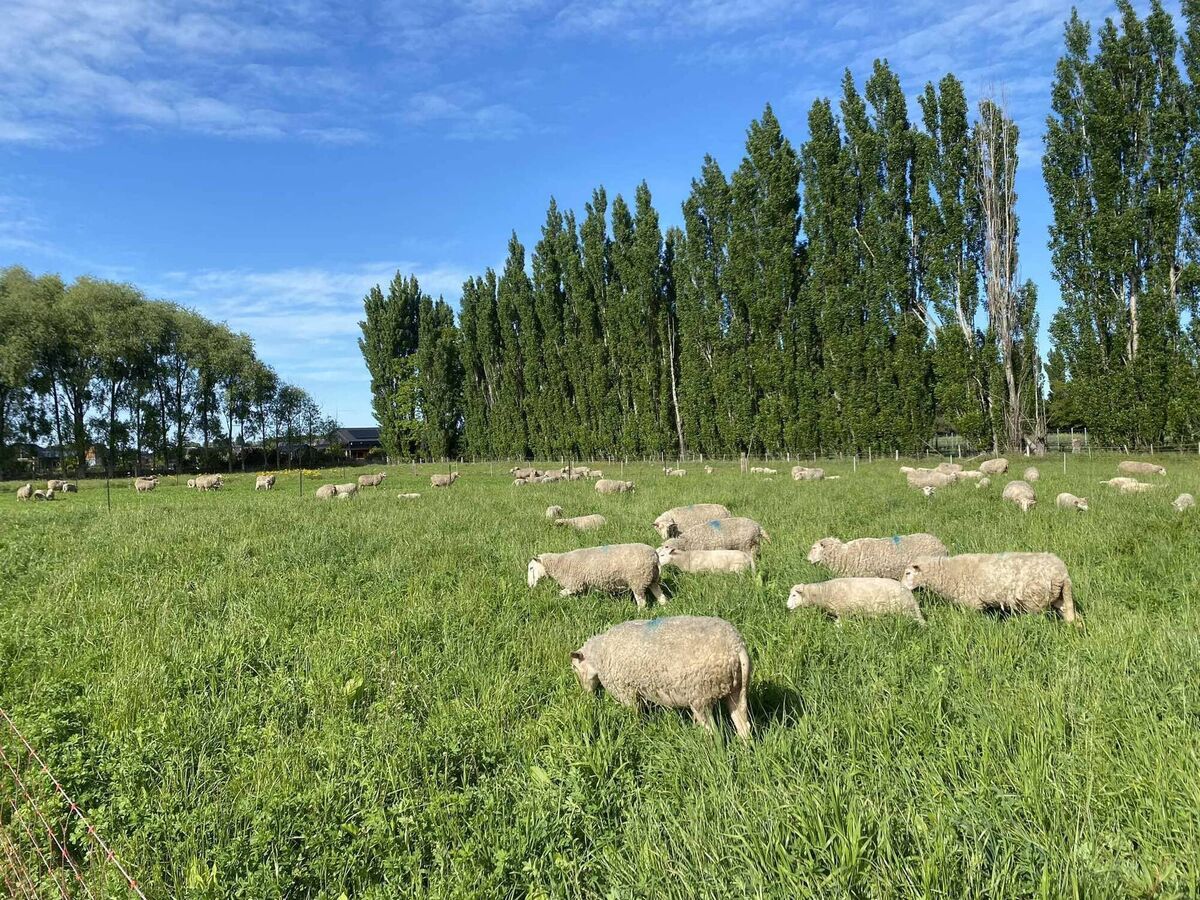
“Thousands, maybe 2000-3000, some had more … The scale was just amazing,” she recounted.
Ms Connolly marvelled at how self-sufficient the flocks had to be in New Zealand compared to Irish practices. All ewes lamb outdoors and by themselves a “sink or swim” mentality is employed by Kiwi shepherds.
Ms Connolly’s day in New Zealand began at 8am. Sheep had to be shifted to new paddocks, ewes with lambs at foot had to be checked, paddocks cut, and botanical separations conducted on samples from every paddock entered and left by ewes and lambs.
“It was a lot of data collection like that, and sometimes that would take up the majority of the day,” she explained.
Ms Connolly mainly helped manage the research as she had missed lambing by a matter of weeks when she arrived in October.
Once 4.30pm rolled around, you were expected to go home, Ms Connolly explained.
“They’re very good in their work-life balance,” she recalled wistfully, her day-to-day now back home, not allowing for the same luxuries with her PhD in full swing.
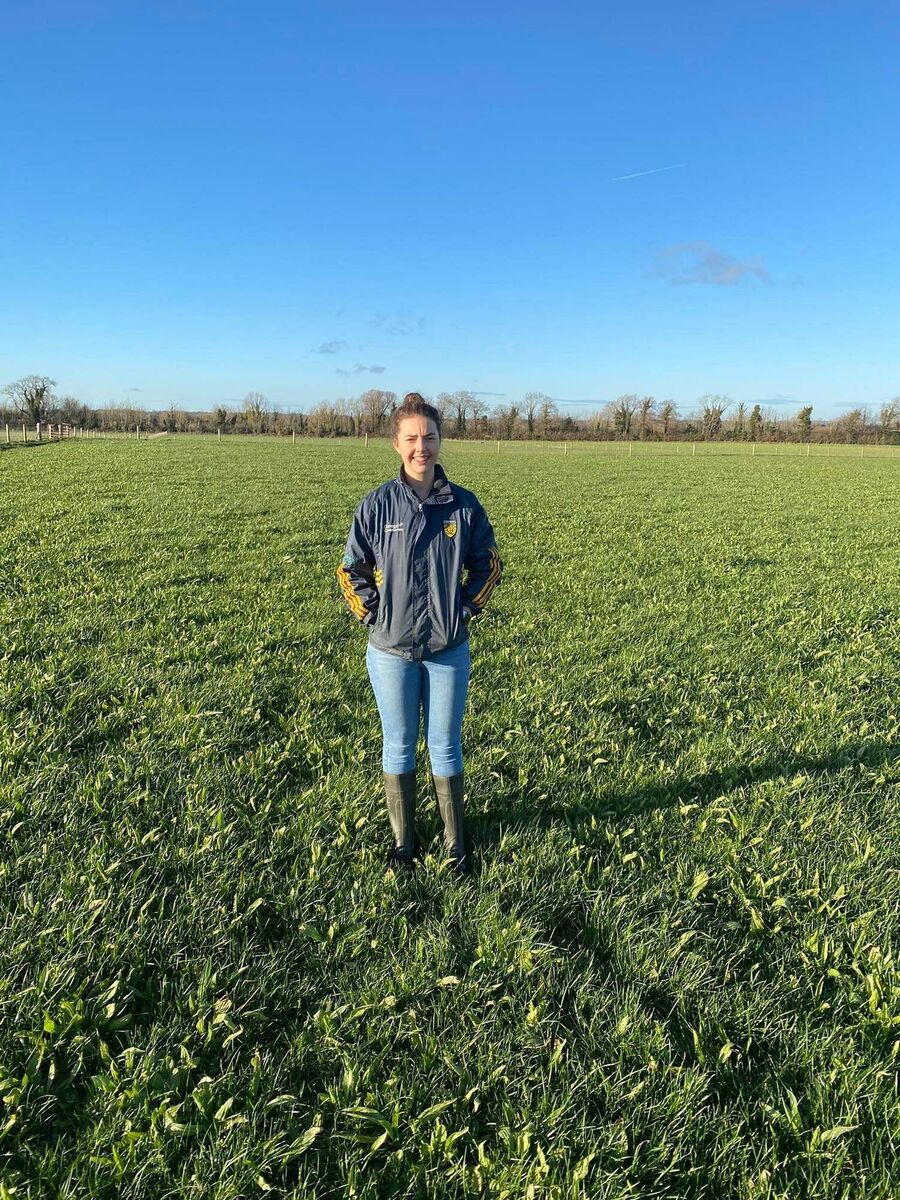
A skill Ms Connolly brought back with her was the relaxed mentality the farmers seemed to have out in New Zealand.
“They are such a relaxed nation and they don’t get excited about things that aren’t worth getting excited about … I can be quite an excitable person, and it took me a while to get into that frame of mind,” Ms Connolly explained.
The breeding practices were a big difference between the norm back home in Ireland and New Zealand.
“One thing that really stood out to me was their progression in improving their flock genetics, and some of the things they’re selecting for really surprised me.”
Ms Connolly explained farmers focused on selecting and breeding animals for welfare and to be suitable for the factory, such as breeding for shorter tails or for shorter wool on their hind legs and bellies. As a result, this lowers the labour intensity needed for the animal.
“They’re thinking ahead in terms of that,” she considered.
Ms Connolly also marvelled at the openness the farmers in New Zealand displayed.
“You could ask any question, there were no secrets. They’re just such an open group of people, and it was just lovely to witness that and to be able to get exposure to that.”
As one might expect, travelling alone across to the other side of the world can be a daunting task for anyone.
“I kind of had to get comfortable with being uncomfortable for a while and, you know, being unsure of exactly how things were going to pan out,” Ms Connolly explained.
“It was daunting enough, going somewhere so far away on my own, especially, being a young woman too, it’s not always easy, but I’m glad I was brave enough to get out there and just do it,” she insisted, encouraging all young farmers with any hint of trepidation to give it a go.
An interesting practice, Ms Connolly noted, that juxtaposed with the lives of Irish farmers was the lack of attachment to the land that the Kiwis seem to have.
“One thing I did notice was that we’re very attached to tradition and the land here in Ireland, but in New Zealand, from what I’ve seen, it’s not like that at all. If the farm isn’t capable of supporting the production system that the farmer wants to run, they look for land elsewhere. There’s no issue in moving on to another farm, even if that farm they were on was part of their family for generations.”
Now home and working on completing her PhD, Ms Connolly would go back to New Zealand “in the morning if I could”.
Her parting advice for farmers going off this year to Australia or New Zealand is to get out there, get excited, but give yourself the space and grace to find your feet and enjoy yourself.
I’m sure I speak for all farming parents letting their chicks fly the nest to experience the wider world and see what Australia and New Zealand have to offer, when I say: Slán abhaile agus tar ar ais arís.