Kieran Coughlan: The numbers stacked up for solar success... even without Tams
The additional cost over and above what I would have saved via Tams was, of course, deductible as an expense, and solar panels generally qualify for 100% tax relief.
It has been nearly 12 months since we installed solar panels on the bullhouse roof, it being the only shed in the farm yard with a southerly aspect. Unfortunately, all of the other sheds were either of the round roof variety or lean-to sheds facing east and west.
I did consider fixing solar panels on a mix of east and west roofs such that they would balance each other out, the easterly panels generating well in the morning and the westerly making up the afternoon, but in the end, the bullhouse roof was chosen.Â
A relatively new fibre cement roof was fitted to that building a few years ago, which also gave me peace of mind that the roof and solar panels will hopefully last for at least 20 years without either needing to be replaced.
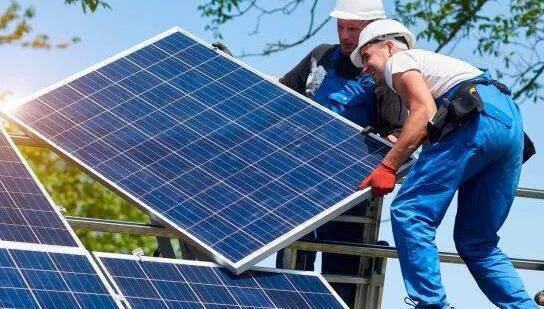
The solar system installed was a 5.5kW system comprising 14 panels, an inverter, and cabling to the main fuse board. The system size was determined not by me but by the grid capacity.Â
Financially, the Tams grant does make a lot of sense. Why would anyone turn up their nose at a 60% grant rate? For me, it was more of a timing issue. Firstly, if going the Tams route, by the time I would have applied for the grant, received approval and installed the panels, I figured I would have lost the guts of a year's free solar electricity.Â
Secondly, there was also some confusion at the time about whether those farmers who availed of a Tams grant were entitled to get paid for exporting to the grid. Thirdly, there was a cost factor in applying for Tams grants, both via a survey, agri-adviser fees and a farm safety course which I had done previously, but more than five years ago.Â
All of these factors, along with some impatience and having made the decision to proactively take some steps to reduce the carbon footprint of the farm, led me to go the direct route, bypassing Tams.
The additional cost over and above what I would have saved via Tams was, of course, deductible as an expense, and solar panels generally qualify for 100% tax relief up front in the year of investment under the accelerated allowances scheme, so all told, I’m not overly bitter with myself for not availing of Tams.
Of course, each farmer should weigh up for themselves whether the Tams grants are worth applying for on their own particular circumstances. We’ve had fantastic weather this past month, and the solar panels are generating well. Last month, the panels produced about 600kW of electricity, and for the past 12 months, they’ve generated a total of a little less than 5,000kW.
In terms of the annual savings, the electricity generated by the panels is used firstly within the farm and if surplus electricity is generated over and above what is needed on the farm, it is exported to the grid. There are no actions required by me on this front as the system smartly prioritises solar-generated electricity over bought-in electricity.Â
In terms of the savings from the system, so far over 85% the electricity generated has been used on farm. In fact, only 472kW of electricity has been exported to the grid.
Some simple hacks can help get the most out of panels, such as fitting timers on water heaters or changing timers on automatic scrapers, so electricity usage is spread out a little more across the day, giving the solar system the opportunity to meet demands from the farm over the course of the day.
At the moment, the solar panels are busy running the milking parlour, water heater, and cooling milk with any electricity generated within the four- or five-hour window being used on the farm.Â
For me, every kilowatt of electricity used from the solar system saves 28c, whereas each kilowatt exported generates 18.5c. On the sunniest days, the system is generating more than 35kW of electricity across the day and at peak over 5kW per hour, whereas in the dark days of winter, the system might not generate even 1kW for the whole day.
So far there has been very little hitches other than a faulty MCB within the fuseboard and I would suggest all farmers and indeed house owners should consider if solar panels would be of benefit to them.Â
In terms of battery storage, I shied away from installing same following advice from my installer, when you’re getting 18.5c for every kilowatt exported to the grid, the payback on batteries is questionable, more especially in circumstances such as mine where a high percentage of the electricity generated can be used on site, but each person should weigh up their own individual circumstances.