The anonymous cow - the 'old faithfuls' on every farm
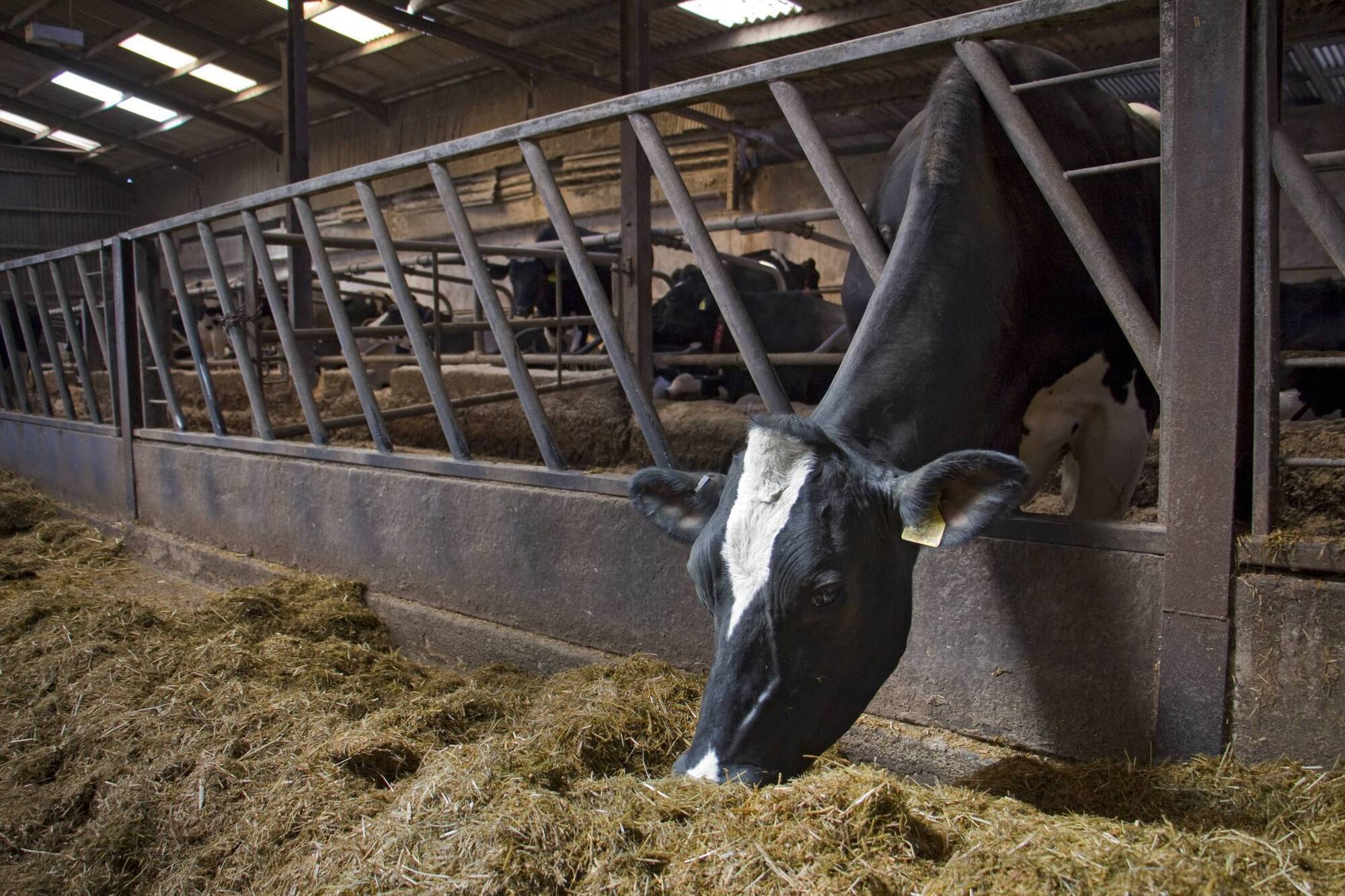
410 million individual daily milk weight records were examined to determine resilient cows within herds in the US.
A cow’s resilience is heritable, ranging from 0.01 to 0.2 heritability, an American-based study on cow stress responses has found.
The findings of the study, which was conducted by Ms Fiona Louise Guinan, a PhD fellow at the University of Wisconsin-Madison presented her findings at the BSAS (British Society of Animal Science) conference this April.
Ms Guinan’s presentation on her study “Dairy cow resilience: data-driven detection and quantification of perturbations using daily milk weights,” received the “Developing Talent Award” for her approach of utilizing precision technology and animal health science to support improved welfare and productivity in the dairy sector at the conference.
The concept of Ms Guinan’s study aimed to answer the oxymoron “How do we identify the anonymous cow?” The cow that gives a farmer so few issues, you don’t even know her tag number, she just blends in, a pure herd animal.
Ms Guinan cited in her presentation an American legend by the name of “Granny,” the Holstein cow that held the national lifetime milk production record from 2003-2020, who produced 458,616 lbs of milk in her lifetime, but went relatively unnoticed by the farmers who milked her until she received her award.
Ms Guinan’s study aimed to try to identify these anonymous cows, the herd’s 'old faithfuls', through her monitoring of daily milk weights.
Ms Guinan used data already at the fingertips of many farmers, milk data, health, and breeding records.
This study contained an eye-watering 410 million individual daily milk weight records, 37.8 million test day records, 4.4 million health records, and 5.5 million breeding records. These records represented 702,861 cows within 312 herds in 37 states across the US.
US dairy herds typically segregate their cattle in pens based on factors such as parity, lactation stage, calving age, and milk production. With this pen structure, Ms Guinan monitored animals in smaller groups while also monitoring localised perturbations or challenges experienced by the cow on a pen basis.
Perturbations mainly came in the form of environmental challenges to the cow through extreme weather events or illness in the shed. To help quantify resilience, Ms Guinan first investigated consistency in the cows.
Observing lactation curves based on expected and observed daily milk weights, Ms Guinan was able to identify consistent cows amongst the large population being observed. The consistent cows observed less variation between the expected and observed lactation curves throughout the study, even when experiencing perturbations.
The inconsistent or “troublemaker” cows had their milk production vary a lot throughout their lactation period. Based on the occurrence of perturbations, the inconsistent cow’s lactation curve dropped before correcting itself, days or sometimes weeks later.
On the back of consistency, Ms Guinan went on to explain resilience in the context of her study. “Resilience is the bounce back to normal functioning after a disturbance occurs.”
To quantify resilience, Ms Guinan again monitored the expected and observed milk curves, focusing specifically during periods where perturbations occurred. She “investigated 40 different combinations of severity and duration, ranging from at least a 3% difference between the observed and expected milk production to at least 7% difference in milk yield loss and severity, ranging from at least three days to at least 10 days.”
The top six most resilient cows in the study lost little to no milk during perturbation periods. However, the six least resilient cows experienced 30% milk loss during the same periods, with Ms Guinan concluding, “the greater the challenge level, the more resilience is expressed.”
“Resilience is heritable, ranging from 0.01 to 0.2 depending on the challenge level and the duration,” she said as a take-home message for the attendees of the conference. A farmer can identify a period and level of perturbation using their cows’ daily milk weights, with cows responding differently at the pen level.
Subsequent findings of the study found that the more consistent and resilient cows had a positive correlation with milk production and health traits, while the least resistant cows displayed lower health traits, fertility, and generally lower predicted transmitting ability (PTA).
With the Netherlands already having implemented a resilience index on their herd profiles and US farmers being interested in obtaining animal scores to highlight their anonymous resilient cows, particularly as Ms Guinan explained with the “lower trained labour availability,” also being experienced in the US as well as Ireland maybe a resilience sub-index may be the next criteria to appear on EBI profiles for Irish herds.