Spring calves – getting feeding and management right
Providing calves a suitable environment for them and rearing them with optimum performance take skill and precision, writes independent ruminant nutritonist Brian Reidy.
It is the busiest time of year on dairy farms, with cows calving at pace by now. As we all know, at this time of year, time and labour are precious commodities and making the best value of both is a juggling act around calving season.
Calving cows down with minimal complication with a live calf, getting colostrum into the calf, introducing them to the farm's milk feeding system, providing a suitable environment for them and rearing them with optimum performance take skill and precision.
The first step must be to get sufficient colostrum into calves in a timely manner after birth. It is the one chance you have to optimise antibody transfer. This is even more critical if cows have been vaccinated for scour.
Once settled on milk, aim to introduce solid food at the earliest opportunity. Calves are not born with the rumen function of older animals, so stimulating the rumen from an early age will set it up for the rest of its life.
The new calf’s true stomach (Abomasum) only functions in the early stage of life so developing the rumen as early as possible by including good quality long fibre and appropriate concentrate will reduce the amount of whole milk or replacer required up to weaning.
For many milk producers at this time of year, milk quality is extremely variable. As a result, calves are getting a slightly different diet each time they are fed. This may lead to digestive upsets disrupting performance.
Milk replacers for young calves should be high in protein, 23%-26%, and contain good energy and trace element levels. Remember that the total amount of solids fed per day will determine performance rather than the volume of liquid fed. When feeding milk replacers, ensure that your mixing is done accurately and that you understand what the feeding rates mean. Most quote a rate to make up a litre and not a rate to be added to a litre of water.
Automatic feeders are an excellent tool at managing milk intake and calf health, once they are managed as intended.
Hay, in the past, had generally been seen as the preferred long-fibre source, but clean, fresh barley or wheat straw is significantly better than most hays.
I advise the use of straw regularly and the appearance of the calves and subsequent performance supports its use. Calves seldom get pot bellies when eating straw as opposed to hay. The hay tends to stagnate in the calves’ digestive system and can impair digestion and reduce intakes of concentrates.
Concentrates for young calves can be variable in quality. They should be palatable, dust-free and should contain quality protein sources and digestible fibre. Inclusion rates of finely ground cereals should be kept to a minimum in the ration; therefore, coarse mixes are more suitable than calf pellets.
Flaked maize should be included in the starter to improve the coarseness of the mix and increase energy levels. Molasses will improve palatability and will eliminate harmful dust. Molassed Beet pulp is the preferred digestible fibre source. Soya Hulls should be used if there isn’t a suitable source of beet pulp available. Rolled Barley and Rolled Oats are the preferred home-grown cereal sources for inclusion in calf rations.
Up to 10 weeks old, calf concentrates need to be formulated to supply a Crude Protein of 20% and a high energy level, soya being the best quality protein source.
After 10 weeks, the protein level should be reduced to 18%, but the energy level should be maintained. As the calves are developing rapidly correct mineral and vitamin supplementation is essential. Adequate levels of calcium, phosphorus and vitamin D are essential as part of a balanced mineral and vitamin supplement.
Reared autumn calves that might head to grass soon should receive supplementation with concentrates while getting used to consuming sufficient grass.
Calves are generally sold at 14-21 days old, so a lot of the early nutrition management is outside the control of the farmer who eventually rears the calf.
Calves that are receiving whole milk or milk replacers need a suitable concentrate and fibre source that will encourage live weight gain and skeletal development. This is even more important when these calves are moved to a new environment with different disease pressures after sale. Good practice is to feed electrolytes for the first feed on the new farm.
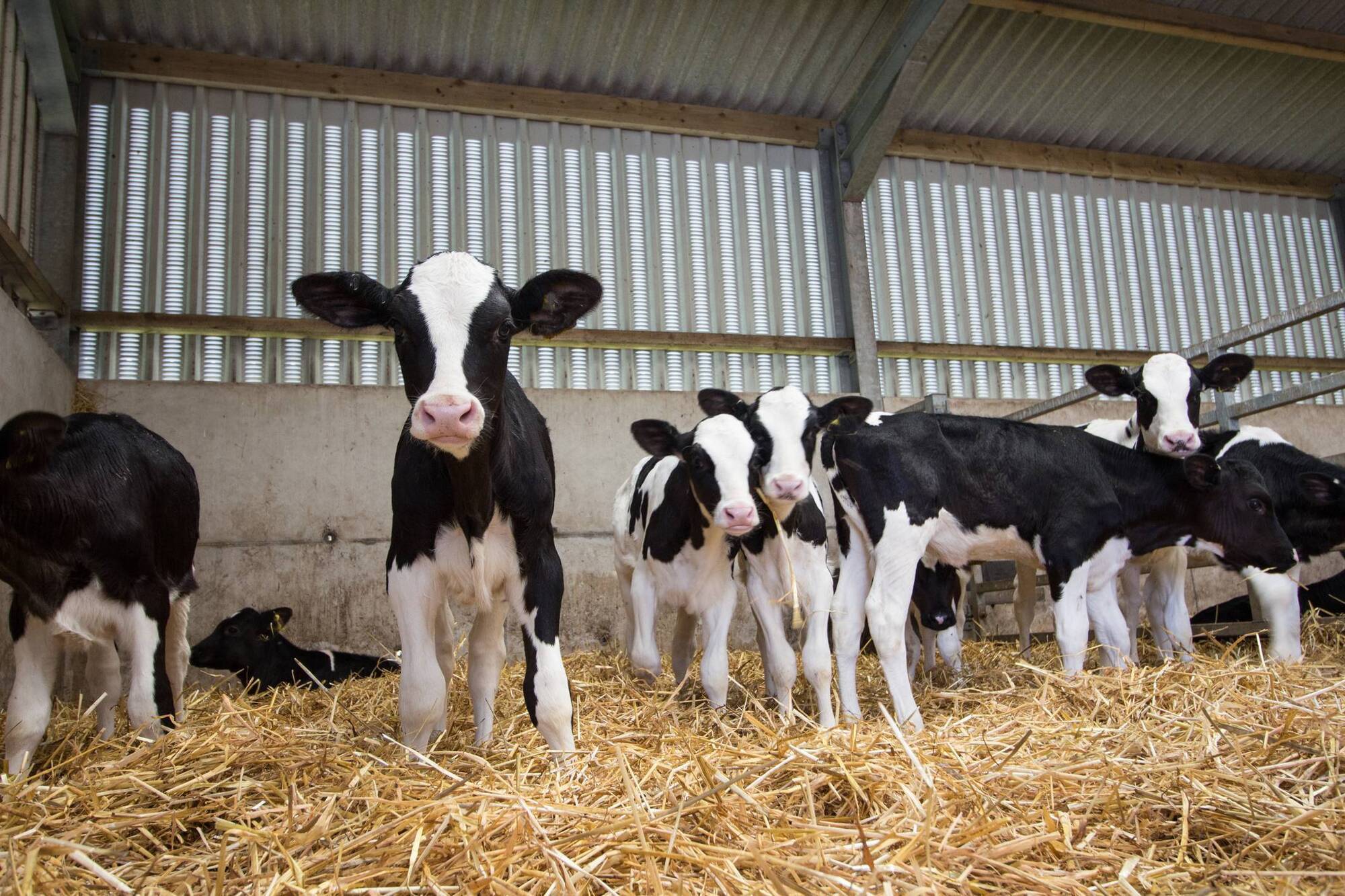
The sheds used for rearing calves are so variable around the country and so many factors determine their suitability for the job. Some are too cold, while some are too stuffy with poor airflow.
What makes a good shed can be different from yard to yard. The location of the calf shed in the yard can determine its suitability.
This type of sheeting, in fact, is detrimental to good airflow. You need good air inlets that don’t come in directly on top of the calves or fall down on them, and after that, you need a good exit for the air to keep them fresh.
Offsetting standard side sheeting and dropping it below the wall plate to create an up current is so much better for airflow and keeping calves cosy in their clean and fresh straw beds.
Try to feed, meal, milk and straw in an area away from where calves lounge and sleep as this will help to keep bedding fresh and dry for longer-this is very obvious but often overlooked. For anyone planning to build or modify a calf shed for the future, the ability to instal an automatic feeder, ease of cleaning out, airflow and access to feeding must be prioritised.