What is a Succession Farm Partnership?
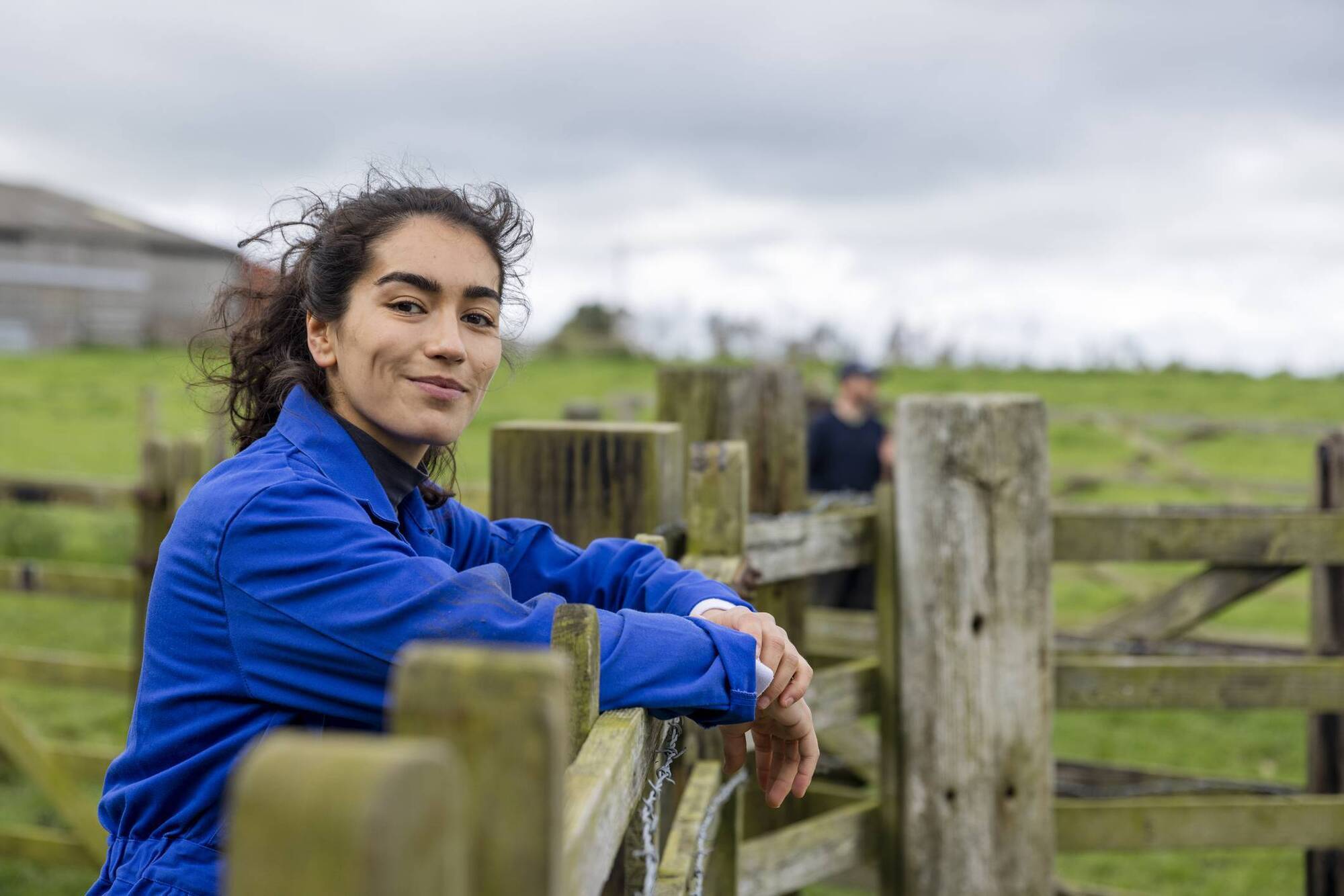
In the Succession Farm Partnership, there’s a requirement to transfer a minimum of 80% of the assets after Year 3 and before Year 10.
A Succession Farm Partnership can play a key role in family farm succession planning, allowing the young farmer to become involved and be formally recognised in the farm business at an earlier stage, while allowing the existing farmer to remain active and provide support, advice and experience.
“It’s important to bring a young person into the business, gradually giving them responsibility, to ensure a smooth and successful transition of ownership”, said Michael Hennessy, host of Teagasc’s Tillage Edge recent podcast, in conversation with Ruth Fennell, a Collaborative Farm Specialist with Teagasc.
They discussed Registered Farm Partnerships (RFPs), including Succession Farm Partnerships, which are distinct from Family Farm Partnerships.
“Under the Family Farm Partnership model, there’s no requirement to transfer any of the assets”, Ruth explained. "It’s an introduction of the next generation into the farm system. They’re recognised in the farming business. There’s a commitment made that they will have a share of the profits. That has to start with a Young Trained Farmer. That has to start with a minimum 20% share of the profits, and it involves them within the farming business".
“What we recommend is that once the young person finishes their formal education, if they have any ambitions to travel or interest to go off and see the rest of the world, or to work in different places, really that should be done before they come home and go on the herd number and join in a partnership agreement”, Ruth said.
“The established or experienced farmer has a lot of years of knowledge and experience put into the farm, and they understand how things work. You can’t learn those tools overnight”, Ruth said.
“The standard Farm Partnership allows the next generation to bring their skills and the knowledge set that they have, and their new ideas, and for them to be recognised within the farm business. It allows the gradual transfer of the management and the responsibilities to take place in a much more controlled and gradual manner.
"The Young Farmer coming on is entitled to a minimum of 20% share of the profits. As the roles change and as the partnership develops, that can change,” she said. “One gradually steps back, and one gradually steps forward”.
Once the family feels that a Farm Partnership would suit their circumstances, their Teagasc Advisor can advise them in detail about how to set up the partnership. The farm accountant will also be able to offer pertinent advice.
If they decide to draw up a Succession Farm Partnership, the family solicitor should be involved.
The application forms for farm partnerships necessarily require the family members to discuss how management of the farm will operate on a day-to-day basis.
“It forces you to have those conversations and to have a clear definition as to what role and responsibility each person is taking within that partnership. Those agreements can be updated, and can be changed, as the partnership develops. It’s just a matter of revising the on-farm agreement or the partnership agreement, and submitting that to the Partnerships Office, as the partnership develops”, Ruth explained.
Teagasc has template agreements for farm partnerships, which can be adjusted to the specifics of each farm. “It’s up to each family to make the agreement what they want it to be, as long as they’re both actively involved within the farm”, Ruth said.
Farm partnership agreements are very tax-efficient.
“If we have two parents and a child together in a Registered Farm Partnership, we can maximise the low rate of tax. With three partners, they could earn up to €126,000, based on the 2024 tax allowances, before they’d be paying any high-rate tax”, Ruth explained.
“In relation to the Succession Farm Partnership, there are also tax incentives. There’s €5,000 a year, for a maximum of five years, up until the year prior to the successor’s 40th birthday, so assuming that they go in at a young enough age, there could be €25,000 of a tax incentive, and that’s split in line with the profit-sharing ratio that’s outlined in the Partnership Agreement”, she said.
“There are other advantages from a financial point of view, in relation to the Complementary Income Support for Young Farmers, in relation to the National Reserve Young Farmer Category, and from a Targeted Agricultural Modernisation Scheme point of view”, Ruth explained. In TAMS, a sole trader has an investment ceiling of €90,000, but a Registered Farm Partnership has a ceiling of €160,000. Where a Young Trained Farmer is part of that arrangement, they get 60% grant aid for the first €90,000 invested.
“The Collaborative Farming Grant covers a maximum of 50% of a ceiling of €3,000 towards the cost of establishing the Farm Partnership".
There is also a Succession Planning Advice 50% grant up to a maximum of €3,000. This assistance for succession planning is available where the farmer is 60 or older and has at least three hectares declared on their BISS application in the previous year.