Thirty-four days of going backwards: Bridging the urban-rural food divide
Creating meaningful connections between producers and consumers is not just an exercise in goodwill; it’s essential to gaining public support and securing the sustainability of our food systems, writes Rachel Martin
Thirty-four days of going backwards: Bridging the urban-rural food divide

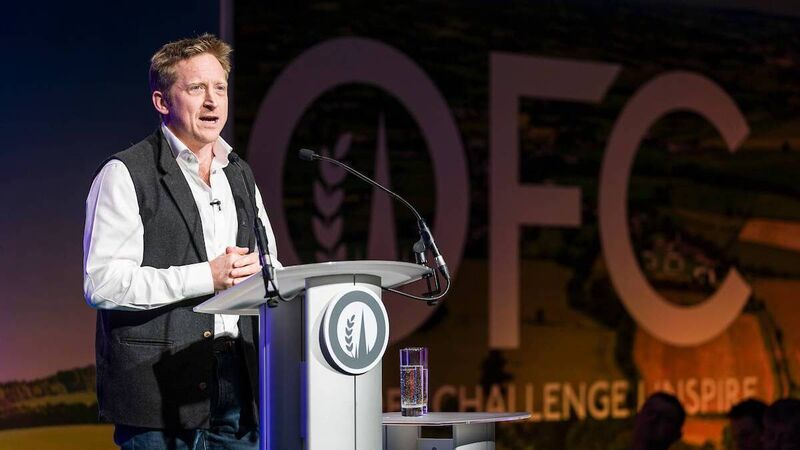
British adventurer Olly Hicks said that success in his missions boils down to a trifecta: 30% rower, 30% weather, and 30% luck. He declined to account for the final 10%, but I like to think it’s a stroke of madness — the same stroke that perhaps led him to study agriculture at college. Picture: Oxford Farming Conference

It was nearing the end of the Oxford Farming Conference when I heard ocean-rowing adventurer Olly Hicks explain that success in his missions boils down to a trifecta: 30% rower, 30% weather, and 30% luck. He declined to account for the final 10%, but I like to think it’s a stroke of madness — the same stroke that perhaps led him to study agriculture at college.

Farmers are used to navigating storms of a different kind whether it be policy, weather, disease, volatile markets — the equation feels similarly precarious.


Yet, unlike Hicks, I’ve yet to meet any with billionaire backers waiting in the wings for rescue missions. When calamity strikes, they’re left to fend for themselves, battling weather, market forces, and the widening disconnect between those who produce food and those who consume it.

Take, for instance, Dominic Watters’ description of the urban estate where he lives as a “food desert in the garden of England” where locals face a “limited menu of chicken nuggets and frozen chips”. 

Olly Hicks recounted how he spent 34 days of his 96-day solo mission sailing between Tasmania and New Zealand going backwards. Picture: Chris Radburn — WPA Pool/Getty Images

Watters wants to foster better direct connections between urban residents and food producers, believing this could open up routes to better, fresher, and more nutritious foods for those around him.

“We always talk about the positives of food security, but as we experience it, it’s food insecurity. That isn’t really spoken about,” he told delegates.

For him, equality in the food chain is about sharing experiences from all perspectives.

“I’m not suggesting my knowledge is more important than theirs — but we are all equal, and that approach will go some way,” he said.

It’s a perspective rarely voiced in agri-food circles. Discussions around food security are typically one-directional, seldom involving deprived urban corners of the UK or Ireland, and even less often suggesting that urbanites want closer ties to farming.

But as fellow speaker Nick Saltmarsh, co-founder of Hodmedod Ltd — a company championing British-grown pulses, grains, and seeds — highlighted, better connections between farmers and consumers benefit everyone along the chain.

He explained:

Even where that direct physical connection is impossible, just providing more communication, more clarity about the provenance of food — what we are eating, who is growing it, where it is produced — is a big step towards connecting the people who eat food and the people who produce it. 

The power of these connections lies not just in information-sharing but in fostering empathy and mutual respect.

There are many approaches, but as one advocate put it, the key is to “just start.” Start the conversations. Start bridging the gap.

Moving forward together 

The common theme on the final day was that urban dwellers want a food system where they don’t just consume but engage with the processes behind where their food comes from — where transparency about food’s provenance becomes the norm, and it’s hard to see how that doesn’t benefit local producers too.

In one story, Hicks recounted how he spent 34 days of his 96-day solo mission sailing between Tasmania and New Zealand going backwards. The endeavour, an attempt to be the first person to sail solo around the world, looked destined to fail before it had truly begun, but just as he felt bound for failure, the tide shifted, and he began to make progress.

Ultimately, Hicks did not complete his circumnavigation but went on to achieve a different win, becoming the first person to row from Tasmania to New Zealand.

Similarly, farmers often find themselves struggling against the tide for weeks or months, whether in public relations or broader challenges. But creating meaningful connections between producers and consumers is not just an exercise in goodwill; it’s essential to gaining public support and securing the sustainability of our food systems.

More in this section

Farming

Newsletter

Keep up-to-date with all the latest developments in Farming with our weekly newsletter.

Cookie Policy Privacy Policy Brand Safety FAQ Help Contact Us Terms and Conditions

© Examiner Echo Group Limited