Maize silage: Getting the best possible feed ensiled properly
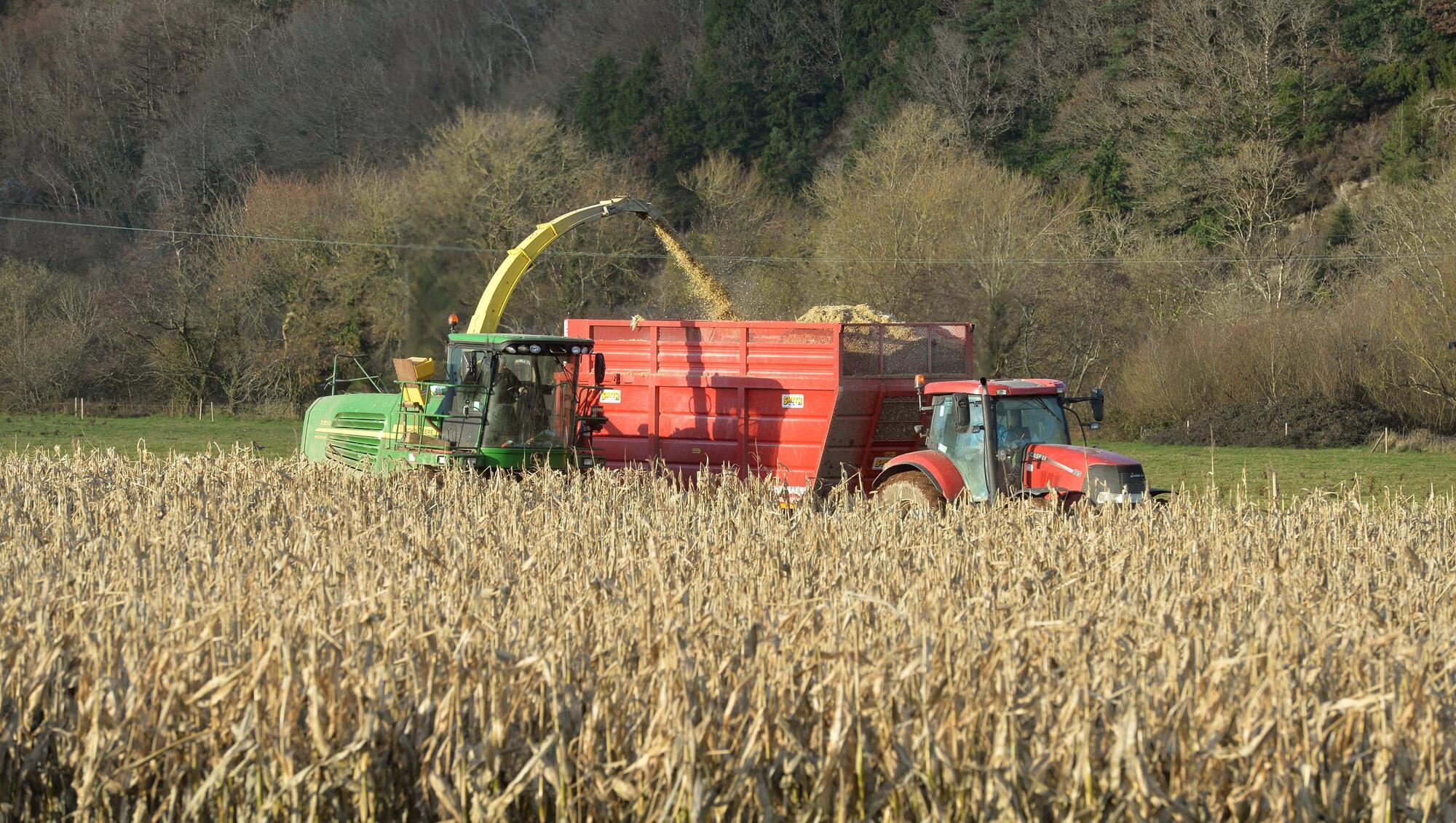
Maize silage harvesting in progress off Carrigrohane Road in Cork. Picture: Denis Minihane.
For many dairy and beef producers, the final piece of the winter/spring forage jigsaw will be put in place once their maize silage is safely in the pit. I mentioned in a recent article that the 2024 maize silage harvest would be a number of weeks later than last year and now as we head into the middle of October the harvesters have just started to move into the more advanced crops.
In the last week some early maturing crops have been ensiled and some other crops 90/95% fit to cut were taken out of heavier ground types before they get too wet.
As is the case every autumn I regularly get asked to assess the ripeness of maize crops for my nutrition customers. It is a combination of crops they grow themselves or crops they are buying in from specialised growers.
Crops this year are generally quite good with potential for healthy yields of dry matter and starch. Anyone who feeds it knows that good quality maize silage is an excellent feed to enhance performance in beef and dairy diets.
As I mentioned a few weeks ago, patience is now needed at this time of year when making the decision to harvest maize. Crops continue to be quite green and will need a little more time to die back before being fit. Cobs are filling with every day that passes.
The whole crop dry matter when assessing its readiness for cutting is the key determinant when deciding when to harvest. If the crop is hit by frost, then it generally won't mature anymore and should be cut within seven days post-frost.
Obviously, if you go to the trouble of growing or buying maize silage, then it is important that it is harvested as close to being fully ripe as is possible. However, this year as we get deep into October, you must also consider how much more your crop can mature and what conditions will be like for harvesting in each field if the weather conditions deteriorate any further.
If the nature of the fields are to get heavy in the autumn, then harvesting slightly before being 100% fit is advisable. Harvesting immature maize can potentially result in some run off of effluent from the pit and most of that effluent will be valuable starch.
If crops are harvested very immature, then it may necessitate the addition of either beet pulp or soya hulls when ensiling. Monitor your crop and land conditions and seek help if you are unsure about when to cut and if an absorbent material would help you to retain nutrients and help with pit stability.
Wastage and spoilage at feed-out can be a huge financial cost with maize silage. Good management when filling the maize pit is critical to avoid these issues.
Preparing the pit pre-harvest is important. A clean surface and walls are a good start and lining the walls with polythene will be a big help in eliminating oxygen from the pit during the fermentation process.
Maize is high in energy and if it is not consolidated and managed well in the pit, will result in moulds and spoilage on the shoulders and feed face. An inoculant to aid preservation and prevent heating at feed out should be considered before any harvest decision is made, it will help to retain optimum levels of the nutrients that you have grown or purchased.
Maize silage, just like grass silage must be ensiled by packing manageable layers of material at a time. Ideally a few inches at a time should be consolidated by packing well with plenty of weight. Many of my nutrition customers will, once the pit has been fully rolled, begin the covering process by applying salt to the clamp surface before putting a primary cover of cling seal as an oxygen barrier and continue the process with two sheets of polythene.
After this, many now use heavy mesh/canvas covers specifically designed to distribute weight evenly across the whole pit. This reduces the requirement for a full cover of tyres and speeds up both covering and uncovering of the maize.