Ragwort warning after Limerick herd suffers multiple losses
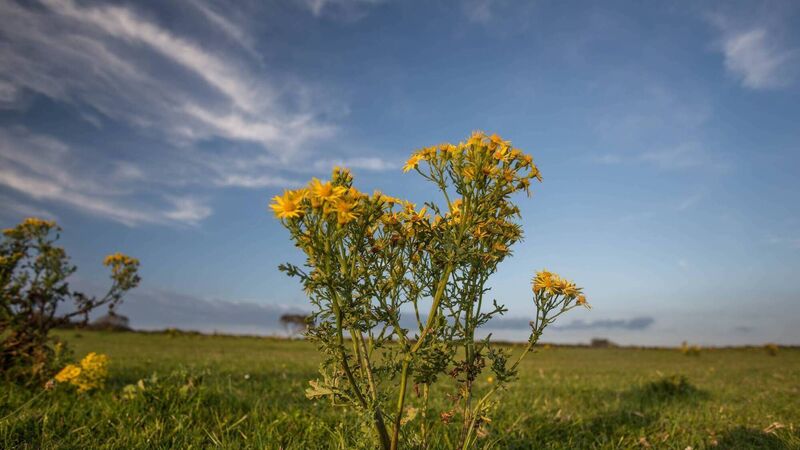
Most fatalities involving ragwort occur where it is finely chopped in hay or silage.
Noxious weeds continue to pose a threat to livestock, with the case last year of a cattle herd with multiple losses in 2022-born cattle being reported by the Limerick Regional Veterinary Laboratory, where the herdowner submitted a number of animals for necropsy in May 2023.
The affected cattle had been housed in December 2022 and were turned out again the following mid-March.
All of the affected animals were fed silage, which had been baled from the same pastures for the last number of years.
During a farm visit, ragwort rosettes (the low-growing, non-flowering form of the plant in its first growing year) were identified in many fields with varying degrees of pasture cover.
The paddock for cows and calves had the heaviest contamination, and the silage fields also contained a significant amount of ragwort rosettes.
The fields were searched for other poisonous plants, but none were found.
The yearlings had not thrived over the previous winter compared to other years.
Two bullocks and a heifer were necropsied, and a number of findings were common to all three animals. The livers had a pale, firm texture, and were difficult to cut, strongly suggestive of cirrhosis. There was marked oedema in the mucosa of the rumen, intestines, and, most noticeably, in the abomasum of all animals. One animal also displayed pulmonary congestion and oedema.
Testing for lead poisoning proved negative.
Histopathology of all three revealed findings consistent with pyrrolizidine alkaloids toxicity. These toxins are produced by more than 6,000 plant species, as a deterrent to consumption by herbivores.
Ragwort (Jacobaea vulgaris) is an example of such a plant, and the most common source of these alkaloids in an Irish context.
The Limerick Regional Veterinary Laboratory made another ragwort poisoning diagnosis in July 2023, when a 24-year-old pony was submitted. At necropsy, once again, the findings were consistent with pyrrolizidine alkaloids toxicity (or aflatoxin toxicity).
Ragwort (also known as ragweed or buachalán) was present on the submitting farm.
According to Teagasc, livestock don’t normally eat ragwort in pastures unless the grass availability for grazing is extremely restricted. An animal must consume up to 12% of its body weight of the weed to cause severe problems. Ragwort becomes more palatable to animals when cut or sprayed, as this releases sugars in the plant.
At smaller infestation levels, pulling of ragwort can be a successful control option. For larger infestation numbers, sprays such as MCPA, 2, 4-D (D50) and Forefront provide good control, but measures must be taken to avoid stock eating any dying or dead ragwort present.
The key points in chemical ragwort control include:
- The best time to spray ragwort is at the rosette stage.
- The larger the ragwort, the longer it takes to rot down and not be cut in silage or grazed.
- Avoid spraying after the plant becomes stemmy.
- Ensure the plant is actively growing at the time of spraying.
- Spray in the spring (February to mid-March) or late autumn (September to mid-November).
- Ensure that the plant is fully decayed into the soil before grazing again (which usually takes five or six weeks).