Hazell Mullins: The SI that could change the future of Veterinary
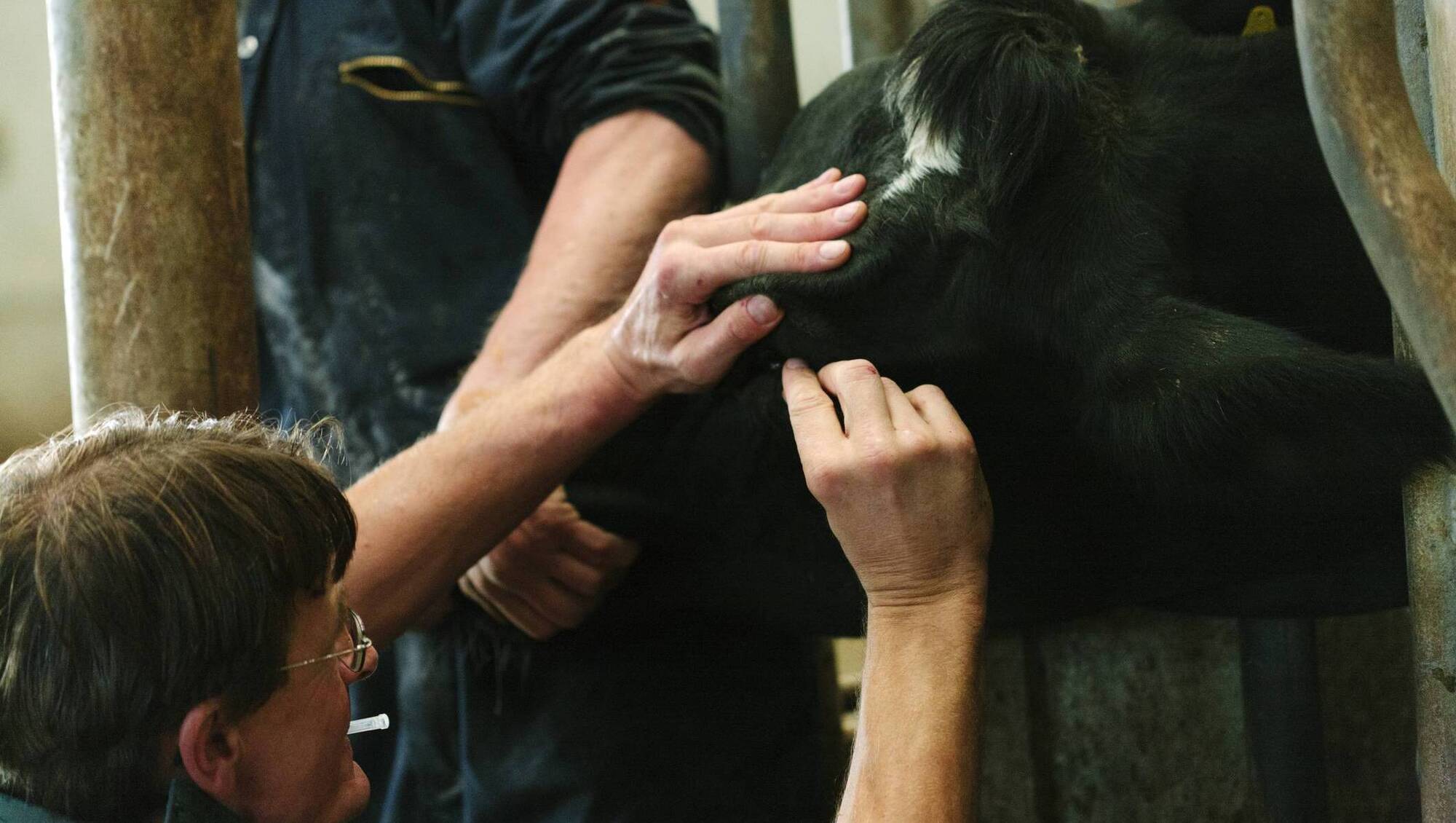
The local vet that calls to do the TB test or attends to the cow calving in the middle of the night has a Client-Practice-Patient relationship, and your animals are under their care as stated in the Veterinary Code of Conduct written by the Veterinary Council of Ireland.
The last week has been a rollercoaster as President of Veterinary Ireland. I usually watch political matters from the sidelines, but this week, I was on the front line representing vets across the industry on the proposed Statutory Instrument (SI).
What is it all about? To be honest, it is far from straightforward, but I will try to explain the implications as best I can.

As you know, I am both a dairy farmer and a vet; I understand how the status quo appears to be at risk when it comes to the supply of anti-parasitics in Ireland.
The EU has recognised that if we continue to use these medicines the way we have become accustomed to, that resistance levels will continue to increase to a level that would impact animal welfare and our ability to farm successfully in Ireland.
Other EU countries have enforced this law since 2007, when Ireland received a derogation as there was no scientific evidence of resistance; this situation has changed dramatically, with numerous published studies showing Ireland is no different to the rest of the world on this front.Â
The latest EU regulation says that Ireland must comply with the new classification of Anti-parasitics as Prescription Only Medicines (POM). However, the route of supply has not yet definitively been decided upon, and it is now in the hands of this SI.
The local vet that calls to do the TB test or attends to the cow calving in the middle of the night has a Client-Practice-Patient relationship, and your animals are under their care as stated in the Veterinary Code of Conduct written by the Veterinary Council of Ireland.
The vet that could be sent the information to write your script for the anti-parasitic may never have seen your animals, know nothing about your farm and will only have to supply an out-of-hours service for an adverse reaction to the medicine prescribed.
This creates a two-tier prescribing culture in Ireland: one vet will have no obligation to “put on the wellies” out of hours, and others will be on their second pair by Christmas.Â
The vet that knows your farming system and has access to your diagnostic tests will be best placed to make a prescribing decision for parasites for your farm. Where a farmer takes that prescription is completely up to themselves; we want to allow competition in the market but not at the cost of animal health and welfare.
Animal Health’s Ireland’s Parasite TASAH was a huge success over the last two years in vet practices, and the results spoke for themselves.Â
This just shows that dosing is taking place when it is not necessary required on farms. I've witnessed it first-hand at home with my Dad; cattle in the crush in summer equals dosing.Â
In my Dad’s case, “Habit is like an iron cloth”, for years the advice was to dose at set intervals on the calendar. Increasing knowledge through research has shown that we need to move to targeted dosing to stop resistance from building on-farm.Â
The 2022 TASAH review also stated that nearly 30% of sheep farmers reported that the doses were not fully effective and resistance was evident on their farms.
This year, for instance, the calves were starting to scour about four weeks post-turnout; you wouldn’t be crazy to presume stomach worms were to blame when, in fact, it was coccidiosis that was causing havoc.
Farmers and vets have worked incredibly hard over the past few years to reduce the amount of antibiotic usage on farm, with an overall reduction of 22% since 2022, this is phenomenal.Â
This all feeds into the 'One Health' approach, which combines human and veterinary medicine to protect public health. Anti-parasitic resistance works first hard with increasing antimicrobial usage on farms. If parasites survive in the animal, secondary infections are inevitable, which will drive up antimicrobial usage on farms.
The other aspect of this proposed SI is to allow the sale of Prescription-only medicines (Exempt), i.e. (POM)(e), over the counter in licensed merchants.
These vaccines include IBR, RSV/PI3, and Salmonella vaccines. If these vaccines are sold through a non-veterinary or pharmacy route, Ireland will be the sole outlier in the EU block.
Again, public health is at risk due to the improper use of vaccines on farms; these vaccines are part of herd health plans formulated by vets using diagnostics on farms.Â
The viability of farm vet practice will be seriously threatened if this SI becomes a reality, as job losses will follow in an industry that is already struggling to recruit and retain vets.Â
Up to 23% of the 600 farm vets in Ireland may lose their jobs in practice as a result of the vaccine inclusion in the SI. Animal welfare will be impacted because the out-of-hours rota will suffer immensely as a knock-on effect of this.
I was thinking about the potential implications of this SI whilst en route to a down cow at 6am last week. I was that cow’s lifeline that morning; the call was on the far side of the practice, which was a 45-minute drive from me, adding getting dressed and hopping into the car, making it over 50 minutes away.Â
In my head, I was panicking while also telling myself that I needed to get to the farm safely or I'd be of no use to anyone.Â
When you divide the total livestock number of 11 millions by the 600 vets we currently have in farm practice that gives a frightening figure of approximately 18000 animals per vet, this will increase with the loss of jobs in the sector.
It is crucial that all aspects of this SI should be thoroughly considered for the sake of upholding animal welfare, animal and public health and ensuring that the future of farm veterinary is safe for generations to come.Â
I thank the Minister for his time last week and for listening to our concerns.