Seeds of success: Breeding the grasses we’ll be grazing in 2050
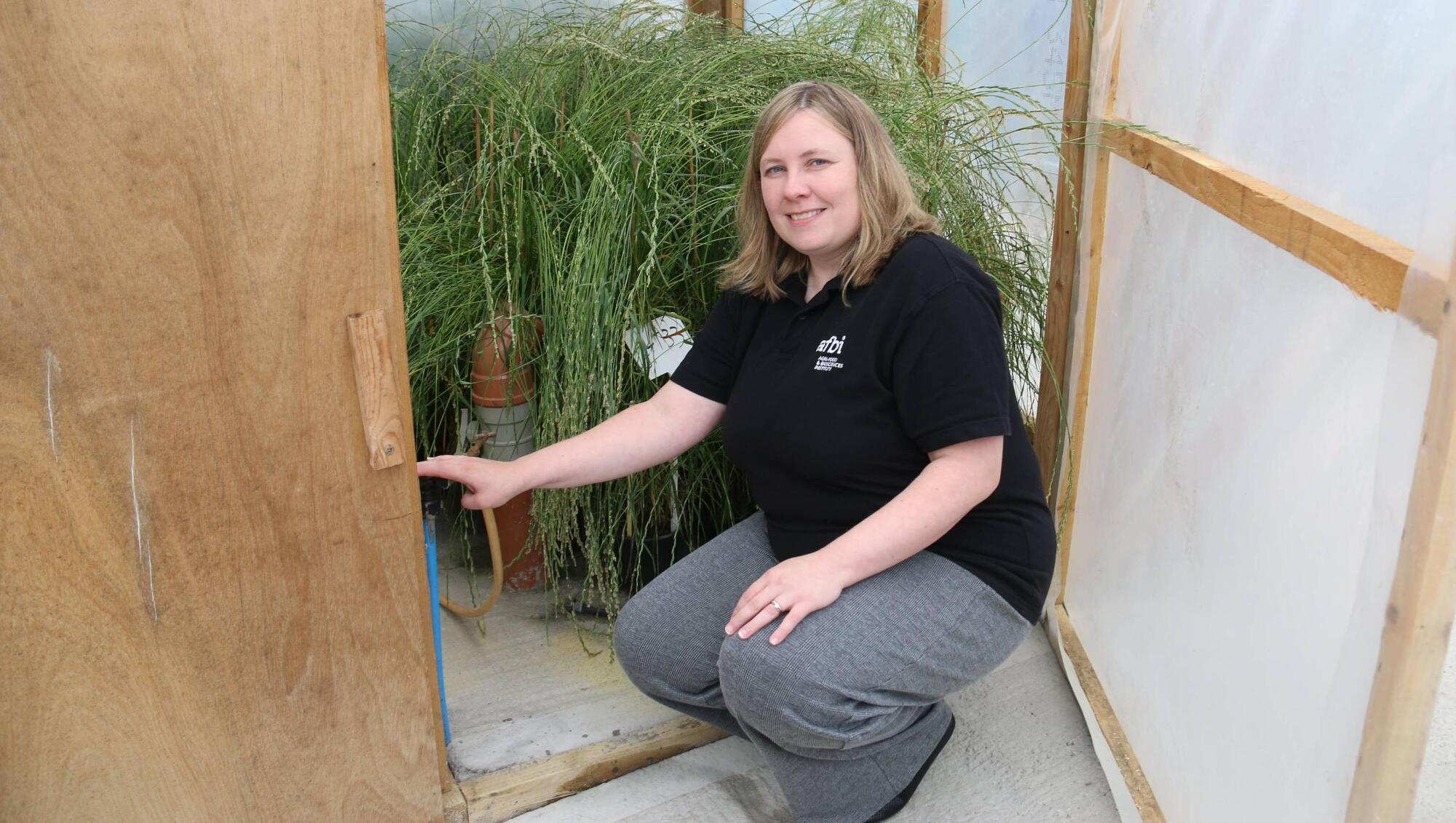
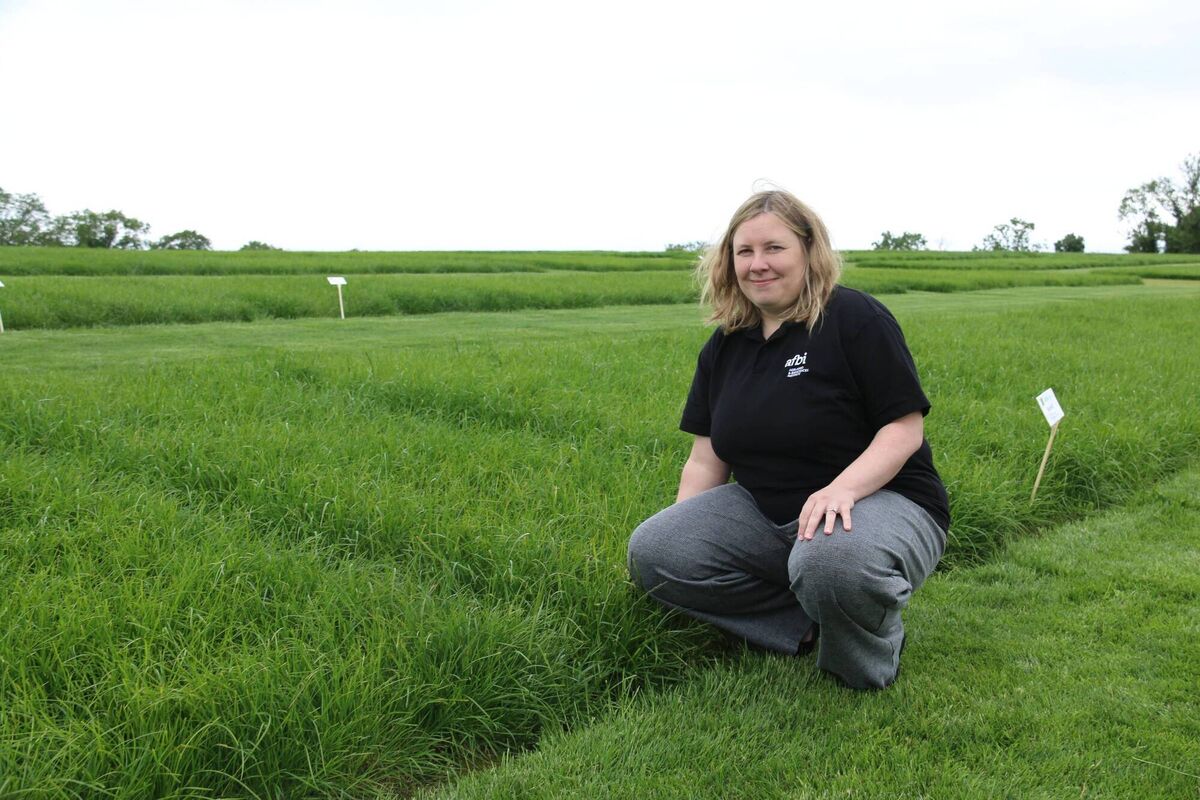
Dr Gillian Young shows the half-sib breeding stage of the programme.
It’s one of the world’s most important forage crops, but with changing climates, restrictions on chemical inputs and a pressure to do more with less, could a new wave of perennial ryegrass varieties offer solutions to make our farms 2050-ready?
The Agri Food and Biosciences Institute’s extensive grass breeding programme includes over 10 hectares of grass trials set out in 3,000 plots.
Northern Ireland has a long history of grass-breeding excellence, and in the 1940s, the region was one of the world’s biggest producers of ryegrass seed, with exports totalling over 30,000 tonnes a year.
It’s also been markedly successful, with researchers at the plant breeding station in Loughgall, Co Armagh, today responsible for the breeding of around a third of Ireland’s recommended list.
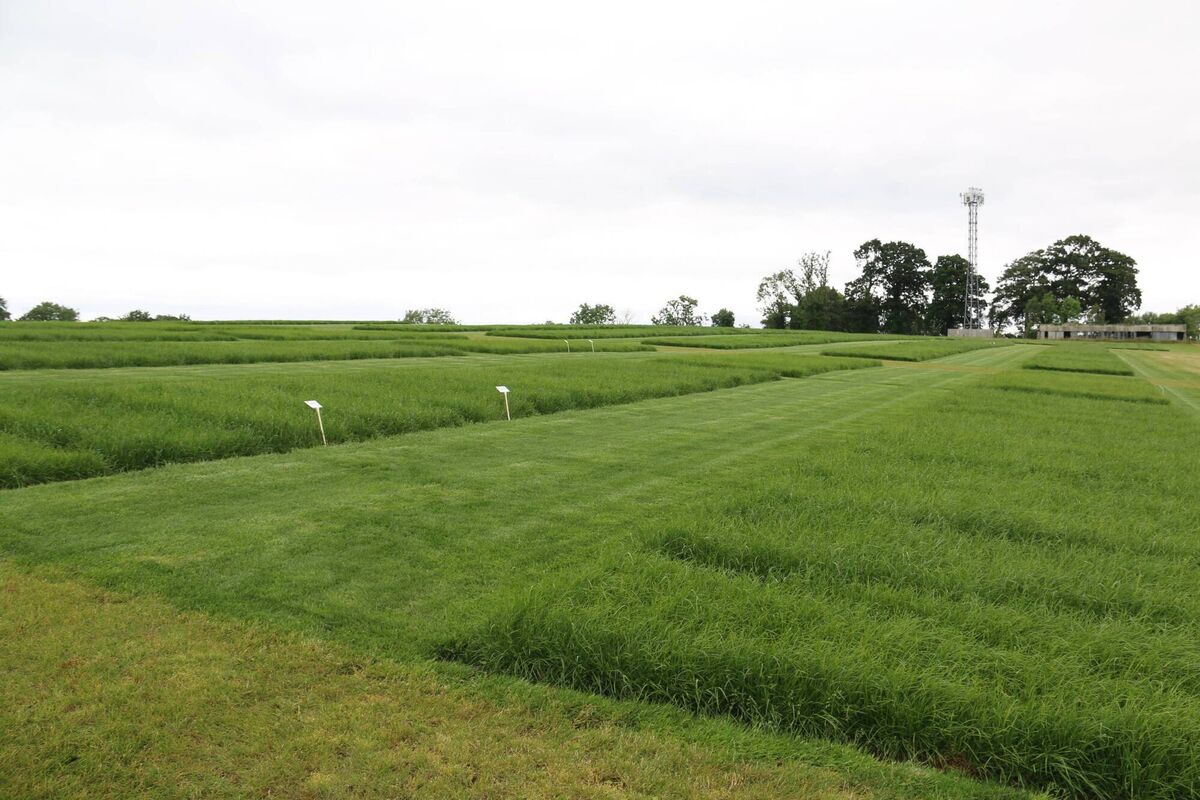
It’s particularly fitting perhaps, that the estate the site is nestled into is also home to the striking Yew Tree Walk, which is said to have inspired the famous Jonathan Swift quote: “Whoever could make two ears of corn or two blades of grass to grow upon a spot of ground where only one grew before, would deserve better of mankind, and do more essential service to his country than the whole race of politicians put together.”
The varieties produced here are also tested at Barenbrug sites in Aberdeen, Scotland; Evesham in England, and Clonakilty, where the first trials of around 150 different varieties were established in autumn 2017.
The longer growing season and mild spring and autumn in Clonakilty allows for better testing of shoulder growth potential of varieties, so the sites are managed in tandem by AFBI staff.
Barenbrug trial site in Clonakilty with around 200 varieties trialled across 600 plots. Each trial includes three replicates. Breed mostly for yield and digestibility.
Galgorm, one of the team’s star intermediate diploid varieties, entered the English recommended list in 2018, but it has just topped Ireland’s Pasture Profit Index, ranking highest for grazing.
The Pasture Profit Index (PPI) expresses the relative differences between varieties for agronomic traits such as spring, summer and autumn herbage yield, herbage quality, silage yield and grazing utilisation.
Data is collected by the Department of Agriculture, Food and the Marine (DAFM) and Teagasc with the total PPI value a sum of its performance in all traits and indicates the additional net profit that can be expected by sowing that variety compared to the average performing sward in Ireland.
“We are really pleased. It is a really high-yielding, highly digestible variety with high yields across the entire grazing season,” Dr Gillian Young, AFBI’s head of grass breeding, said.
“The PPI has shown that you can expect an additional €20/ha in productivity compared to other varieties that you can put into your sward.”
But it’s a long way from recommended lists back to the first stages of a new plant variety. Dr Young explained the process takes at least 15 years to complete.
“We carry out all of our grass breeding programmes indoors because we have such a temperate climate that has a lot of moisture, which can be quite poor for seed production,” she said.
“Grass breeding takes a long time. It takes about 15 years in total to get a grass variety all the way from the beginning point right through to market.
“The first year, we will cross plants together – that’s called the pair cross. And for that to be successful, we have to identify the traits that we want and cross those plants together,” she said.
“During the very first year in the programme, I have to decide what I want. I have to look into the future - 15, 20 years from now, all the way to 2050, to think about what farmers will need.
"I need to identify those traits, but they aren’t too dissimilar to what we have been looking for in the past. In terms of increasing nutrient efficiency, we want to produce as much productivity as we can under reduced nutrients because, moving forward, the amount of fertiliser that we will be able to apply will be lower.
“We are also looking at traits such as drought resistance and resistance to other diseases, along with the change in climate. Compatibility with legumes and mixed species is also becoming an important consideration because that’s where more of the nitrogen will be coming from.
“Yield will still be important because we want to achieve more for less; and digestibility is really important, not only because it increases productivity, but also because it has been known to reduce methane emissions from the animal.” Recent peer-reviewed research by Dr Young shows that every 1% increase in D-Value reduces the methane emissions by 2% from the animal.
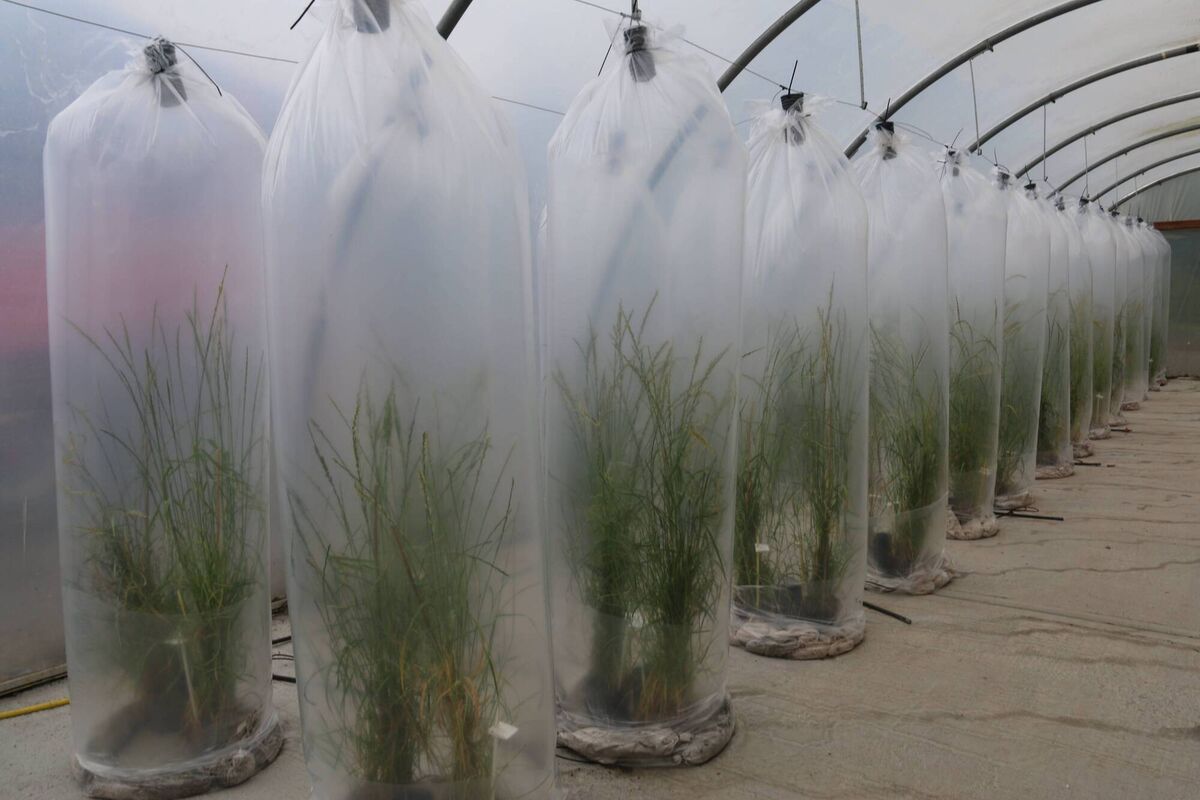
There is no carefully plucking seeds with tweezers, as one might imagine. To achieve the cross, plants in the lab are sealed in large plastic chambers connected to a ventilation system. They are even watered from below to remove the chance of any cross-contamination.
“In the second year, we allow the progeny from that first cross to cross again, which produces a half-sib – a brother or sister,” she said, explaining that researchers must ensure that only one door is open at a time for each of the batches of plants.
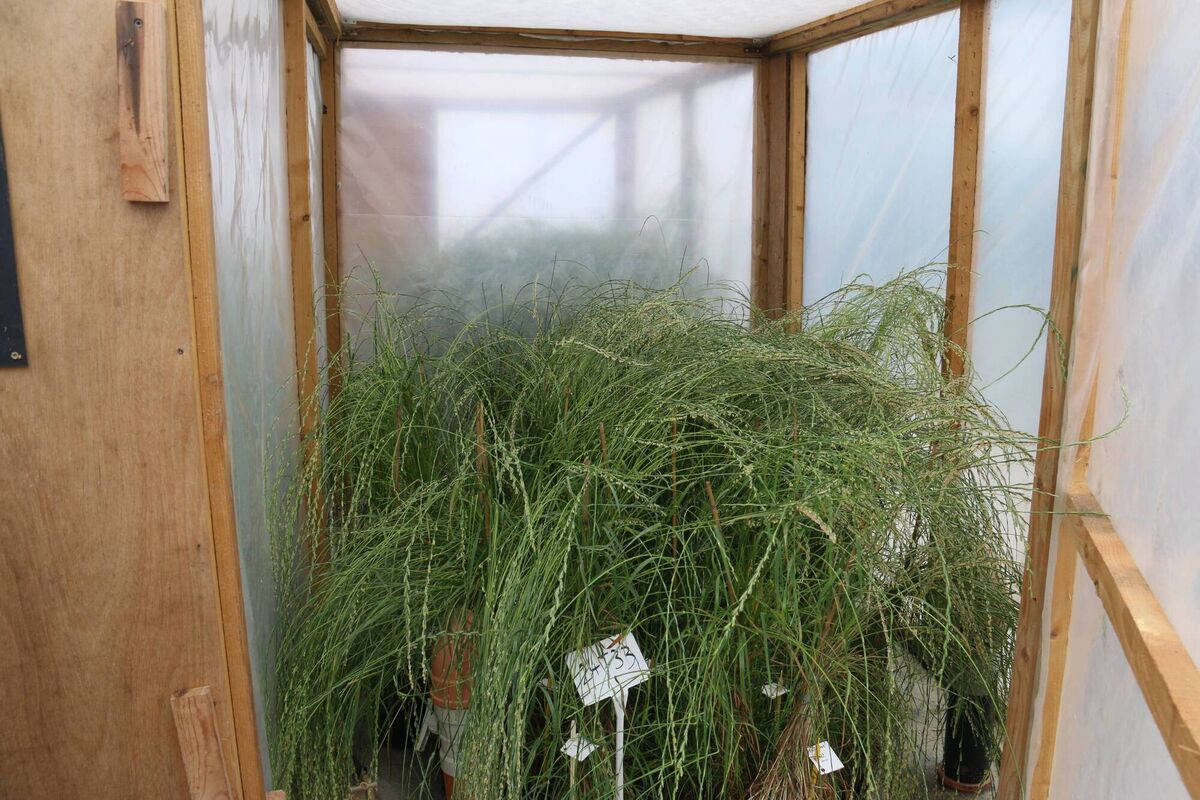
“From this stage, we allow them to cross again, and we keep allowing them to cross again until they reach the half-sib stage. That means they are half brothers and sisters of each other.
“At that stage, we will evaluate them on an individual plant basis, looking for the very, very best.
"That allows us to really look at the genetics underneath the crosses and also multiply up the seed that we need.”
In year three, after the half-sibs stage, 1,000 plants are sowed outdoors for their first evaluation in individual plots.
“At the individual stage, we will be looking at the plants and trying to pick the very best ones,” she said.
“We will walk those plants, which means we will assess them and select them over a two-year period – that will be year four.
“For example, we don’t want reheading as that reduces digestibility,” she explains. “Vigour and disease are important to look out for as well.
“We will allow the top 10% to cross and then we will harvest the seed and sow them out into performance trials, that will allow us to look for yield, which is one of the important traits we breed for. We follow those for two years, which takes us to year six.
“Over that time, we’ll be looking for all the parameters you might expect, such as yield, digestibility, persistence, reheading, and disease resistance. That’s carried out not just here [in Co Armagh], but also in Clonakilty and Evesham [England].”
At this stage, that information is gathered together and brought to the site's commercial partner Barenbrug, which makes decisions on which varieties should be taken forward based on farmers’ needs.
“That brings us up to year eight or nine, depending on the different pathways through the programme,” Dr Young added.
“After that, it’s still not done – it then goes through national list testing, which takes five years.
After that, there is a requirement for seed multiplication to get enough seed for the market, and that takes us up to around 15 years.”
As well as developing varieties for different markets and climatic zones, there are also subtle differences in how the recommended lists for each region are generated.
In England, all varieties are tested for digestibility twice in a season, Dr Young explains. Whereas, in the Republic of Ireland, varieties trialled for use under grazing, are tested for digestibility four times over a four-month period to replicate multiple grazing rotations.
“Every year, we produce varieties that are better than the ones that have gone before. They are tested against their competitors in the recommended list trials across the UK and Ireland,” she explained.
“There’s a huge amount of work, both on a personal level, but also on an economic level to get to that point for every variety. It probably takes around £1m to produce because we are going down from so many thousands of plants at the beginning right the way to one variety at the end… and with inflation, it’s likely the costs will be much higher now.”
Loughgall is known for its high-yielding capability. Under high nitrogen application, the researchers have been able to produce up to 20t of dry matter per hectare. Almost double the regional average of around 12t/ha.
Dr Young explained the key targets of her grass-breeding programme are to look at nutrient efficiency and drought and persistence, all through the roots.
“Over the last 100 years, grass breeding has all very much been focused above the ground, but we have projects now that are looking to go under the ground and look at traits such as root depth, root depth and volume and also nitrogen cycling within the roots and soil, in order to see how that can be improved,” Dr Young said.
“Perennial ryegrass has a fairly shallow rooting system compared to other grass species, so if you can improve that, that should improve your nutrient efficiency as well as your resilience to drought.
“People might think to themselves, 'We are going to have drought all over the world, so why do we need to think about it here?'. But the drought here will be very different from that on the continent, where they will be looking for varieties that will survive because their drought will be severe; we are looking at shorter periods of drought, where we will need the grass to continue to be growing throughout - that’s why we are focusing on those parameters here, and we have some projects we are working on in that space.”
Targeting more than one trait at once is very difficult in grass breeding, but Dr Young is confident it can be achieved.
“It has been done before. For example, we would target yield and digestibility at once. But I think it is ideal if you can find a physical trait that you are looking for, for example, root depth. And that is what you target the most.
“If you can find there is a strong genetic basis for that trait, it is useful if it can solve multiple issues at once.”
And as for yields, will our swards be hitting the impressive 20t/ha DM managed by the researchers by 2050? It’s certainly possible, but not so simple.
“We have been increasing yields under grazing and silage by 0.5% per year, which means that you are getting a 5% bump for every decade,” she said.
“As a research community, we are looking at ways to improve that – using genomic tools to speed up that process, and potentially using tools like gene-editing.
“That 20t/ha is done under high nitrogen application, and I don’t think that is the future. I think we need to start breeding ryegrasses which are compatible with legumes to maintain our yields, and I think if we are able to do that and still retain percentage increases on a year-to-year basis, that would be a good outcome given the slope off in fertilisers that are to come.
“I look to replace nitrogen application - not reduce it, but to replace the synthetic fertiliser application with a well-managed perennial ryegrass/white clover sward - so that we can get the nitrogen we need at hopefully a similar level to what the top end of the derogation would be now. There has been research that has shown that it is possible, for example, in the Clover 150 study in the Republic of Ireland.”