Groundbreaking soil sensor to help reduce fertiliser use
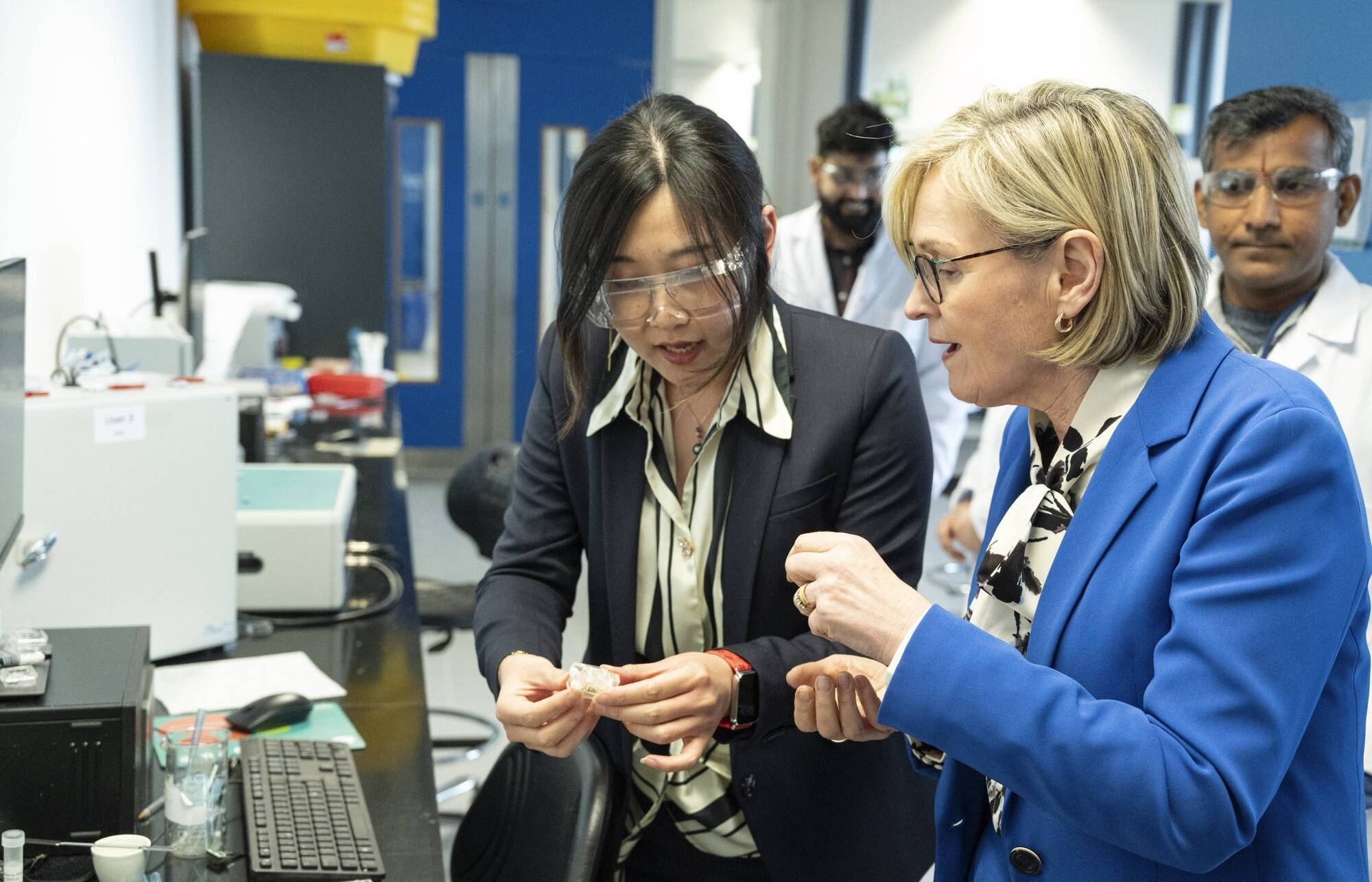
Mairead McGuinness European Commissioner Financial Stability, Financial Services and the Capital Markets Union Visit To Tyndall Picture: Gerard McCarthy
Researchers at Tyndall National Institute, based at University Cork (UCC), have developed a groundbreaking soil sensor that will allow farmers to reduce their use of chemical fertilisers.
The sensor, which is buried in the soil and uses a range of techniques, including electrochemical analysis and laser technology, to monitor nutrient levels in real-time, has the potential to deliver significant cost savings as well as a reduction in the harmful environmental impacts caused by nutrient leaching and run-off, which has been associated with nitrogen and phosphorous.
Tyndall’s Electronic Smart System (ESS) also offers the potential to track environmental conditions such as temperature, humidity, and emissions from fertilised soils - data which could be used to support better crop growth rates and more efficient agricultural production while minimising the environmental impacts of production.
Traditional methods of soil monitoring involve taking physical samples to analyse how the soil changes over time and comparing the results to determine what changes are required to improve the soil. However, this method is costly and can be outdated by the time the data is used.
The ESS sensor designed by Tyndall connects to the Internet of Things and uses cloud technology to collect and analyse the data, generating a report for the farmer.
This project, which is funded by the VistaMilk Science Foundation Ireland (SFI) Research Centre, aligns with the EU's Green Deal objectives and the EU’s Farm-to-Fork strategy, which aims to reduce nutrient losses by 50% and address air, soil, and water pollution. By monitoring harmful emissions and ensuring efficient fertiliser use, the development of this sensor contributes to a healthier, more sustainable food supply chain.
Professor Alan O’Riordan, a senior research fellow specialising in nanotechnology at Tyndall, said: “This a very exciting emerging technology that does not exist elsewhere in the world. We are now looking at ways to translate this tech into the hands of farmers through licensing or commercialisation.”
Tyndall is a leading European deep-tech research centre in integrated IT devices, circuits and systems and a research flagship of University College Cork. The institute is Ireland’s largest research and technology organisation, specialising in both electronics and photonics and works with industry and academia to transform research into products in its core market areas of electronics, communications, energy, health, agri-food and the environment.