How many local election candidates in Munster are farmers?

Farmers will take to the polls on Friday, June 7, and with them they will bring their concerns around recent policy changes, especially environmental regulation, along with the costs of running their businesses.
More than 8% of candidates in this year’s local elections in Munster are listed as working in farming or agriculture.
The public takes to the polls on Friday, June 7, with farmers bringing their concerns about recent policy changes, especially environmental regulation, along with the costs of running their businesses.
Some farmers have taken it a step further in having their voices heard and are seeking to be elected to county councils right across Ireland.
While it is certain many others running have strong connections to farming, agriculture and rural life, 42 of 497 local election candidates across Munster have their occupation listed as farmer, farm worker, agri-contractor, mart manager, and agriculture officer in their county's notice of poll. This makes up about 8%.
Around 11% of the 122 candidates running for Cork County Council have listed farm-related work as their occupation.
For farmers voting in the upcoming elections for Cork County Council, these candidates are spread across 10 electoral areas, with nominees hopeful of securing one of the 55 seats available to them.
The 10 electoral areas in Co Cork are: Bandon-Kinsale (six seats); Bantry-West Cork (four seats); Carrigaline (six seats); Cobh (six seats); Fermoy (six seats); Kanturk (four seats); Macroom (six seats); Midleton (seven seats); Mallow (five seats); Skibbereen-West Cork (five seats).
In Kerry, seven of the 77 candidates running across the county have listed a farming-related role as their occupation, making up about 9% of total candidates.
Thirty three elected members of Kerry County Council represent six local electoral areas.
The number of seats available in each local electoral area are: Listowel (six); Tralee (seven); Kenmare (six); Castleisland (four); Corca Dhuibhne (three); Killarney (seven).
Co Clare has the highest percentage of candidates that are listed as farmers — nine, making up about 15% of the 59 total candidates that will contest.
Waterford City and County Council has 79 total candidates in the running, with 32 seats for the taking across six electoral areas. Only three candidates here have farming listed as their occupation.
In Limerick, four of the 90 candidates for the City and County Council have farming listed, however, a number are connected in some way to farming, as is also the case in other counties.
In Tipperary, of the 70 candidates running, five said they are in farming.
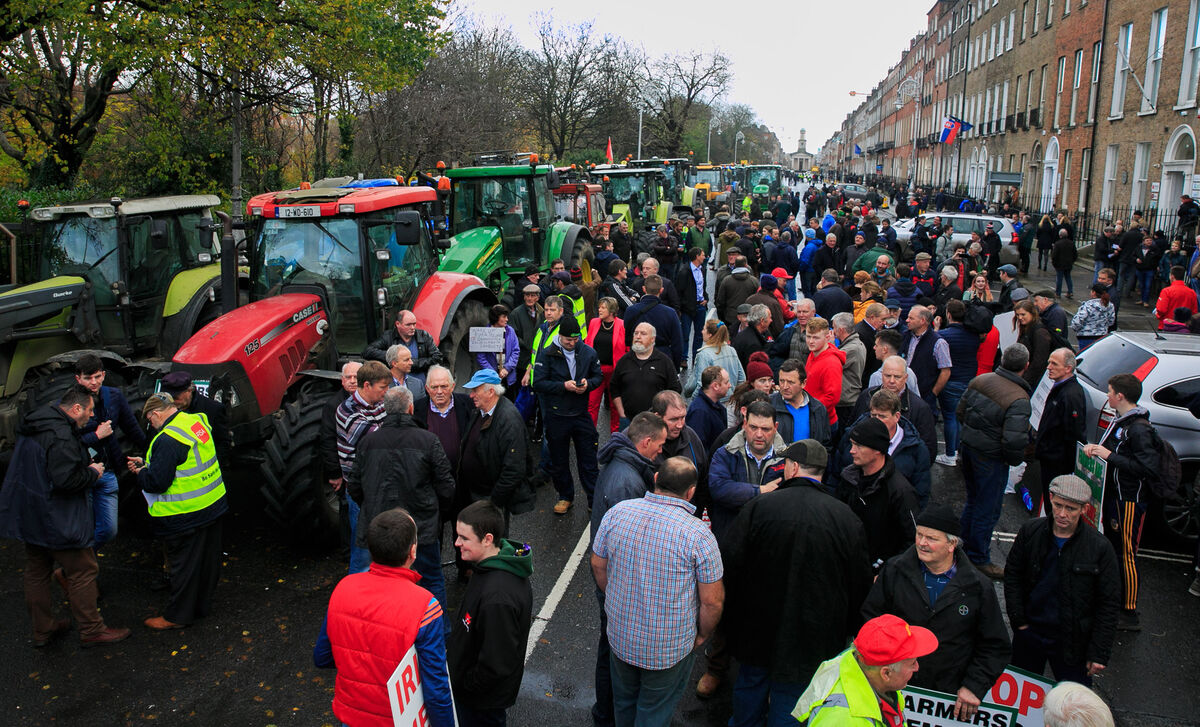
Across the country, farming and rural matters are likely to be key voting issues in many electoral areas.
This year has been marked by a series of protests by farmers in Ireland and across Europe sparked by their frustration with “overregulation” and a number of issues including the rising costs of inputs, late scheme payments, cheaper food imports, and concerns around generational renewal.
Farmers this year targeted county council meetings in particular to protest.
Irish Farmers’ Association president Francie Gorman said the message for politicians was that “enough is enough”.
In late February, Cork farmers raised their concerns with councillors, giving a letter to the county mayor outlining same.
Munster IFA chairman Conor O'Leary said farmers were "tied up in a bureaucratic mess".
"We’ve issues around nitrates, payment system failures, measurement of emissions, and frustration around unworkable regulations," Mr O'Leary said.
A particular focus of the protests this year was the nitrates derogation reduction from 250kg of nitrogen per hectare to 220kg and the impact this is having on Munster farmers, who are having to obtain more land or reduce stock numbers to comply with the new rules.
With councillors up for election, agriculture is a "huge industry in Cork and we need them to stand up for us", Mr O'Leary added.