‘Belgian Blue is to meat, what Holstein is to dairy’
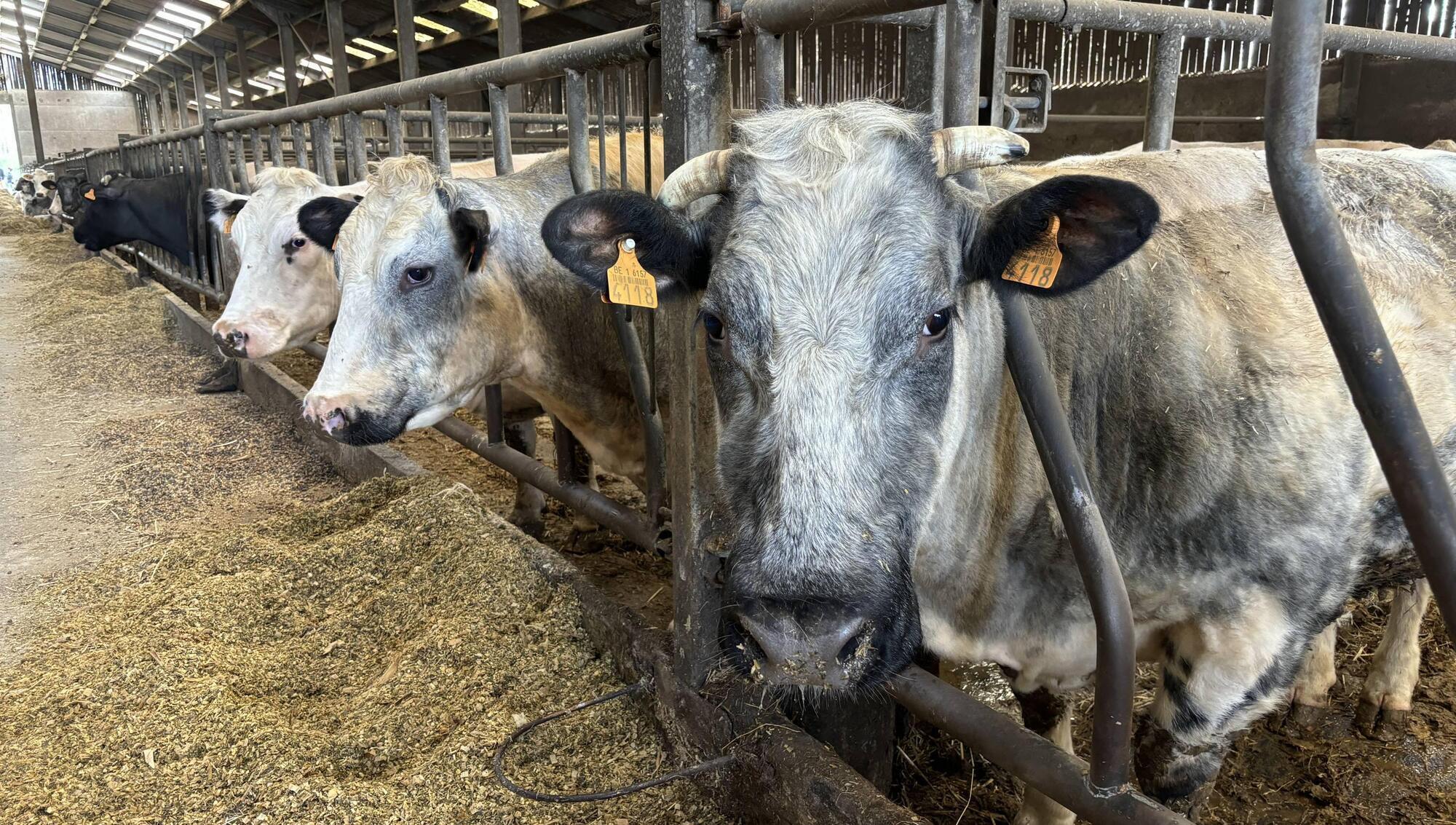
Ferme Laruelle has 480 Belgian Blues, and around 180 calvings a year.
With a carcass yield and meat yield of around 80%, the Belgian Blue is the “ultimate breed” for meat production.
This is according to the Belgians themselves, of course – but its favourable characteristics are appreciated across the world with the breed present in more than 50 countries across all continents.
It is without a doubt the most popular breed in Belgium, and famous for its well-developed muscles, feed efficiency, meat yield, high protein content, and lower cholesterol levels.
The Belgian Blue Herd-Book is a national society acting for the general interests of breeders and entrusted with the selection and the promotion of the breed, set up in 1973.
According to information from the society, until the 19th century, Belgian landscapes were “mostly filled with dairy cattle”, and shortly before the 20th century, “the Shorthorn, a more muscular breed from England, started to attract attention”.
“Some Belgian livestock farmers decided to mate their cattle with this breed to increase meat production: the ‘Race de Moyenne et Haute Belgique’ was born,” the society said.
“In 1973, some farmers started to form a structure around the breed and decided to rename the breed: the Belgian Blue.
“The breed consists of two distinct branches: the meat-oriented Belgian Blue, primarily bred for its meat production, and the dual-purpose Belgian Blue, known in Belgium as the Bleue Mixte, bred for both meat and milk production.”
The society sees the breed as an “incontestable ecological asset”.
The cattle graze for around seven months a year.
For the other months of the year, their typical daily diet is made up of over 70% grass silage in most cases, and products from the farm’s lands such as corn, cereals, and beet pulp.
The society said that Belgian Blues are well-known for their feed efficiency, requiring an average of 4.5kg of feed to gain 1kg of weight.
"This feed efficiency coupled with an important daily weight gain positions it as a high-performance breed in terms of carbon footprint.
“A recent study estimates Belgian Blue emissions at 21kg of CO2 equivalents per kg of meat, compared to other breeds which range between 27.5kg and 18.5kg."
Patrick Meyeres of the Walloon Breeding Association, a farmer association that supervises breeders in the south of Belgium and has about 5,000 members, also explained that in the beginning of the last century, the breed was dual-purpose, that the animals were milked and used for beef production, however, over the years the breed evolved to be more focused on meat production.
The dual-purpose Belgian Blue is "considered today an endangered breed", Mr Meyeres said.
In the Walloon region, there are around 230,000 beef cows, and most of them, upwards of 80%, are Belgian Blue.
"Pure-bred Belgian Blue are mostly present in our country in the Walloon region, in the Flemish Region, we have some pure-bred animals in the north of France, some in the Netherlands, Denmark, England. But Belgian Blue is famous all around the world for crossbreeding."
Simon Noppen, general manager of the Belgian Blue Group, said that it is important for farmers to have the "most efficient animal possible, that eats less than others but produces the most".
When it comes to productivity, "you all know the Holstein dairy cow - we have the same thing in the beef breeds, which is the Belgian Blue", he said.
"We always say the Belgian blue is to the meat what the Holstein is to the dairy; we consider ourselves as the champions for conformation and carcass yield."
He described the Belgian Blue as the "ultimate crossbreed all around the world".
"If you compare it for example with Angus, which is also a very popular beef breed all around the world, Angus reaches a carcass yield around 55%. Here we [Belgian Blue] are already at 70% which is much higher.
"So, we export a lot of Belgian Blue semen all around the world.
"The Belgian Blue is ideal for breeders who want to add value."
Ferme Laruelle in Wallonia is run by Manu Laruelle.
He took over the farm from his parents in 2001, stopped dairy production in 2006, and dedicated the farm to Belgian Blue breeding.
He has 480 Belgian Blues. He has around 180 calvings a year, with the age at first calving being 26 months with each cow calving three or four times.
He sells his meat to four supermarkets within 15km of the farm, and also through 'meat baskets' sold directly at the farm twice a month; in 2015 he "started to wonder where my meat was sold and I decided to regain control over commercialisation".
Mr Laruelle said there are two types of meat appreciated by his customers: the young bull meat, which is "healthier, leaner, more tender", and the cow meat which has been "grazing for three to five years, it has a bit more fat, it is also tastier and redder".
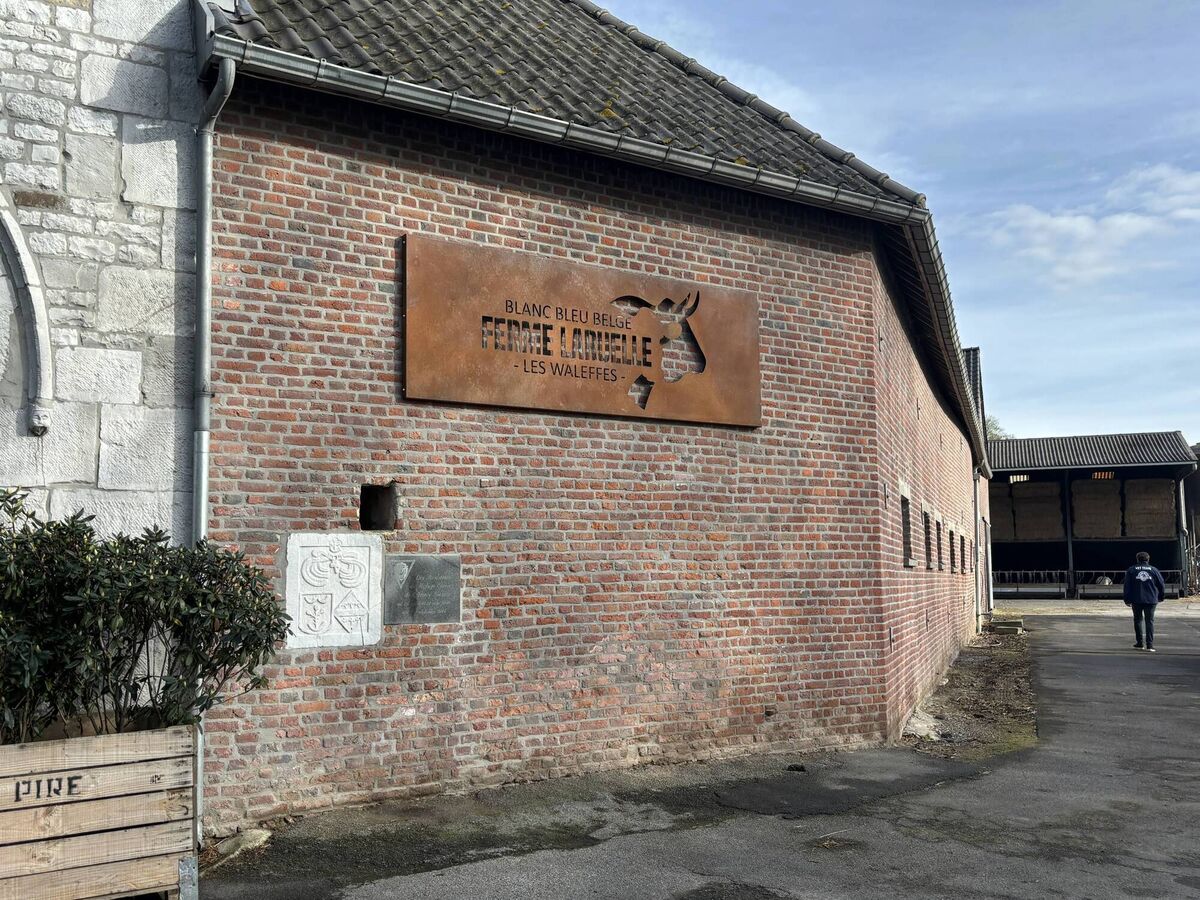
His cows graze for seven and a half months of the year, with 98% of the cattle’s feed produced within a 200km radius.
The farm is over 75% self-sufficient in terms of cattle feed.
Energy for the business is produced by solar panels on the roofs.
The farm was recently visited by agriculture ministers from across Europe, to which he told of his passion for the "docile" local breed.
"Maybe I am a bit too proud, but I think it is the best breed in the world," Mr Laruelle said.
He describes cows as the "best factory in the world" that "eat grass, then produce two very important proteins for humans - milk and meat".
"With the manure coming from the cows, we can feed the crops and the pastures so it’s really a circular economy," Mr Laruelle said.
"Another great priority is the care I take of my animals. As a breeder, it is very important that my cows are happy because it is the way I earn my money.
"The cows are linked to pastures, linked to the soil. The Belgian Blue is also a very sustainable breed because they need to eat less to produce more."
He stressed to politicians that "if you want to continue seeing us working like this, you have to support livestock farming, you have to support farms".
"If you want to see young people taking over farms, you really have to support us because farming is a sustainable activity," Mr Laruelle said.
"It is very important to have high-quality, certified, and sustainable local [production].
"It is also important as we serve to maintain the landscapes and it is also important to have livestock waste to feed our soils, to feed our pastures, and to exchange with other farmers."
In Herent in the Flanders region of Belgium, Wouter Saelens works with his parents in running the family farm that has over 200 Belgian Blues, of which 90 are calves.
Mr Saelens grows 30 hectares of wheat, 20 hectares of maize, 1.5 hectares of spelt, and one hectare of quinoa.
The farm has 40 hectares of grassland, 10 of which are devoted to making hay for the winter.
Thirty hectares are used for grazing.
Mr Saelens produces 98% of his own livestock feed. The rest is made of soymeal and linseed. He aims to operate as closed a system as he can.
He slaughters his own animals, 60 cows a year.
This meat is sold in shops, and on his farm in his 'automaat' - vending machine.
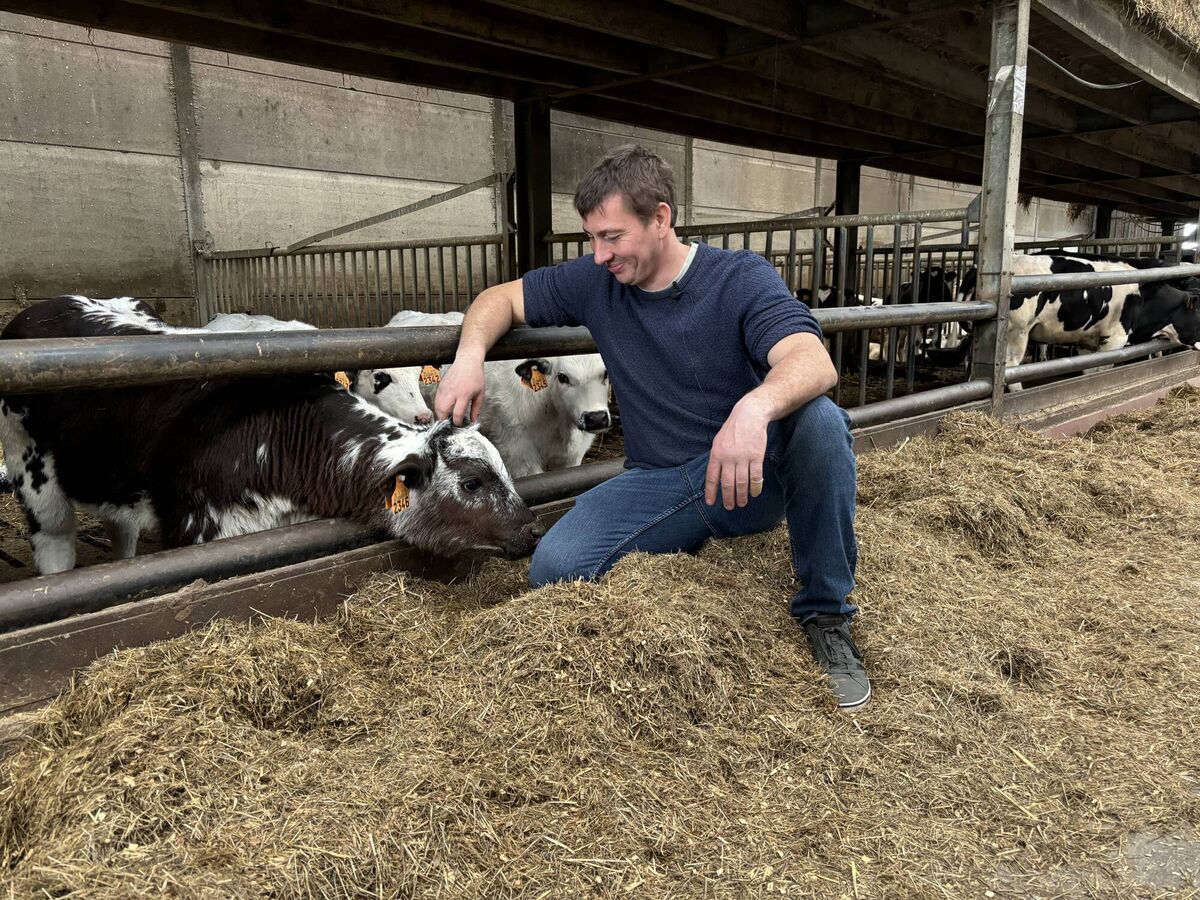
Despite changing consumer habits, and the expectation that people will "eat less meat" going forward, Mr Saelens said he is not worried about how that will impact his business.
He feels that while people may eat less meat, they are becoming more considerate of where the meat comes from, and are focused on sourcing quality, locally-produced meat, something that he believes the Belgian Blue breed is well-placed to provide.
Environmental regulations coming from Europe are challenging, Mr Saelens said, but farmers are capable of overcoming these challenges, he added.
A four-year Belgian project to 2026 is currently underway looking to develop a strategy that includes sustainability criteria to support the meat sector, particularly the Belgian Blue breed, called the Blanc Bleu Vert (Belgian Blue Green) project.
The project is examining how best to reduce greenhouse gas emissions and the impact of livestock on the environment.
Ways in which this can be achieved include improving breeding techniques; using rations based on products with a low environmental impact production; and by optimising farm systems thanks to crossbreeding to produce more efficient animals.
The project team said that feeding in particular is an area that can allow for action to reduce negative environmental impact of meat production.