Detecting mycotoxins boosts sustainability
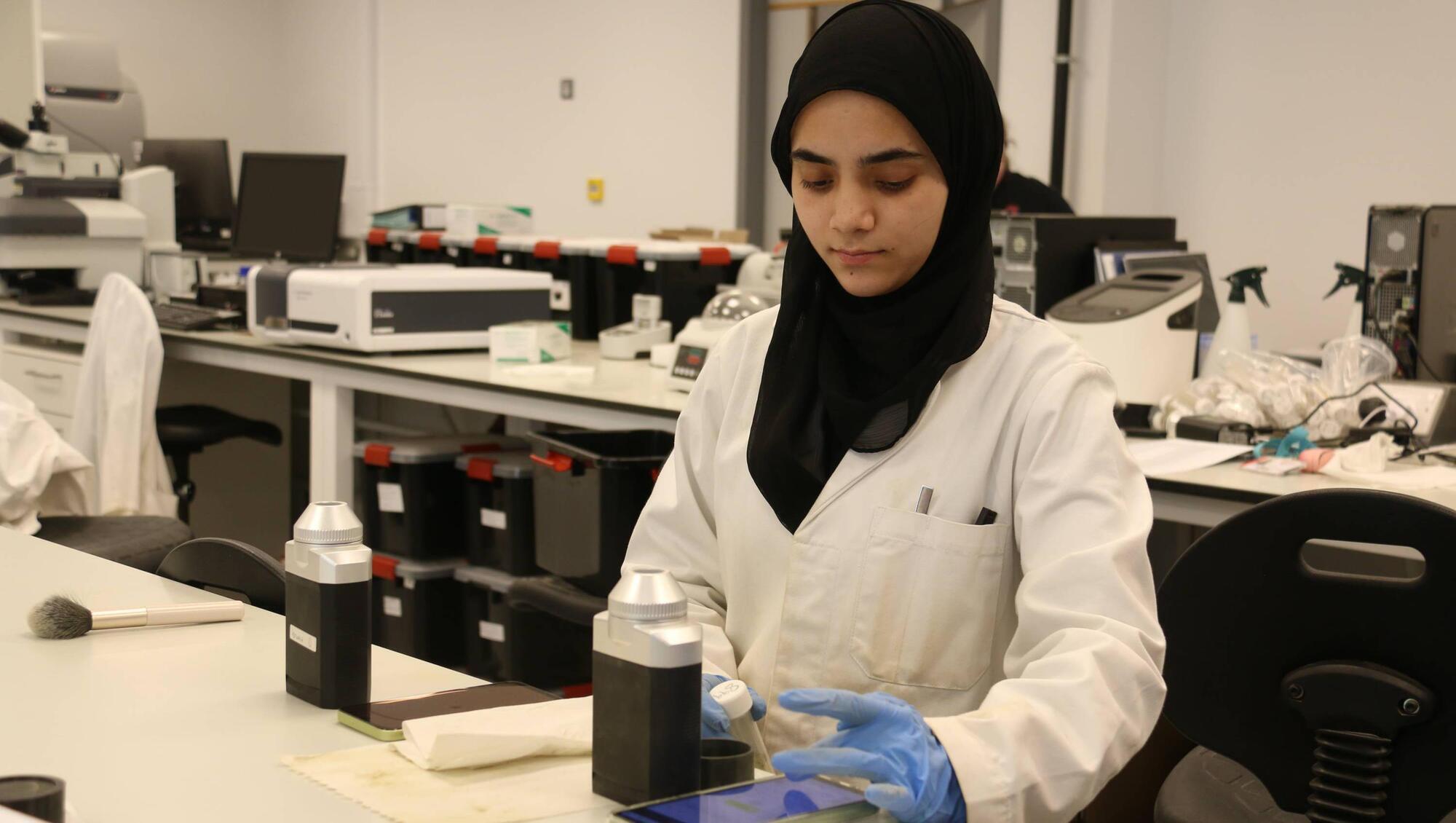
Lab technician Radhika uses an artificially intelligent NIRS tool to test the validity of samples of oregano.
Getting a handle on mycotoxins and feed contaminants is already helping to give Ireland an edge in reducing its agricultural emissions.
Food Fortress, a sampling and testing programme covering around 80% of the island’s livestock feed, was established in the wake of the 2008 Dioxin crisis, which saw contaminants in livestock feed make their way into Irish pork.
Around 100,000 pigs were slaughtered, and the crisis cost the industry an estimated €100m.
“It was a very major event on the island and had a multi-million impact on the industry in terms of the loss to processors and loss to producers. It was a wake-up call to the industry,” Robin Irvine, Northern Ireland Grain Trade Association (NIGTA) explained.
Over a decade might have passed since then, but mycotoxins — poisonous substances created by fungi that can cause disease or death in both humans and animals — continue to evolve and adapt.
They occur naturally in warm and moist conditions but can be particularly problematic in grains that are not properly stored or managed, so the risks of a changing climate are clear.
In 2022, maize from Serbia was discovered to have been affected by high levels of Alfatoxin, a toxin linked to liver cancer, but alarmingly, the contaminants were not detected in feed, but rather in finished dairy products on supermarket shelves.
“While the animal feed is the first link in that food chain, the contaminants can move right through that chain to appear in the finished food, so our processors or marketers, processors, everyone was concerned about how to get a safe and effective way to manage that risk,” Mr Irvine said.
To begin, researchers at the Institute of Global Food Security analysed 20 years’ worth of contamination data and identified key priorities and risk areas - mycotoxins, dioxins, heavy metals and pesticides.
The pilot was initially offered to all feed producers in Northern Ireland; however, this was soon extended to include the entire island. Today, the project is led by a cross-border board and owned by the 82 feed compounders and seven grain importers who participate.
“We now cover 8m tonnes of finished feed production – only 2.5m tonnes of that relates to Northern Ireland, so a large proportion is destined for the south,” Irvine said.
Currently, all of the feed produced in Northern Ireland is included, as the programme is a requirement of Northern Ireland Farm Quality Assurance, around 70% of that produced in the Republic of Ireland, as well as some made in Britain.
The initiative has become recognised as one of the best examples globally of industry, academia and government working together to self-regulate and ensure information is shared and protocols agreed and adhered to.
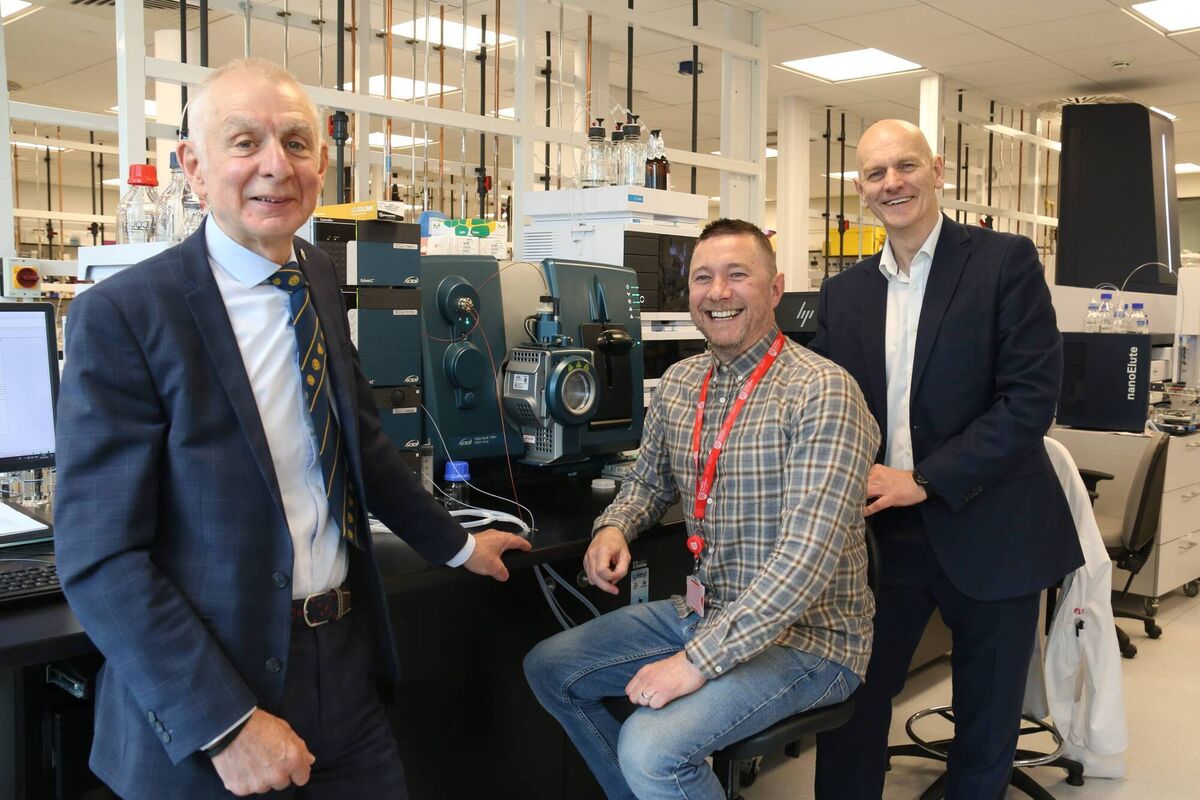
Fronted by Chris Elliott, former Professor of Food Safety at Queen's University Belfast School of Biological Sciences, explained the rigorous testing gives Irish and Northern Irish produce compete in overseas markets.
The sampling programme and testing programmes are both risk-based based on which countries and regions have the greatest likelihood of a bad load of grain.
The project works to EU guidelines for maximum levels of mycotoxins for each species.
Bigger companies will submit several samples a month, while smaller ones are tested at intervals throughout the year, focusing on where the greatest risks lie.
“The key was to measure and mitigate. Protect the most sensitive species by reducing the inclusion rate – for example, broiler chicks, calf starter rations,” Irvine said.
“The information is provided to Queens, who act as the honest brokers, and what we get is the anonymised information.”
A traffic light warning system to determine how often testing is conducted. Results are then also given a traffic light system, with breaches automatically referred to the Department of Agriculture and any other relevant authorities.
The main focus on the four regulated mycotoxins but others are also monitored, with an extended sweep looking for new, emerging and modified mycotoxins that aren’t regulated.
“It’s monitoring to see where the next threat might come from,” Irvine added.
“Maize can be particularly susceptible,” Dr Brett Greer, a senior research fellow at the institute, explained, “So we watch that very closely”.
“When you get the byproduct of maize – when the starch is extracted – you are left with the surface of the grain, and that concentrates the toxins that are there,” Dr Elliott added.
“If you get a difficult harvest in North America, you probably have to watch the gluten and the distiller’s [grains] for the next 12 months basically. We don’t find much variation between the different importers because they are basically all coming from the same places.”
But aside from ensuring food safety, there are other benefits, Dr Elliott explained.
“To be competitive in those markets, we have got to be safe – that’s a given. We have got to be competitive – the price has to be right - our production has to be efficient and sustainable, in terms of the environment. And none of these things can be delivered without high-quality feed. And by that, I mean ensuring that it is free from contamination and from anti-nutrients that impact feed efficiency,” he said.
"When feed efficiency goes off, your profitability suffers, but the emissions associated with production also go up.
“The EU guidance level for mycotoxins in maize byproducts is 12,000 parts per billion. The highest we have seen is 5,000ppb, so they are far below what’s legally required. You buy in a contract that it will be compliant with regulation, but we know a bit more about the impact of mycotoxins and at what level it starts affecting animal performance, and that’s a different, much, much lower level.
“I think the legal limits need to be much lower. If you want to increase productivity and reduce your carbon footprint mycotoxins are becoming much, much more important now.
“We did a study with Devenish Nutrition looking at mycotoxins going into poultry crops over 18 months.
“It’s given us the opportunity to think about how we can help the industry to control their greenhouse gas emissions by controlling their feed materials and the impact of mycotoxins on methane production.
“20 years ago, when there were big issues around performance, farmers were always told they had a “mystery virus”. It was called a mystery virus because no one could ever find the virus. I’ve always believed it’s probably been mycotoxins, and I think over time, I’ve probably been proved right about that.
“Mycotoxins have always been a problem, but over time have been getting more and more problematic because of climate change.”
For example, we have never had problems with aflatoxins in the northern hemisphere but now what we are seeing in the monitoring programmes a couple of years ago a big problem in Serbia, and that was linked to the changing climate. So we always have to be aware – don’t think something is just a southern hemisphere problem. Things are changing and changing fast.
“The Food Fortress and the risk analysis we are doing is always changing – it is always living and breathing – we are always looking for new sources of information and data to feed into it.
"We knew that anything coming from that part of the world was likely to have higher levels of dioxins and PCBs because those are linked to combustion, and so much burning was going on in that region."
Now with a huge unique dataset on mycotoxins, pesticides, heavy metals, dioxins and PCBs built up over 10 years, the institute is beginning to look to artificial intelligence to look for future potential issues.
Dr Elliott said: “We are starting to build predictability models based on the data – what are the likely trends going to be in six months, two years in advance – and then what we can start to do is tailor the sampling and testing programmes around those predictability models. It’s really quite exciting.”