€4m for project working to increase capacity of clover to fix nitrogen
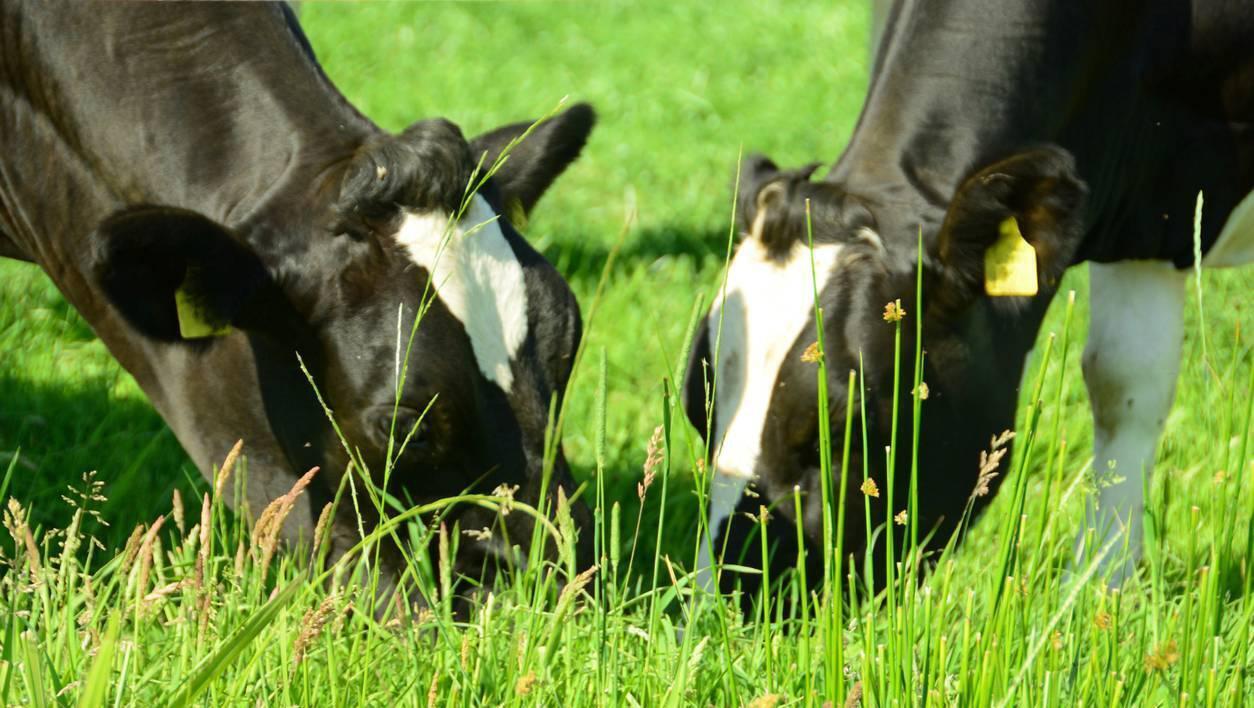
New proprietary legume varieties have also been developed by Belfast and Tipperary-based Germinal and Aberystwyth University in Wales that improve the efficiency of protein uptake by cattle from grassland.
A research project has been awarded almost €4m to fund on-farm testing of a new approach to grassland farming that seeks to eliminate nitrogen fertiliser dependence.
The project, called Project 'NUE-Leg', will exploit innovations in plant breeding, soil microbiology, nutrition, and grassland management to achieve improvements in the capacities of legumes such as white and red clovers to fix nitrogen from fresh air and make this available to grasslands.
The project has been awarded the significant level of funding by the UK Government.
New proprietary legume varieties have also been developed by Belfast and Tipperary-based Germinal and Aberystwyth University in Wales that improve the efficiency of protein uptake by cattle from grassland.
Other varieties have also been developed which contain tannins that reduce methane emissions by cattle.
The objective of the project is to create conditions in commercial farm settings that will enable clover to fix up to 300kg of nitrogen per hectare per year, a large portion of which will be available for grass growth.
At these levels, additional chemical nitrogen fertilisers needed for grass growth could largely be eliminated.
Germinal UK and Ireland managing director Paul Billings said that nitrogen is an essential nutrient for growing grass and without it, the grass needed to feed livestock would not grow.
"However, nitrogen fertilisers are also a major source of greenhouse gas emissions in their manufacture and transport, and from in-field losses such as nitrous oxide and ammonia," Mr Billings said.
"They are also a source of nitrate losses to our waterways. They are expensive and farmers have seen huge volatility in prices, particularly in the last two years when price fluctuations have been around 300%."
Agriculture accounts for about a third of Ireland’s total greenhouse gas emissions. Ruminant livestock is a significant source of emissions in the forms of methane and ammonia.
A near-term sectoral emissions reduction target of 25% has been set for the sector.
A range of measures are proposed to support this target including limits on the maximum amount of nitrogen fertilisers applied on Irish farms of 300,000 tonnes (by 2030).
"Governments around the world have rightly said that we need to reduce our reliance on nitrogen fertilisers. We need a solution," Mr Billings continued.
"Legumes such as white and red clovers grown with grass can fix nitrogen from the air, but with no emissions. A grass sward with a good clover content could fix on average between 100 and 150kg of nitrogen per hectare per year.
"The clover will use about 75kg of this for itself. The rest is available to the grass.
"We also need to wrap this up in a management approach that supports farmers and gives them the tools and information they need to make this work in a commercial setting, and make a profit."
This is what the new project hopes to achieve, according to Mr Billings - a "threefold increase in the capacity of clovers to fix atmospheric nitrogen up to 300kg nitrogen per hectare per year and thereby eliminate the need for chemical nitrogen fertilisers".
On-farm testing and evaluation will take place across 14 commercial farms co-ordinated by Aberystwyth University and NUE-Leg supply chain partners: Dovecote Park (beef), Pilgrim’s Pride (lamb), Müller UK & Ireland (dairy) and farming charity LEAF.