Focus on efficiency sees former dairy farmer win Irish Hereford Prime Farmer of the Year
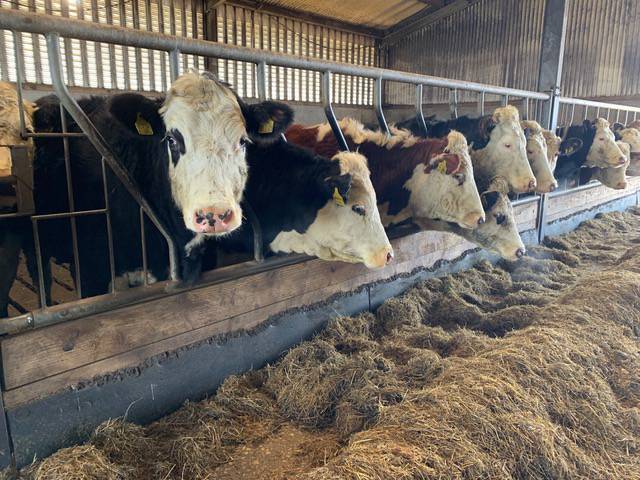
Housed cattle on Maurice Hallahan's farm.
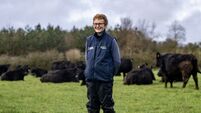
Efficiency-focused Waterford beef finisher Maurice Hallahan has been named this year’s Irish Hereford Prime Farmer of the Year.
Maurice farms in Grange, near Ardmore, and has run a Hereford-cross heifer beef system since he retired from dairy farming over 12 years ago.
Judges noted Maurice works an “impressive and well-run farming system”, historically buying between 65 and 75 Hereford-cross heifers in as weanlings each year.
However, in 2023 he changed his breed profile further and bought in 110 Hereford-cross heifers. In 2024, he aims to stock the farm entirely with Hereford-cross cattle, and with all things going well, this will mean 150 Hereford heifers on the farm.
This excellent animal performance is a testament to his grassland management as he believes in striking a balance between grass utilisation and grass quality.
Maurice keeps stock for around 12 months, taking them right through to finish, at which point he supplies ABP Waterford and is also a participant in the ABP Advantage Beef Program.
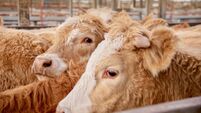
When asked why he farms Herefords, Maurice explained: “The breed is easily managed, good weights for age, docile and easily finished. It’s hard to buy other breeds of cattle that can perform as consistently well.”
The improved animal performance seen on Maurice’s farm from his Hereford cattle, has also resulted in a lower age at slaughter, while maintaining carcass weight.
Maurice places huge emphasis on buying quality cattle, and makes the majority of his purchases locally in both Fermoy and Dungarvan marts. Interestingly, over 80% of the Hereford cattle he slaughters have only one or two farm movements in their lifetime.
Reviewing the performance of Maurice’s herd over a five-year timeframe allows us to see that he has managed to drop the age of slaughter by 41 days in that period, while at the same time not only maintaining carcass weight but actually increasing it by an average of 11kg.
By working in tandem with the procurement team, Maurice has gone from having anywhere from 10-15% of his cattle grading too fat (5’s) pre-2021, to having 100% of his heifers in 2022 and 2023 grading between a 3= and a 4=.
When asked what other element of his herd performance he would look to improve, he points out that the minimum conformation grade O= for bonus qualification can sometimes be difficult for him to achieve.
His system of production means that he is relying on another farmer to breed the animal for him and buys in all Hereford stock as weanling heifers as he “hopes to be buying potential rather than feed”.
Making great strides in sustainability The first port of call for Maurice in making any decision for animal treatment or farm management is through testing. He regularly soil tests, takes faecal samples and does silage analysis of both pit and baled silage.
He aims to make his first cut of silage most years in mid to late May, which tends to provide him with a silage that comes in at 70 to 72 DMD. A feed over the years that Maurice has huge faith in is locally grown fodder beet, which he tends to feed to both his stores at 3-5 kgs and finishing stock at a rate of 14kg plus 3-4kg meal.
Another key driver for performance for Maurice is “grass, grass, grass”. By using the infrastructure that was in place from when he was milking dairy cows, he is able to give groups of 25-30 heifers two days in a paddock before moving them to fresh grass.
He reseeds a portion of the farm every year and looks to include higher levels of clover due to the nitrogen fixation properties that help him to reduce his artificial N requirements.
By getting cattle outdoors for a long grazing season, he feels this is giving them the best chance to thrive. Achieving an early turnout, depending on the weather in any particular year, Maurice strives to have stock out by St Patrick's day. Housing usually takes place in November, but again, the weather plays a huge part in this.
Similar to the benefits of a coordinated approach taken by the Irish Hereford Prime producer group in marketing Hereford beef under one brand, Maurice is a strong believer in the power of farmers coming together.
As a result, he is part of a local purchasing group in his area that strives to strike the best deal possible for lots of his farm inputs; such as diesel, fertiliser, fencing, veterinary supplies and feed.
Maurice is the third generation of Hallahans to farm in Grange, near Ardmore which was bought in the early 1900s, Maurice’s father also purchased an additional part of the existing farm in the 1950s.
Maurice has three brothers who both help out when needed, along with his nephews, but in reality, the farm is very well set up with great infrastructure that makes life easy for handling and working with his cattle.
The farm and farmyard are exceptionally well maintained, partly due to the enjoyment that he gets from welding and making the things the farm needs to stay in good order. A simple but highly effective example is the loading bay and ramp that makes the loading of animals very safe for both man and beast.
An avid reader and golfer, with a keen interest in the GAA, Maurice likes to find time for travel, and he lists New Zealand as being one of his favourite destinations, having worked there in his late teens.
He also aims to play golf twice a week if possible and recently retired from the role of secretary after 22 years in his local golf club West Waterford, home to two touring professional golfers Seamus Power and Gary Hurley.
One of Maurice’s earliest farming memories was working at sheep with his father in the rain and getting soaked to the skin (probably one of the reasons that he doesn’t have sheep now!) As was tradition, there was an expectation that Maurice, as the oldest son in the family, would take over the family farm, but as he says himself, “Farming was all I ever wanted to do from a very young age, so I’ve had many years of enjoyment doing what I love.
“Farming, as most of us know, is not always easy at times, but it is a great way of life. Farming Herefords does help, and so they will be part of my farming system for the foreseeable future”.