Cull to bring Derrynane rabbit population under control
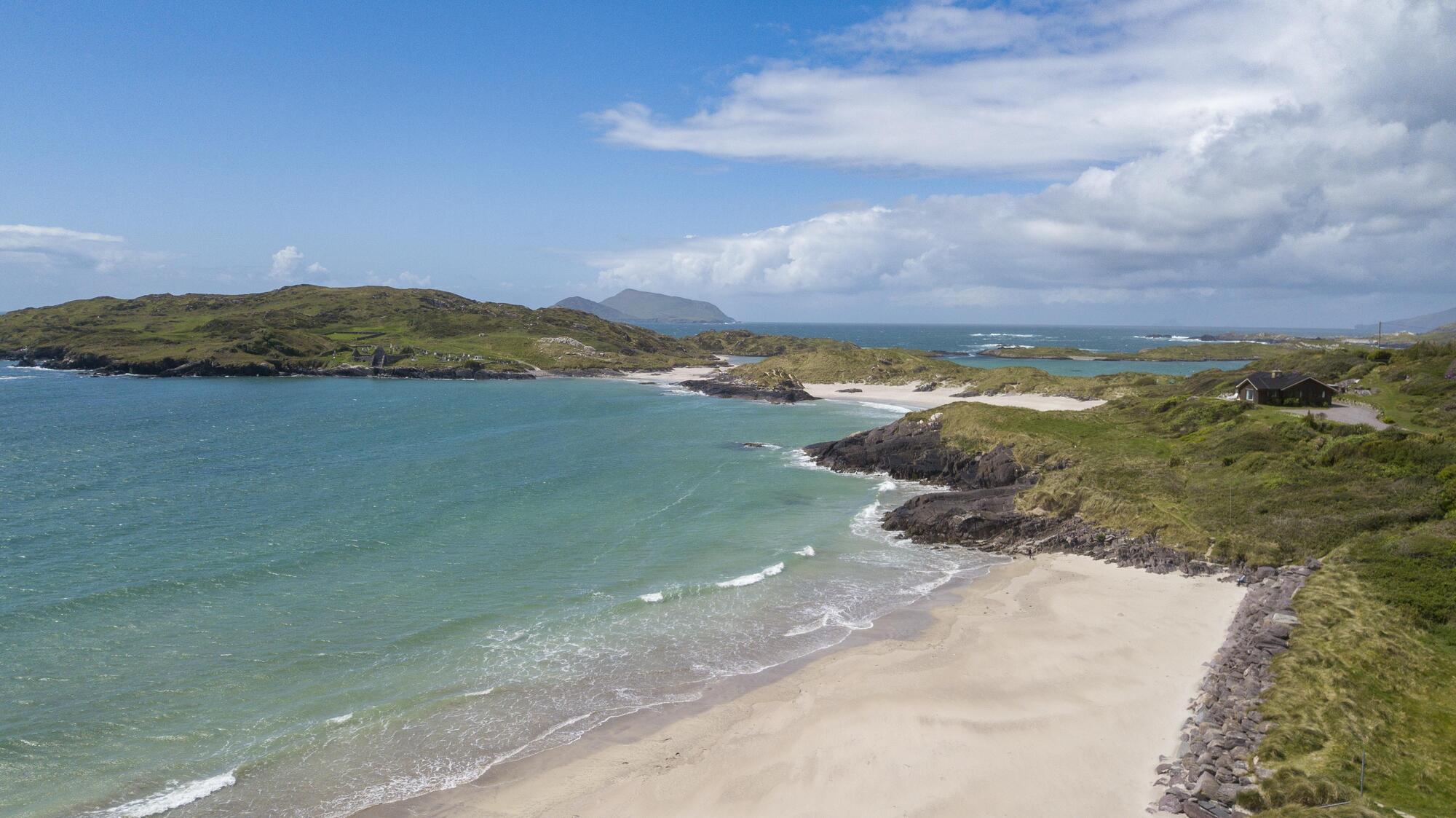
Derrynane Beach looking towards Abbey Islane near the village of Caherdaniel on the Ring of Kerry. Picture: Dan Linehan
A cull of wild rabbits at Derrynane, the Kerry birthplace of Daniel O’Connell, is expected to take place over the next three months.
The Office of Public Works (OPW) has sought a tender for the work which will be carried out on the advice of ecologists who are finalising a report on the sand dunes at the location.
A 320-acre historic park, part of Derrynane House and a national monument on the Iveragh Peninsula, has wildlife habitats that are protected at a European level.
Minister of State Patrick O’Donovan told Kerry TD Michael Healy Rae in answer to a Dáil question that the OPW is continually looking at options to successfully manage the landscapes and properties in a way that benefits wildlife and biodiversity.
He said there is no timeline for delivery of the services in the tender documents as culls of this nature are determined by weather conditions.
“It is envisaged that the controls may be undertaken sometime between November 1, 2023, and the end of January 2024,” he said.
Dublin South-West TD Paul Murphy urged the OPW to seek alternative methods of population control.
Minister O'Donovan said the OPW is responsible for the maintenance and conservation of the lands surrounding Derrynane House and Gardens.
The overall dune system supports a plethora of wild flora and fauna, as well as providing a natural buffer against climate impacts.
“Unfortunately, over the past few years the rabbit population has exploded, and extensive damage is being done due to their extensive grazing in the vicinity of the sand dunes,” he said.
Minister O’Donovan said the OPW has a responsibility to control the rabbit population and has researched ecological studies that support their control in dune habitats.
The Irish Wildlife Manual for Sand Dune habitats, commissioned by the NPWS, notes that rabbit burrowing and grazing can cause extensive damage to the structure of sand dunes if populations are uncontrolled.
Rabbits do not have protected wildlife status in Ireland, unlike the species and habitats that they are harming at Derrynane, he said.
He said these locations contain wildlife habitats that are protected at a European level. Ireland has a responsibility to nurture and protect these sites.
The Minister said a range of control methods were examined and, unfortunately, they are not feasible approaches given the number of rabbits present and the likelihood of detrimental impacts on other species.
News of the cull will revive memories of the role that rabbits have played in the wildlife, economic and social life of rural Ireland over the centuries.
The rabbit was first recorded in Ireland in the 9th century and had spread to every townland in the four provinces and to all the islands by the end of the 18th century.
In his 2016 book, The Rabbit Industry in Ireland, author and scientist Dr Michael Conry put Ireland’s rabbit population at almost 40 million at its peak during the two world wars, with perhaps half of them killed annually.
The introduction of Myxomatosis in 1954, dramatically culled the numbers, and devastated what had been a thriving industry.
It once supported at least 20 large exporting firms in Co Cork alone. More than one million rabbits per year were exported from the county in the early 1940s.
At the height of the export boom in the same year, Castlemahon Co-op Creamery in west Limerick was processing up to 2,000 rabbits in a night.
Rabbits were also an important source of meat for hundreds of thousands of Irish families during the 19th and first half of the 20th centuries.
Catching them supplemented the meagre incomes of urban workers, farm labourers and small farmers.
But they were also a huge pest for farmers as they decimated grassland, arable crops and forestry plantations.
In more recent years, a disease fatal to rabbits and hares, but of no risk to humans, was confirmed in the wild in Ireland for the first time.
The Department of Housing, Local Government and Heritage's National Parks and Wildlife Service (NPWS) asked the public to report any suspected cases.
Rabbit haemorrhagic disease (RHD) was first reported in domestic (farmed) rabbits in China in 1984 killing millions of animals within one year of its discovery.
By 1986 this viral disease had been found in continental Europe and has since spread globally leading to significant mortality in wild populations of rabbits.
In 2010, a new more virulent strain of this virus (RHD2) emerged in France. It causes death within a few days of infection.
The disease was reported in Ireland from domestic rabbits in 2018. It was later confirmed in the wild from a rabbit in Wicklow and another in Clare and from a hare in Wexford.
Minister Darragh O’Brien, replying to Wicklow TD Jennifer Whitmore in the Dáil in March, said only two positives were recorded in 2021 — one in a hare and one in a rabbit with one further record in a wild rabbit notified to the Department since then.