Implication of Wyeth plant closure 'extremely concerning' for Irish dairy sector
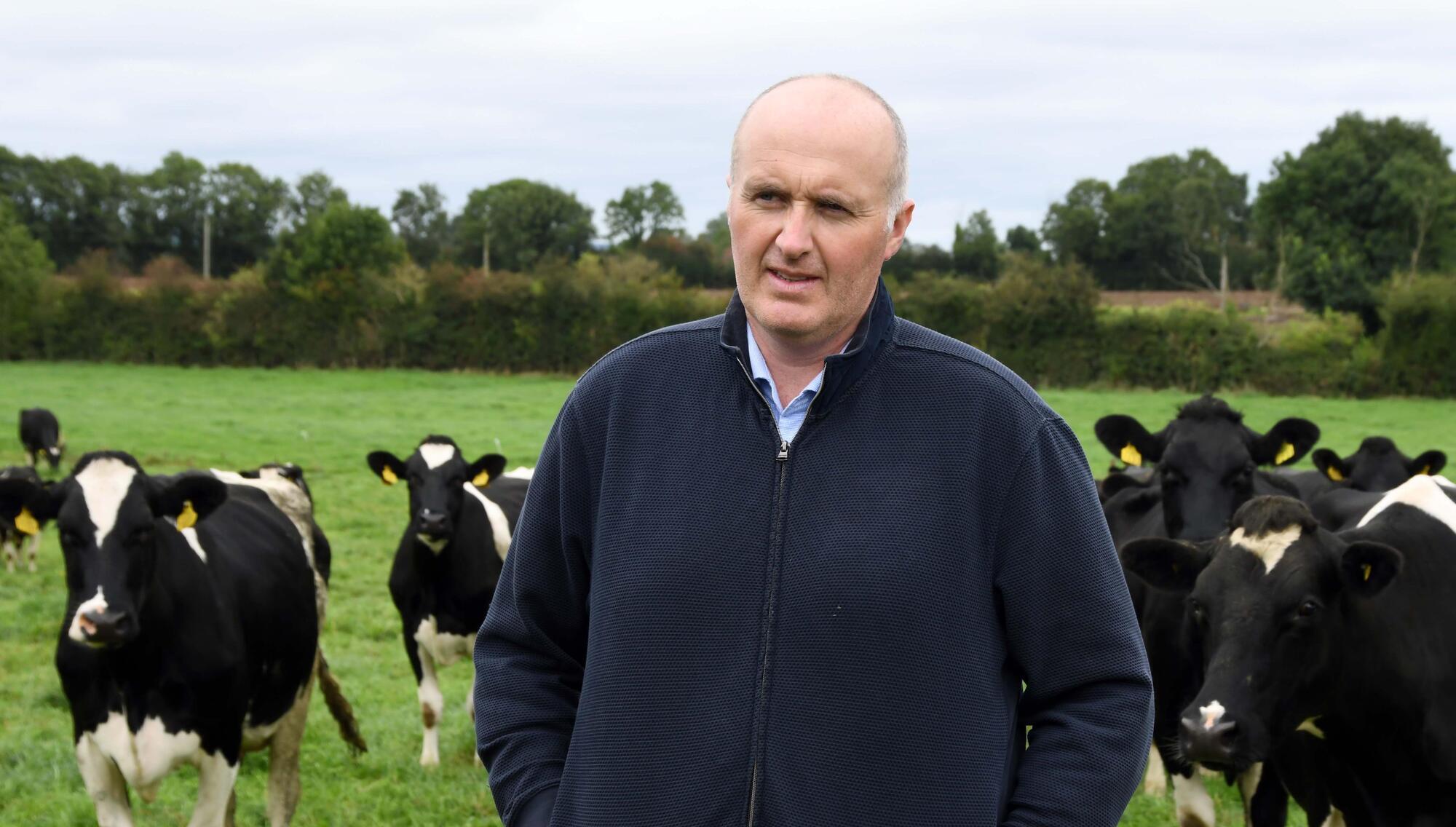
Pat McCormack said that Wyeth is a “major buyer” of the industry's product, and the association is aware of the “gravity of this threat” that plans of its closure pose. Picture: Denis Minihane.
The implications of the closure of the infant formula factory in West Limerick are “extremely concerning” for the region and the broader dairy sector, a farm organisation has warned.
Irish Creamery Milk Suppliers Association president Pat McCormack said that Wyeth Nutrition is a “major buyer” of the industry's product, and the association is aware of the “gravity of this threat” that plans of its closure pose.
Nestlé made the announcement of plans to close the Wyeth Nutrition infant formula factory in Askeaton, Co Limerick, in 2026, with the R&D centre to close in 2025.
More than 540 jobs are at risk as a result of this.
“We are based in Limerick and know the reliance of so many jobs in the west of the county on the operation in Askeaton and downstream in the communities around it,” Pat McCormack said.
“We have the first-hand knowledge of what this could mean in terms of direct economic and social impact.”
Mr McCormack said the position for the dairy sector alone “is no less concerning”.
“The degree of complacency that seems to inform Irish Government policy on dairy – which is the jewel in Ireland’s agri-farming crown – is both astonishing and dangerous,” Mr McCormack said.
“It’s worth repeating because it never seems to be properly grasped: farming and food production is the biggest and most successful indigenous economic activity in Ireland and milk production is the flagship activity within that.
“This announcement by Nestle via Wyeth is a very clear signal that the market is changing and that we will have to change with it if we are to maintain our pivotal role.”
Mr McCormack said that instead of approaching it in that spirit – “where we try and progress and move to understand how we can develop new products and markets”, there are instead “never-ending waves of restrictions and a bluntly anti-dairy state policy”.
“This announcement is a blinking light on the Irish economic dashboard,” he said.
“You’d like to think it would be noticed and dealt with, but on the basis of the official attitude we see just now, you’d have to be doubtful.”
The facilities in Askeaton were part of Nestlé’s acquisition of Pfizer Nutrition in 2012.
Operating as Wyeth Nutritionals Ireland Ltd, the factory manufactures infant formula products exclusively for export to markets in Greater China and Asia.
A spokesperson for Nestlé said: "External trends have significantly impacted demand for infant nutrition products in the Greater China region.
"The market, which had previously been reliant on imported infant formula products, is also seeing rapid growth in locally-produced products."
It is proposed to transfer the production from Askeaton to two existing factories – Suzhou, Mainland China, and Konolfingen, Switzerland.
Bord Bia told the that it is "disappointed" with the decision.
"In recent years, import demand for infant milk formula in China has declined as the Chinese government has encouraged development in local manufacturing," a Bord Bia spokesperson said.
"Chinese dairy companies have grown their market share from 30% in 2012 to almost 70% in 2021. Population demographics have also had an impact on demand.
"Since 2018, we have diversified our approach to the dairy opportunity in China and through our Shanghai office, Bord Bia has placed an increased focus on supplying added-value ingredients to local manufacturers."
Bord Bia said in May it met with Irish dairy stakeholders ahead of a ministerial-led trade mission to China, "to share our latest market insight and the key opportunities it identified in the market including healthy ageing and clinical nutrition".
"We remain fully committed to growing Ireland’s exports in these channels in 2024 and beyond," the spokesperson added.
Irish Farmers' Association Limerick chairman Sean Lavery said that it was a "big bet" that the company made on the Chinese market a number of years ago.
"The plant became solely dedicated to the Chinese market and they’re victims now of the halving of the birth rate in China," Mr Lavery told the .
"Our processors have to be aware of markets and they have to have diversified product portfolios.
"It’s a lesson for any processor if they are overly exposed to any specific market, the danger attached to it. You have to be continuously diversifying and identifying opportunities and market trends."
John Hannon, who farms in Clarina in Co Limerick, describes Wyeth as being “really part of the community” in West Limerick.
Part of a commercial for an infant product by Wyeth for the Chinese market was filmed on Mr Hannon’s farm in 2015.
Mr Hannon said he had a “great connection” with Wyeth and is “very sad to hear it closing down”.
He said personnel brought to his farm on a number of visits by Wyeth from the US, Europe, and Asia “were delighted with the run-down and the fact I was a fourth generation farmer and that it’s a family farm”.
“They were astounded at how clean the air was, how green the countryside was, and they were all genuinely impressed with the family farms and the fact cows were outdoors,” Mr Hannon said.
“They were so impressed with the environment.”
Milk from Mr Hannon and other dairy farms “did not go directly to Wyeth, the milk was taken to the processors and it was processed and dried and sent to Wyeth”, but he said that Wyeth understood “the quality of the product leaving Irish farms”.
He said this message is important for Ireland to continue to attract multinational companies.
Mr Hannon added that closure of Wyeth will be “as much a sadness for the general community as it is for the farming community”.