Emissions on dairy and cattle farms declined last year as chemical nitrogen use falls
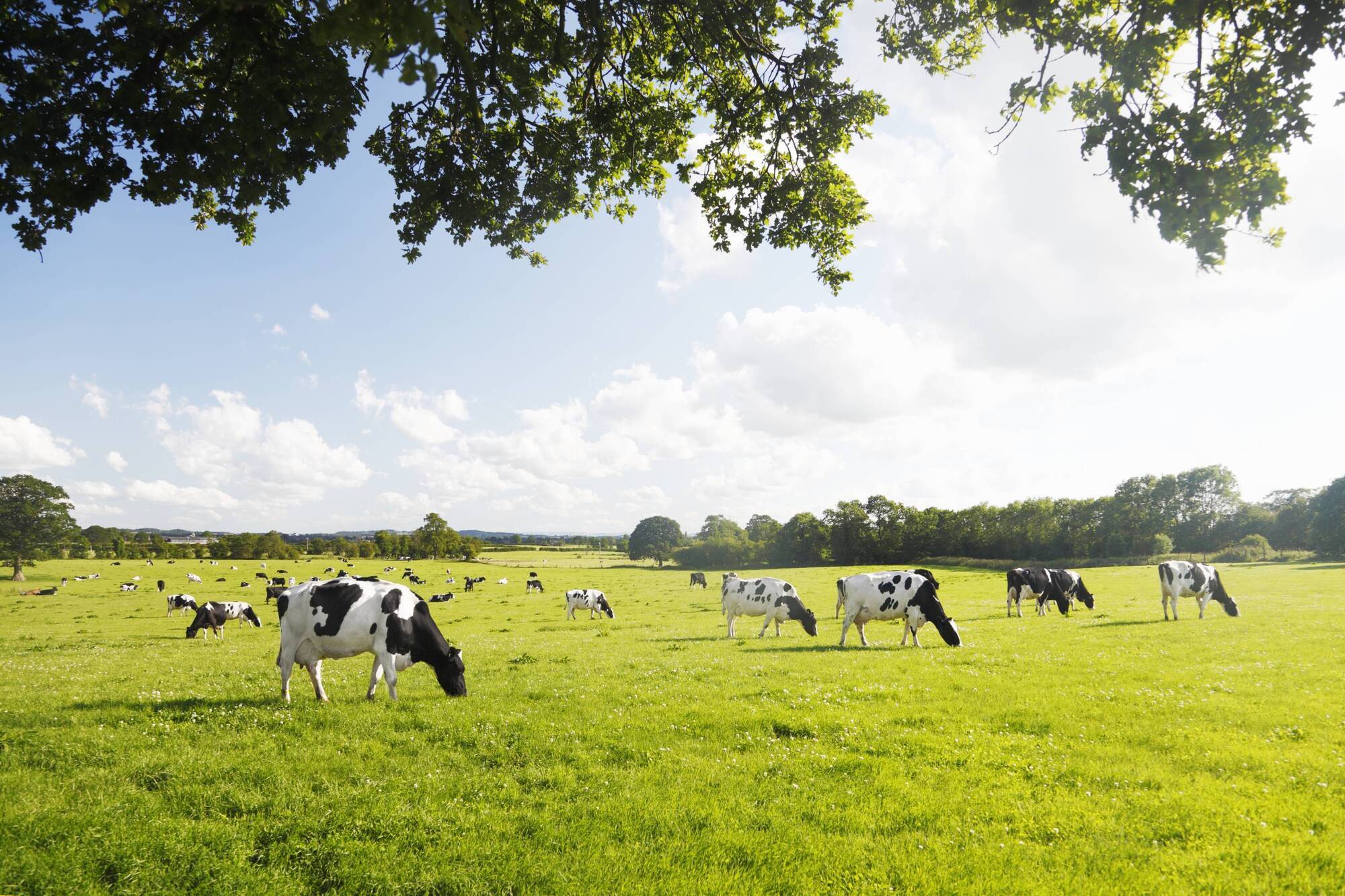
Even though herd sizes increased in 2022, total farm and per hectare GHG emissions on the average dairy farm declined, largely due to a significant decrease in chemical nitrogen fertiliser use.
On average, greenhouse gas (GHG) emissions across dairy, cattle, sheep, and tillage farms declined in 2022 on the back of reduced chemical nitrogen fertiliser use.
Teagasc has released its latest sustainability report, focusing on 2022.
The report derives farm performance indicators from the Teagasc National Farm Survey to track the progress of Irish dairy, cattle, sheep, and tillage farms in improving their economic, environmental, and social sustainability.
Along with acknowledging emission reductions, the report illustrates the continuing adoption of actions to address gaseous emissions, particularly by dairy farmers.
For example, in 2022, 34% and 75% of slurry on cattle and dairy farms respectively was applied to land using low emissions slurry spreading (LESS) equipment.
However, the uptake of other desirable practices, such as a transition to lower GHG emission fertilisers, remains low.
Lead author of the report Dr Cathal Buckley said that dairying continues to "exhibit a strong economic performance relative to other farm systems".
"We continue to see an increase in dairy output and dairy farm incomes. However, expressing farm incomes on a unit of family labour basis, dairy and tillage farms can be considered as relatively comparable in income terms," he said.
"The results show that both of these farm system types considerably outperform the drystock farm systems in economic terms."
Co-author of the report Trevor Donnellan added that from a socioeconomic point of view, the improvement in farm incomes in 2022 "makes a larger share of farms sustainable in an economic context".
"It is notable that even though herd sizes increased on dairy farms in 2022, on average GHG emissions on a whole farm and per hectare basis declined, largely due to a significant decrease in chemical N fertiliser use on dairy farms," he said.
"However, ammonia emissions increased due to increased use of straight urea fertiliser on dairy farms."
Teagasc director Frank O'Mara said that Teagasc's research "continues to develop and refine a range of technologies and farm management practices which can reduce the impact of agriculture on the environment".
"The sustainability report demonstrates how progress is already being made, and highlights where further improvements can be achieved. Critically, the report demonstrates the multi-dimensional nature of sustainability in an economic, environmental, and social context," he added.
The GHG emissions intensity of milk production improved last year. Effectively, this means that the average kilogram of milk on Irish dairy farms was produced with a lower carbon footprint in 2022.
At 73%, most dairy farm agricultural GHG emissions were associated with the production of milk output.
A further 26.6% of dairy farm GHG emissions were allocated to beef production on these farms (this would include emissions from cull cows and calf sales and transfers).
The remaining emissions, less than 1%, were associated with sheep production on dairy farms.
Farm level and per hectare level GHG emissions on cattle, sheep, and tillage farms also declined in 2022 on the back of reduced chemical nitrogen fertiliser use.
In percentage terms, the reduction in nitrogen fertiliser use was larger on drystock farms than on dairy farms, but in absolute terms, the reduction on dairy farms was larger.
This reflects the fact that the average dairy farms typically use close to three times as much chemical nitrogen per hectare compared to the average drystock farm.
The decline in chemical nitrogen use was most likely driven by the high nitrogen fertiliser prices, which emerged in the second half of 2021 and persisted throughout 2022.
However, the advice to farmers now strongly emphasises reduced fertiliser use on both economic and environmental grounds, which may mean that the observed reduction in fertiliser use in 2022 could well be maintained.
On dairy farms, ammonia emissions per farm and per hectare increased in 2022 relative to 2021, but the level in 2022 was below the longer-term trend of years before 2021.
The increase was driven by the composition of nitrogen fertiliser used, with a move away from the use of CAN towards straight urea, which is a much bigger emitter of ammonia.
Ammonia emissions on other farm systems tended to decline in 2022 due to reduced chemical nitrogen use and increased adoption of technologies LESS.
In spite of the increased usage of LESS on drystock farms, the use of that technology is still less prevalent than on dairy farms, indicating that there is room for further progress in this area on drystock farms.
Consistent with the established trend of earlier years, dairy farms remain an economic powerhouse in Irish agriculture.
Average economic returns per hectare in dairy tend to be multiples of those in the other farm systems in Ireland and the gap between dairy and the other farm systems has tended to widen since the EU decided to eliminate the milk quota system.
The report indicates that this gap widened further in 2022, which saw a significant spike in milk prices, due to the slow growth in milk production globally, allied with strong international dairy demand.