'Real fear' over nitrates derogation 'carnage'
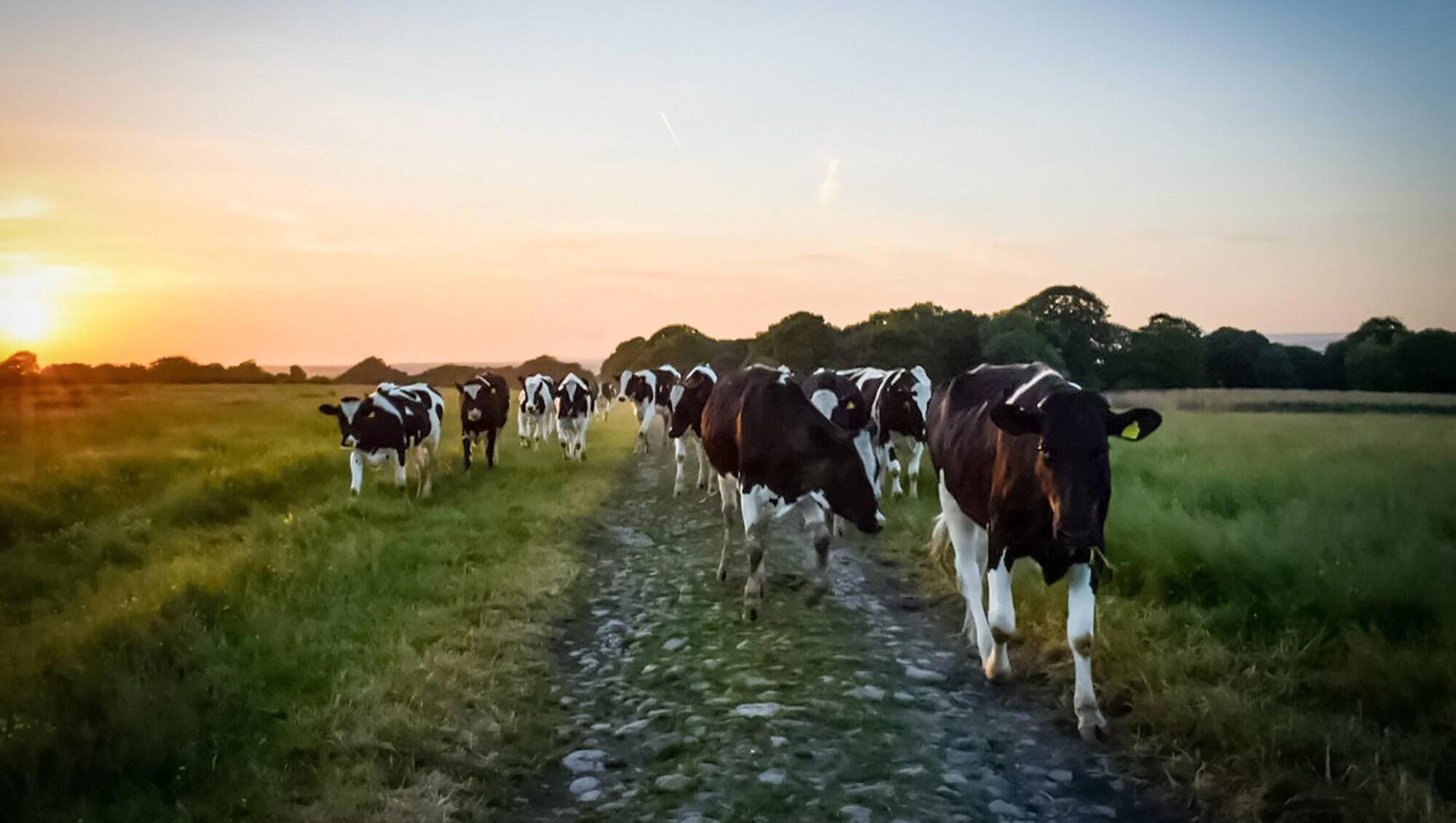

“There’s farmers that can’t plan for next spring because they don’t know where they’re going to be, they don’t know what the figure is.”
'Real fear' over nitrates derogation 'carnage'

Irish dairy farmers are anxiously awaiting a decision from Brussels expected in late September / early October as to whether the nitrates derogation maximum stocking rate will be cut from 250kg per hectare to 220kg from 2024.

Farmers are “frustrated” that a likely drop in Ireland’s nitrates derogation will result in “carnage” for the industry.

Farmers of West Cork gathered in Clonakilty on Monday night for a meeting organised by Fine Gael senator Tim Lombard, who told the meeting that the coming weeks are “critical for this part of the world”.

The nitrates derogation allows farmers to farm at higher stocking rates, above 170kg livestock manure nitrogen per hectare up to 250kg nitrogen per hectare.

Irish dairy farmers are anxiously awaiting a decision from Brussels expected in late September / early October as to whether the nitrates derogation maximum stocking rate will be cut from 250kg per hectare to 220kg from 2024.

If this is the outcome, affected farmers will have to either remove stock, obtain more land, or export nutrients to other farms.

'Carnage'

Mr Lombard told this week’s meeting that if farmers are “stuck in that scenario that you have to destock, that’s carnage”.

“That’s my real fear here – that we’re dealing with carnage and I’m worried about where we’re going to go,” he said.

“There’s farmers here this evening that can’t plan for next spring because they don’t know where they’re going to be, they don’t know what the figure is.”

 Panel discussion at the meeting in Clonakilty on Monday night. Picture: Andy Gibson
Panel discussion at the meeting in Clonakilty on Monday night. Picture: Andy Gibson

Carbery Group’s director of sustainability Enda Buckley told the meeting that those in derogation are the ones “going the extra mile” in trying to farm environmentally friendly.

Effect on the West Cork economy

He said that the company recently has estimated the potential “economic impact of derogation and what it could have on the West Cork economy”.

Mr Buckley said: “We really zoned in on farmers that are running a 60-70-cow herd and it’s just going to decimate those farmers,” he said.

“They’re looking at circa 12% destock, possibly more.

"It’s hard to give exact numbers because we don’t know exactly how many farmers we have in derogation.

“We’ve a good idea, we feel it’s around two-thirds of our supply so it’s very substantial.”

Mr Buckley said that a cut to the derogation is going to be “very unfair” on these farmers.

He added that “the last thing we want is reducing milk supplies, we want to see it going the other direction”.

In total, the cut to the derogation would affect around 7,000 farmers in Ireland.

'Devastate' West Cork

According to the chairman of Barryroe Co-op Peter Fleming, for areas like West Cork, the outcome of a reduced derogation from 2024 would “devastate” farmers.

He said this week at the meeting that “if you take the cow out of West Cork there isn’t going to be a lot left because there’s no heavy industry down here”.

Mr Fleming said that farmers are not just “confused, they’re frustrated”.

“This is going to devastate West Cork,” he said.

Farmers in our catchment area aren’t happy, they’re fearful for their future, a lot of them with youngsters coming into the industry.

“The idea of expanding and driving on, that was for my generation, it doesn’t seem to be for the future.”

Mr Fleming added that there is “an onus on us to defend ourselves”, and he called on politicians to stand up for farmers.

Tim Lombard told the Irish Examiner recently that farmers’ fears over the “ticking timebomb” that threatens their industry are growing as a possible cut to the nitrates derogation is nearing.

Minister for Agriculture Charlie McConalogue is being urged to go before the Oireachtas Joint Committee on Agriculture, Food and the Marine as soon as possible to discuss the matter.

Fine Gael senator and vice-chairman of the committee Mr Lombard said that “the potential of us losing the derogation is very possible and what that means for us as an agricultural entity is huge”.


EPA report

The Environmental Protection Agency’s (EPA) recent report shows that nitrates “remain too high in rivers, groundwater, and estuaries in the south-east, south-west, and midlands and eastern regions”.

While negotiations are continuing, the EPA’s report went to the commission over the summer.

The report is part of the interim review process of the Nitrates Action Programme. The review was required by the European Commission as part of granting Ireland’s nitrates derogation.

The report outlines the regions that could be required to reduce their organic nitrogen stocking rate to 220kg per hectare from 250kg in 2024 under the derogation, as a result of the effect of agriculture on water quality in these areas.

This would likely see a reduction in herd numbers, and put further pressure on the land market.

'Maybe less cows has to be a consideration'

Speaking at Monday’s meeting in Clonakilty, Bank of Ireland’s agri manager John Fitzgerald said that farming “has a track record of always responding and changing to the challenges that are presented to it”.

If the derogation is cut, he said the bank will “be looking to work with our farmer customers” through it.

“There are solutions here for farmers to try and work with derogation as well,” he said.

Citing contract rearing stock along with bringing in extra land, Mr Fitzgerald said that fewer stock numbers “is also a solution”.

“Maybe less cows has to be a consideration here as well,” he told the meeting. 

“I know farmers particularly don’t want to cut back but if it gets you into a situation where you can farm comfortably within the limits that are there, a few less cows isn’t the worst outcome here, hopefully not.

“But hopefully that won’t have to be the case.”

A drop in profitability by 29% on worst affected dairy farms is possible as a result of nitrate banding and a cut to the derogation, Teagasc has recently estimated.

More in this section

Farming

Newsletter

Keep up-to-date with all the latest developments in Farming with our weekly newsletter.

Cookie Policy Privacy Policy Brand Safety FAQ Help Contact Us Terms and Conditions

© Examiner Echo Group Limited