Signpost: Keeping an eye on our figures to improve flock fertility
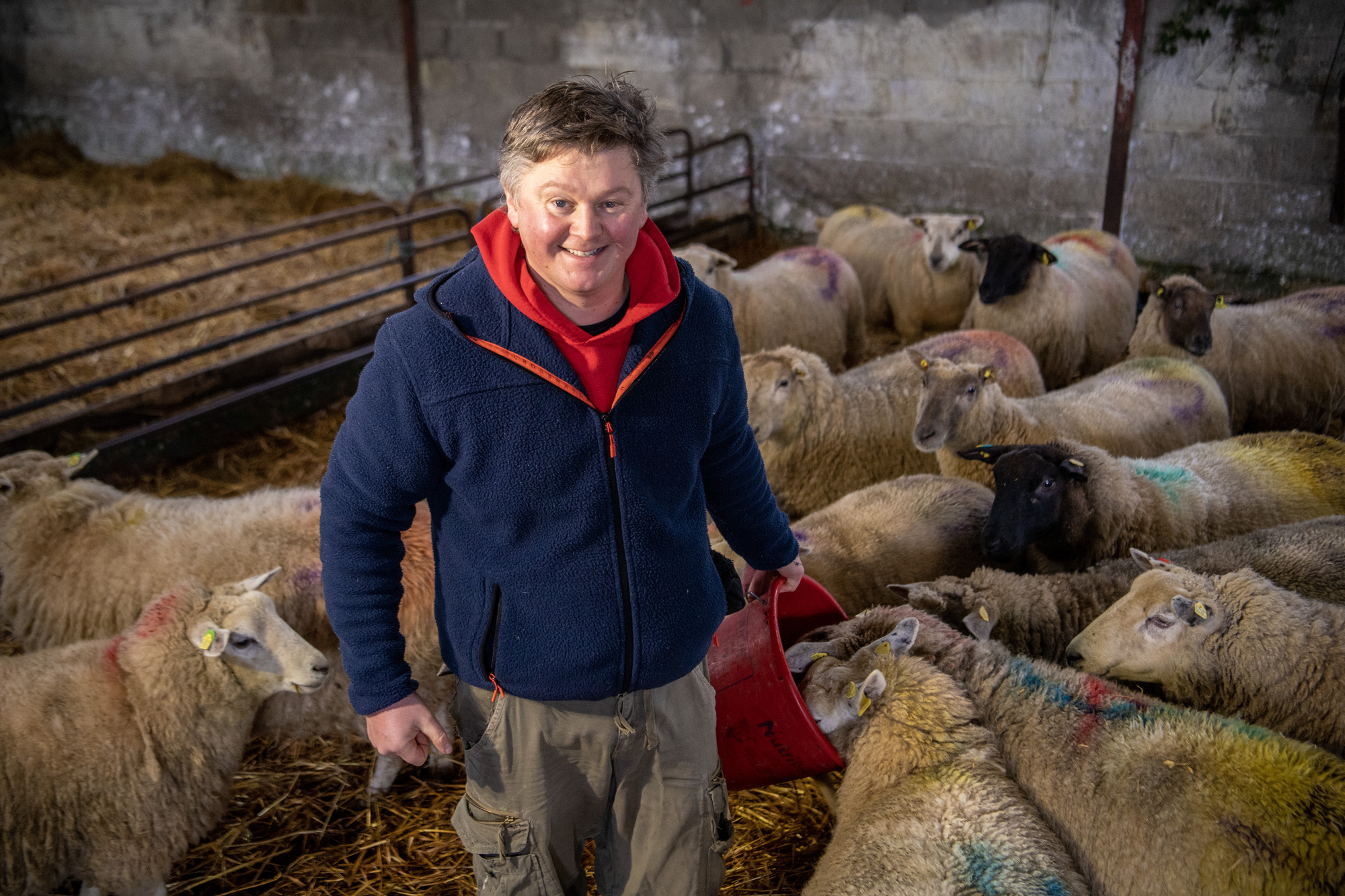
Des Powell at his farm in Templederry, Nenagh, Co Tipperary feeding some suffolk and beclare sheep. Picture Dan Linehan
Grass growth has been flying here in the last few weeks, with my last grass cover showing a growth rate of 56kg DM/day/day, which is ahead of the current demand on the farm.
My plan is to drop out a couple of paddocks for silage and cut these as soon as possible to keep grass quality in check while also ensuring that paddocks are not out for too long, as I want to try and build some covers for the autumn.
I also intend to spread my last round of fertiliser for the year later this month as I will get a better response to it going earlier than right before the deadline. I am planning on going with protected urea.
I am currently selling lambs in two different ways, with heavier finished lambs going for slaughter and am moving some lambs on as stores.
Currently, the lighter lambs are grazing good quality grass only with a group of ewes following them around cleaning out the paddocks, while the heavier lambs are grazing good quality grass, but also being supplemented with 500g/head/day of concentrates.
Splitting the lambs like this allows me to increase the gain on lambs off grass only while also keeping the concentrate bill down.
A faecal sample was taken from the lambs this week, and based on the result of that, I will drench the lambs for stomach worms if necessary.
To this end, I went through the ewes a couple of weeks after weaning and marked any thin ewes within the flock.
These are currently grazing as a separate group and are not cleaning out paddocks behind lambs. Any of these ewes that fail to regain adequate BCS by mating time will be culled as it most likely indicates another underlying issue, and these ewes are more likely to cause issues during the year.
My target is to have as few of ewes as possible with a BCS of less than 3.0 at mating.
The first year, all the ewes were condition scored at mating. Nearly half of my ewes were in inadequate BCS going to the ram, but I have managed to get this down to just 6% in recent years by changing my management strategies pre-mating.
However, ewe BCS needs to be regularly monitored as the number crept back up last year, and every year will present different challenges, so it is important to be vigilant and regularly check the ewes in the final eight to ten weeks pre-mating.