24% increase in reports of dogs worrying livestock last year
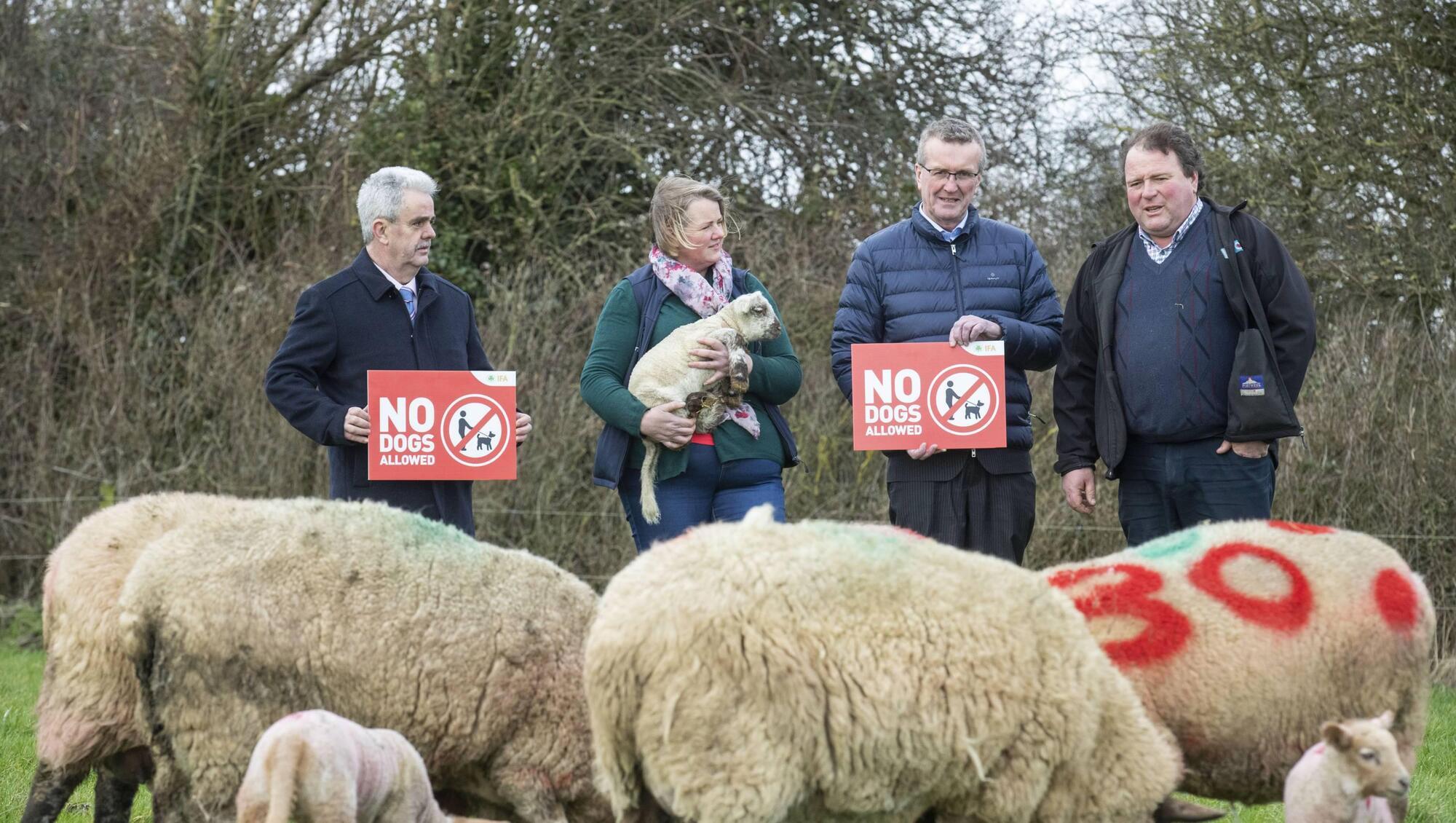
IFA sheep chairman Kevin Comiskey, Offaly sheep rep Marita Phelan and IFA president Tim Cullinan with Enda Bracken on his farm in Gurtacur, Co Offaly launching the IFA's 2023 campaign on dog control earlier this year. Picture: Finbarr O'Rourke
2022 saw a 24% increase in reports of dogs worrying livestock, a new report published this week shows.
There were 268 incidents reported to local authorities in the year, with this increase described as "worrying" in the Local Authority Control of Dogs Statistics Report for 2022 published by the Department of Rural and Community Development (DRCD).
"Sheep worrying, threats to livestock, and related matters continue to be of significant concern amongst our farming and rural communities," the report states.
"In 2022, the Irish Farmers' Association [IFA] continued their 'No Dogs Allowed' campaign requesting dogs not be brought in or near farmland, and urging all dog owners to behave in a responsible way.
"The effect of dog attacks on livestock cannot be overstated – not just in terms of monetary loss of livestock, but the traumatic impact of witnessing the aftermath which can devastate farming families."
IFA sheep chairman Kevin Comiskey told the that 2022 was a "very difficult year" for livestock farmers in many ways, with the added "massive worry" around the potential of a dog attack occurring on their farms.
A number of dog attacks that resulted in the loss of dozens of animals on farms gained national attention throughout the last year, with pressure put on for changes to the laws.
Back in March, stronger regulations were brought before cabinet, including doubling the fine to €5,000 under the Control of Dogs Act, which the IFA recognised as a step in the right direction.
However, the association has said that progress is needed to prevent dog attacks on livestock.
"While we did get promises from the Government for the increase of the fines and needing more dog wardens in place, we still have to see that happen and have an effect," Mr Comiskey said.
"Attacks are a massive worry, and especially for farmers who had a dog attack, they are worried in case there would be another one."
Stronger regulations and enforcement "need to happen yesterday, not tomorrow", Mr Comiskey said.
The IFA began the 'No Dogs Allowed' campaign in 2021. Mr Comiskey said all dog owners should take heed that they are fully liable for all damage and suffering caused to farmers and their sheep by their dogs.
He said dogs should not be allowed in or near farmland and he urged all dog owners to behave in a responsible way and adhere to this.
The IFA has repeatedly outlined the key areas that must be addressed:
- The establishment of a single national database for all dogs correlating licensing and microchipping and identifying the person responsible for the dog;
- Full enforcement of microchipping and licensing obligations of dog owners for all dogs;
- Increased on-the-spot fines for failing to comply with the microchipping and licensing requirements;
- Increased sanctions and on-the-spot fines for failing to have the dog under control;
- Significant on-the-spot fines for dogs found worrying livestock;
- Legal requirement for dogs to be microchipped and licensed and identified on the National Veterinary Prescription System prior to any veterinary treatment or prescribing of medicines by veterinary practitioners.
2022 saw the publication by the DRCD of a review of measures relating to the control of dogs in Ireland.
"This report, informed by a public consultation process to which over 1,000 responses were received, highlighted a need for increased focus on promoting and embedding a culture of responsible dog ownership – a message that DRCD intends to more actively progress in the years ahead," this week's local authorities report highlights.
"Of most concern, is a number of serious incidents involving dogs in 2022 which resulted in the then-Taoiseach, Micheál Martin, tasking the Department of Agriculture with the establishment of a Working Group on Control of Dogs in collaboration with DRCD and other stakeholders.
"It is expected that recommendations of this working group will drive further changes in dog control in the short to medium term."
Concerning increases in incidents of livestock worrying in addition to an overview of reports of aggressive behaviour and dog attacks on people "further the case for increased focus on the area of dog control in the years ahead", DRCD said.
"DRCD recognise the challenging environment in which dog control services operate and are committed to supporting our colleagues in collaboration with other departments and agencies.
"Additionally, DRCD will continue working with stakeholders to support dog owners to be informed and responsible, to ensure better outcomes for all people, dogs, livestock, and property in our communities."