The steps you can take to protect owls on your farm this year
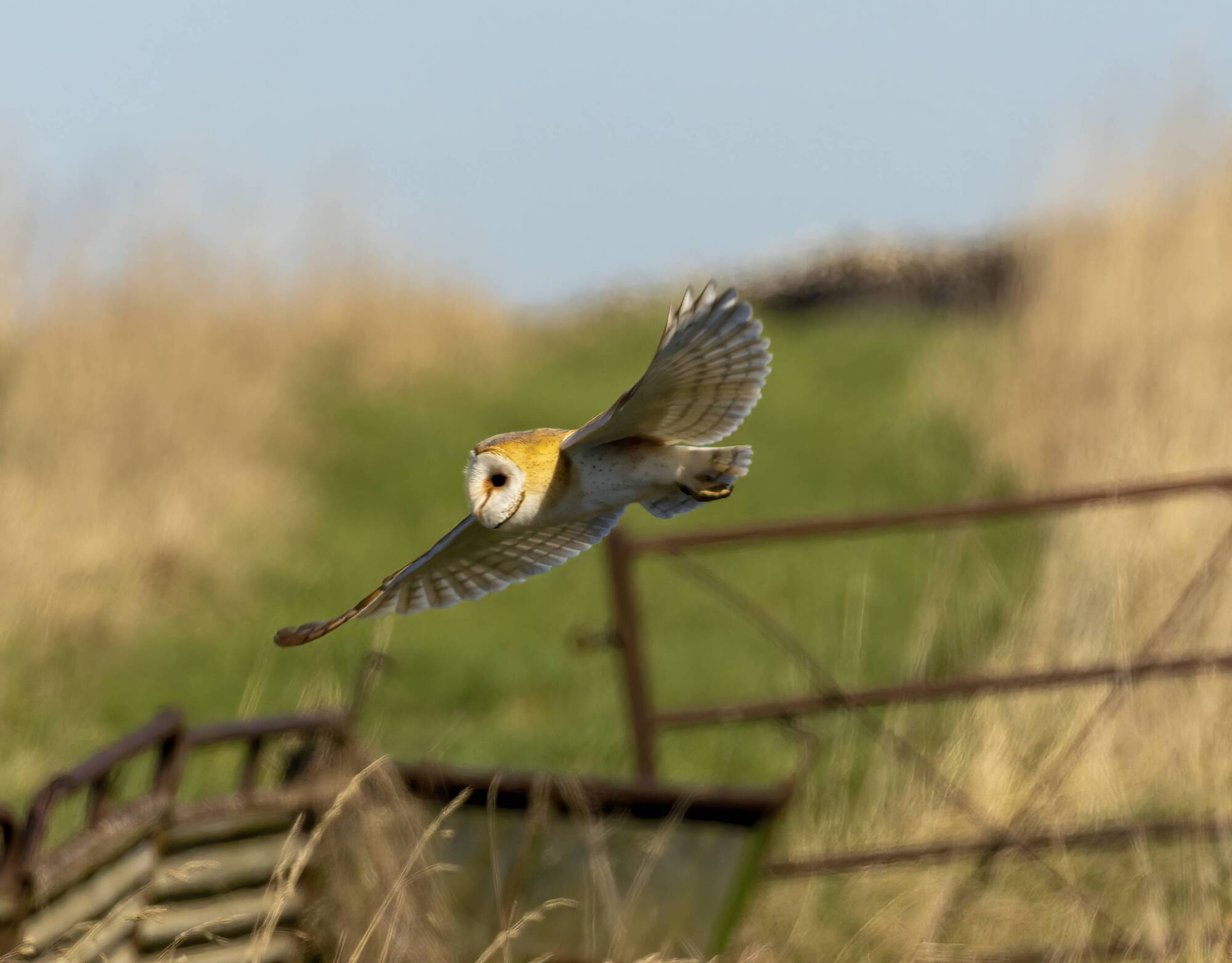
Rats eat rodenticide and it takes them seven days to die. The barn owl eats them, while they are vulnerable, and over time, the rodenticide builds up in the barn owl’s liver. It also kills mice, shrews, insects, garden birds.
What steps can you take to protect owls on your farm this year?
Over recent decades, barn owl populations suffered widespread declines, and the bird is now a red-listed species
of conservation concern in Ireland.
How can farmers provide safe habitats for barn owls? John Carrig, the founder of the Barn Owl Project, joined Cathal Somers and Deirdre Glynn to discuss this on a recent episode of Teagasc’s The Environment Edge podcast.
“Safe habitat would be, for me, people that care, I suppose. If you’ve got a farm, and you’re looking to have wildlife there, don’t be trimming back all the bushes and cutting back all the wild areas,” John said.
“If you want barn owls on your property, any wildlife, you need hedgerows. Don’t let them grow wild, but they can’t be trimmed back to this trim and proper-looking lovely straight-line thing.
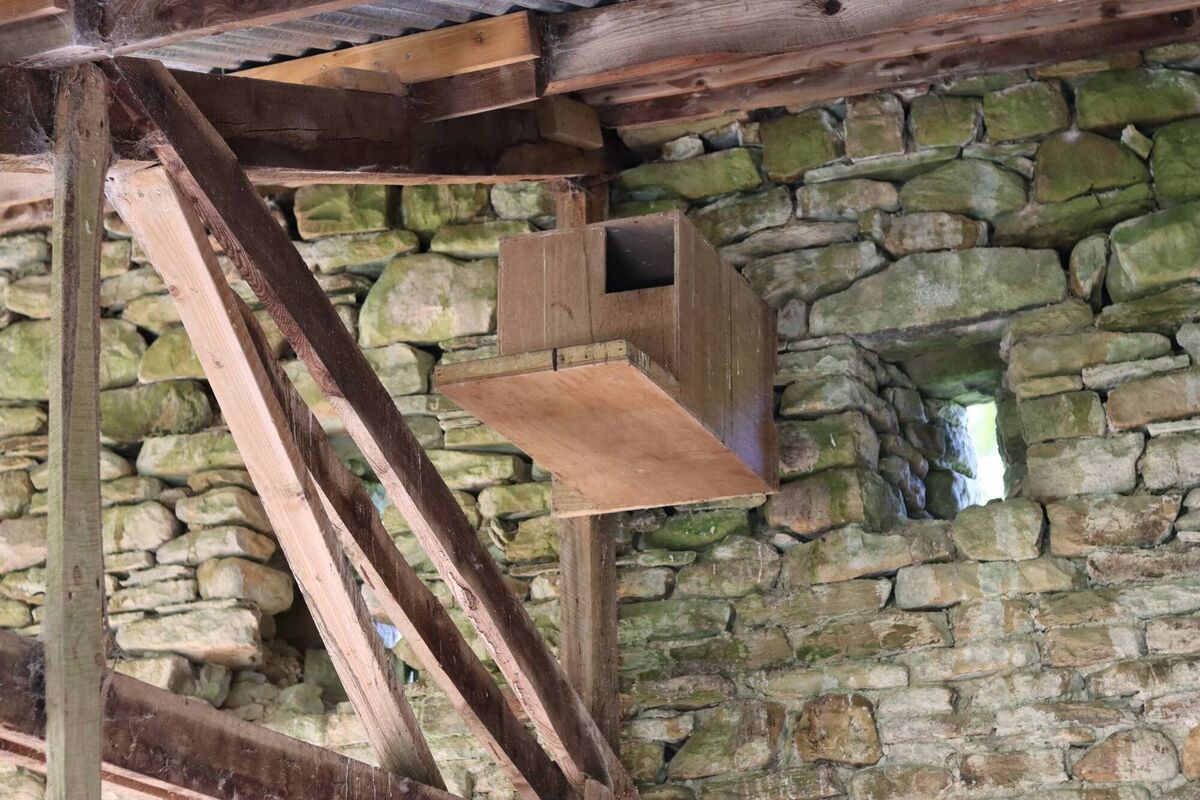
“If you’ve got big trees, leave them be. If you’ve trees that are starting to decay, make them safe; don’t totally cut them down, but put up nest boxes,” he said.
Â

The Barn Owl Project can advise on the optimum location for such nest boxes, or those wishing to do so can consult the project’s website. “I can guarantee you that if we put up a box, we have nearly a 90% chance of getting owls in it,” he said.
John suggests leaving margins in fields which can be grazed off at the end of the growing season.
And he suggests that if farmers are really dedicated, they might devote an area to game cover.
Barn owls in Ireland don’t do well in heavy rain or wind. Habitat loss is a key factor in their decreasing numbers.
As old buildings are being knocked, barn owls lose out on habitual nesting places such as disused chimneys. Barn owls like to nest in holes in the trunks of old trees and as those trees are felled, yet another safe haven disappears. “Things are improving. It’s not all negative,” John said. “There’s a massive interest coming from the farming community.”
100 Barn Owl nests in Cork!! An incedible & record-breaking milestone reached yesterday when we confimed the 100th nest in Cork!! We don't want to stop there, please report info on Barn Owls https://t.co/gAvLST8aQx Cork Barn Owl Survey supported by @CorkCoCo & @npwsBioData #LBAF pic.twitter.com/iO59rPIy6U
— BirdWatch Ireland (@BirdWatchIE) August 2, 2023
John and colleagues met the Minister for Agriculture Charlie McConalogue recently to discuss the impact of rodenticides, which are a major contributor to the near demise of the barn owl.
Many farmers are unaware of the protocols related to the use of rodenticides and other poisons.
John said: “88% of barn owls in the UK, living barn owns, have rat poison in them. We know that we use more rat poison per head in Ireland than they do in the UK.
“We’re putting the figure at about 90% in Ireland, of living owls, barn owls, long-eared owls in Ireland.
“The UK tests 600 owls per year. We have tested, I think, eight, since 2011.”
Garden birds tested in the UK are also showing rodenticide traces.
“We have come across a lot of birds, particularly last year, and juvenile birds, showing signs of rodenticide.”
The Barn Owl Project in Ireland doesn’t have the means to systematically test, but is relying mainly on the experiences of rehabbers, who have been working with owls for over 30 years, and with sympathetic vets.
“It would probably shock most people if I told you that every single bird of prey that is brought into a rehab in
Ireland is treated with vitamin K; that’s a reversal for rodenticide anti-coagulant,” John said. “It’s a major
problem,” he said.
The simple truth is, he said, that rodenticide kills wildlife. It kills mice, shrews, insects, garden birds.
Rats eat it and it takes them seven days to die. The barn owl eats them, while they are vulnerable, and over time, the rodenticide builds up in the barn owl’s liver.
Such secondary poisoning can prevent the barn owls breeding, can cause them to collide with trees and cars, and can render them comatose in their nests.
If treated with vitamin K, they can usually recover. It can be quite distressing for volunteers, John said, when they come across a bird with blood around its face, haemorrhaging from rodenticide secondary poisoning.
John reckons that Teagasc’s responsible rodenticide use campaign failed, and that 90% of farmers know nothing about it.
The Barn Owl Project monitors the 40km Galway to Ballinasloe road.
In 2022, 29 owls were picked up dead by project volunteers on that short stretch of road, and they estimate that does not represent the full number killed, 60% of those were juveniles.
Bird Watch Ireland published figures of 600 owls being killed on Irish roads five or six years ago, and John
estimates that number is much greater now.
Kestrels and owls are the two main birds of prey that target farm animals such as mice, rats and shrews.
The Barn Old Project has requested more testing by the National Parks and Wildlife of birds found dead.
It is also seeking data to be collected by the Department of Agriculture of when people buy wildlife poison (not names and addresses, but general locations). Then any spike in wildlife, cat or dog deaths could be linked more readily to poison, if that were the source.
John spoke of farmers reporting back to the Barn Owl Project about nest boxes they put up last year, telling of chicks hatched and the fact that they no longer use poison, but employ manual traps instead, being mindful of minimising leaving food lying around. “If we can get someone to give you advice, to come out and look at your farm, to help you out, we’ll do that,” John said.