Signpost: The MACC's a 'double win' for both my farm and the environment

Peadar O'Driscoll on the farm in West Cork.
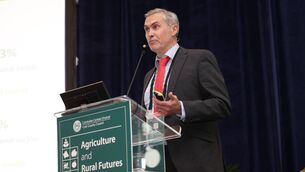
It's been a busy month; I was the host farmer for my discussion group for the July meeting with guest speakers John Crowley and Anthony Dineen, the local climate signpost advisors in the region.
The meeting focused on the new signpost advisory programme, which aims to demonstrate how we can reduce greenhouse gas emission levels on Irish farms while increasing farm profitability at the same time. The idea is to make the farm more sustainable both economically and environmentally.
The duo outlined the main greenhouse gases that agriculture emits - methane and nitrous oxide - as well as the target for agriculture is to reduce its emissions by 25% by 2030.
We had a good discussion on the challenges and how they would affect every farmer involved and talked about how to meet these targets through new and existing technology, using the marginal abatement cost curve (MACC).
There are a lot of easy wins on it that some farmers are already doing, such as switching to protected urea, using LESS for slurry spreading, spreading lime, building soil fertility, increasing herd EBI, incorporating clover, sexed semen and much more as well as new technologies, such as feed additives.
I have been implementing a lot of these on my farm as I see many of them as a double win for me and the environment.
It was also very positive to learn that so many of the group members have also been using so many of the practices and technologies that reduce greenhouse gases.
Some of the options seem expensive, such as protected urea per tonne, but when worked back to cost per kilo of nitrogen, it always works out cheaper as well as ticking all the boxes in reducing my farm emissions as well as growing the same amount of grass, if not more, compared to normal urea or CAN fertiliser.
It’s these simple changes that can both increase my farm profitability and reduce my farms carbon footprint and for all farmers too.
Meanwhile, on the farm, the cows are currently averaging 24.5L at 3.94% butterfat, and 3.49% protein, equalling 1.87kg milk solids, with SCC running at 53,000.
As grass growth is somewhat back to normal levels, cows are now getting 2kg of meal in the parlour at milking.
The bulls were taken out from the cows and heifers on July 20, giving me an 80-day breeding season.
I don’t see any cows bulling lately, so I’d be hopeful about a high in-calf rate across the herd. I did a farm walk on July 25, and the average farm cover was 716kg DM/ha.
My second-cut silage is fit to cut when the weather allows; I'm hoping to get it cut as soon as possible.
It will be soon time to start building covers for the autumn to try and extend my grazing season into the autumn as much as possible, so there more than likely will be no more paddocks taken out for bales.
I am currently following the cows with 38% protected urea +S. After comparing my phosphorus fertiliser allowances against what fertiliser I have already bought to see how much more P I can use, I will spread 18-6-12 on some of the low P index paddocks on the farm.
On the “clover paddocks”, I am happy that there is a sufficient level of clover in them and that it’s evenly distributed through the paddock are getting zero nitrogen fertilizer bar soiled water for some rotations.
These paddocks got one bag/acre of 0-7-30 to keep the P and K levels up in the soil. This is a great saving, with fertiliser prices being so high.

BLACK FRIDAY
Already a subscriber? Sign in