Why IBR vaccination should be a cornerstone of your herd health plan
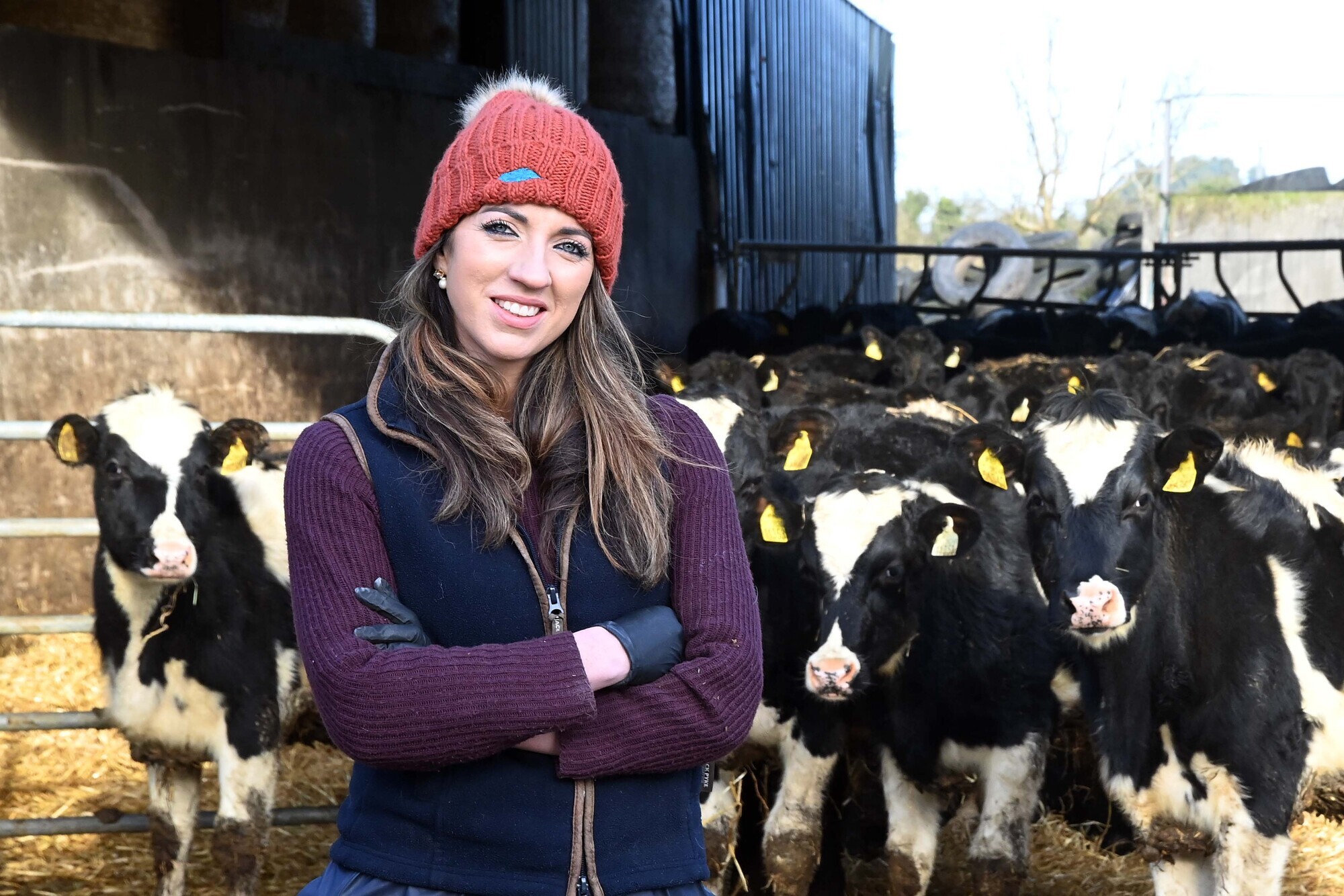
A study has found that stock which is given an intranasal as calves have an improved response when given a booster by injection, highlights Hazell Mullins, BVM BVS.
After our father-daughter bonding day at the Teagasc Moorepark Open Day a few weeks ago, I left the event feeling very inspired about what can be achieved on the farm in the future.
I will hold my hands up and admit that my grass management skills are lacking; grass was not on the curriculum in vet school.
So now I have a stack of brochures on my office desk and a new subscription to PastureBase is complete.
With my veterinary background, I was automatically drawn to the “One Health, One Welfare Village” on the day where I felt more in my comfort zone.
The topics on the boards covered all aspects of dairy cow health, from colostrum management to somatic cell count reduction.
It reminded me that our IBR vaccine booster was due the following week, we use a six-monthly live IBR vaccine programme given every January and July.
IBR stands for Infectious Bovine Rhinotracheitis and belongs to the herpes virus family of viruses; you could say the cold sore virus in humans is a second cousin once removed.
It is not a zoonotic virus, meaning that humans are not affected from it, but unfortunately, it can have serious consequences for an individual animal and the herd.
After initial infection with the virus, the animal may appear dull, exhibit a milk drop, reddening of the nose and eyes plus nasal and eye discharge and may exhibit have a cough.
The temperature readings I have seen with IBR have been hard to believe, my record is 41.5 degree Celsius, which could lead to organ damage if not rectified.
The eye and nose involvement always causes alarm bells to consider IBR as a diagnosis during my clinical exam. IBR can also cause abortion, usually from four months to full-term pregnancy, it forms part of the screening tests when an abortion is investigated in the lab.
I remember an unusual mastitis outbreak in a herd in the middle of the summer, all the usual tests were performed, such as cultures and sensitivities, however, after numerous treatment failures, we decided to run bloods on the herd.
The results indicated high levels of IBR in the herd, which was not vaccinating at the time, and it was a major light bulb moment.
The cows' immunity was under so much strain keeping the virus at bay that they were unable to cure their mastitis. Once the herd was vaccinated, the mastitis issues improved over a matter of time.
This is why I am such an advocate for diagnostics on farm; you never know what underlying cause you may find.
The virus is airborne and can travel up to five meters, which means it can transfer across boundary fences.
Just like the cold sore virus, IBR can lay dormant in the animal's nervous system for its lifetime, which is known as a latent infection.
These latently infected animals act as carriers of the virus that can then infect naïve animals in the herd, creating more carrier animals once recovered.
During times of stress, such as calving, mixing groups, or even a secondary disease, such as lameness, can cause the virus to be reactivated from its latent state.
The virus’s ability to create carried animals is why it is now classed as endemic in Ireland. IBR is not confined to just dairy cows, an Irish study by Barrette et al., showed 90% prevalence in suckler herds.
As mentioned before, I vaccinate my cows using a live vaccine every six months; this is a choice I have made for my farm, however, there are different vaccination program options available.
The board at the open day was focused on the intra-nasal form of the vaccine, which can be used in calves from two weeks of age to give early cover that lasts for three months.
A live IBR vaccine can then be given from three months of age intramuscularly, which gives six months of cover. There is an option with one of the vaccine brands to make the live vaccine a yearly booster protocol after administering an initial two live doses six months apart.
To add to the vaccine protocol decision making there is also an inactivated vaccine that can be used as a booster six months after the initial live dose that then gives 12 months of cover.
There are differences in the mechanisms of the live and inactivated vaccines with the goal to reduce clinical signs and viral shedding. The key to choosing the correct vaccine protocol for your herd is knowing the level of risk and discussing all options with your vet.
IBR should be a whole herd vaccine approach, however, animals to avoid vaccinating are any bulls with the potential to be used for AI due to EU semen export rules.
We are very fortunate that all the vaccines available to us are marker vaccines which means you can test for antibodies and know if they belong to the wild strain or the vaccine strain.
This is the key to IBR diagnostics, the simplest method of monitoring for the dairy farmer is routine bulk milk samples. It can be easy for your vet to recognise a pattern on these results to advise vaccination.
In both beef and dairy herds, blood tests are a good way of showing the level of exposure to the wild IBR strain in the herd. Sampling animals over nine months of age will be more beneficial to avoid confusion with maternal antibodies. IBR can also be found on nasal swaps from clinically affected with clear nasal discharge.
Animal Health Ireland has been developing an IBR eradication programme and has a world of information about IBR in Irish herds on its website, www.animalhealthireland.ie.
The bulk of the vaccinations are now completed on the farm until the autumn, so I will retire my favourite pink vaccine gun for now and enjoy the vaccine-free time. I am looking forward to a new locuming job next week in a new Cork-based location, back on home soil again.

BLACK FRIDAY
Already a subscriber? Sign in