From pollinator strips to energy: How Irish horse racing is looking to greener pastures

DESIR DU LARGE and Shane Fitzgerald jump the last to win the Tote Galway Races Maiden Hurdle in 2021. Picture: Healy Racing.
Thousands of people will flock to next week’s Galway Races just as their ancestors have done since 1864.
But this year, against a background of global heatwaves, and the effects of climate change, Horse Racing Ireland (HRI) has set out its plan and progress so far in improving the sector's environmental sustainability.
A report commissioned by HRI on the social and economic impact of the sector, which supports more than 30,000 jobs, outlined actions it and other key stakeholders are taking.
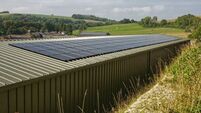
The report by Deloitte noted that the industry achieved the 33% public sector energy consumption reduction target for 2020 from a 2009 baseline and has a 30% target to further improve efficiency by 2030.
Biodiversity is being increasingly promoted at racecourses through dedicated rewilding and pollinator areas.
HRI racecourses are also adapting their approach to using fertilisers, ensuring that excessive nutrients are not applied whilst maintaining a safe and resilient racing surface.
“As the impacts of climate change become more evident via extremes of weather, increased watering of racing surfaces will also be required to maintain the highest standards of safety and welfare for jockeys and horses.
“Racecourses are therefore increasingly conscious of their actions here with water conservation being prioritised through on-site reservoirs to capture rainwater. Many of these are part-funded by HRI capital grants.
“Future developments to the fixture list may also be considered so that ground maintenance in the face of climate change can be better managed,” the report states.
The breeding industry is a significant promoter of environmental sustainability, with Coolmore Stud in Fethard, Co Tipperary, playing a leading role.
One of the largest in the world, it aims to create optimal conditions for its horses, extracting marginal gains wherever possible by considering all aspects of operations at its facility.
These include air, water and land, and all factors that can affect the physical development of its horses, from newborn foals to broodmares and stallions.
Coolmore carefully considers soil health, which ultimately contributes to the quality of grazing and nutrient provision.
According to the report, these initiatives are part of a wider nutrient management plan which is continually being refined, with soil and water samples being regularly extracted for monitoring.
Giving priority to these initiatives shows that Coolmore is at the forefront of environmental sustainability and regenerative farming. It is also taking a leading role in disseminating key learnings to wider stakeholders.
The report notes that the racing industry in Ireland is uniquely positioned at the intersection of the agriculture, sports, leisure and gambling sectors.
As such, it has a significant role to play in fostering and promoting strong sustainability practices and in protecting and strengthening the industry’s continued licence to operate.
Stakeholder expectations on sustainability ambition and performance have increased significantly in recent years.
The report adds that recognition of the growing environmental and biodiversity crisis in Ireland requires the industry to establish a robust and ambitious approach to sustainability.
Galway Races is a key part of that industry. With fifty-three races, the 2023 festival has a prize fund of over €2.1m on offer and contributes over €54m to the local economy.
Meanwhile, summary findings and recommendations from an independent assessment of environmental sustainability across British racing and breeding were also published last year.
It recommends that British racing take a "coordinated, industry-wide approach" to mitigating the risks and realising the opportunities.
Carbon emissions, water availability, the impact of extreme weather, and waste disposal, to commercial partnerships, supply chain management and changing consumer expectations are among the challenges listed.
But the report also recognises the potential for British racing to show leadership and innovation in tackling these issues – adapting operations where possible and finding effective solutions.
It outlines some of the activity already taking place across the industry from the management of key resources like water to reducing carbon emissions and promoting healthy ecosystems.