Environmental legal challenge over Aussie beef trade deal
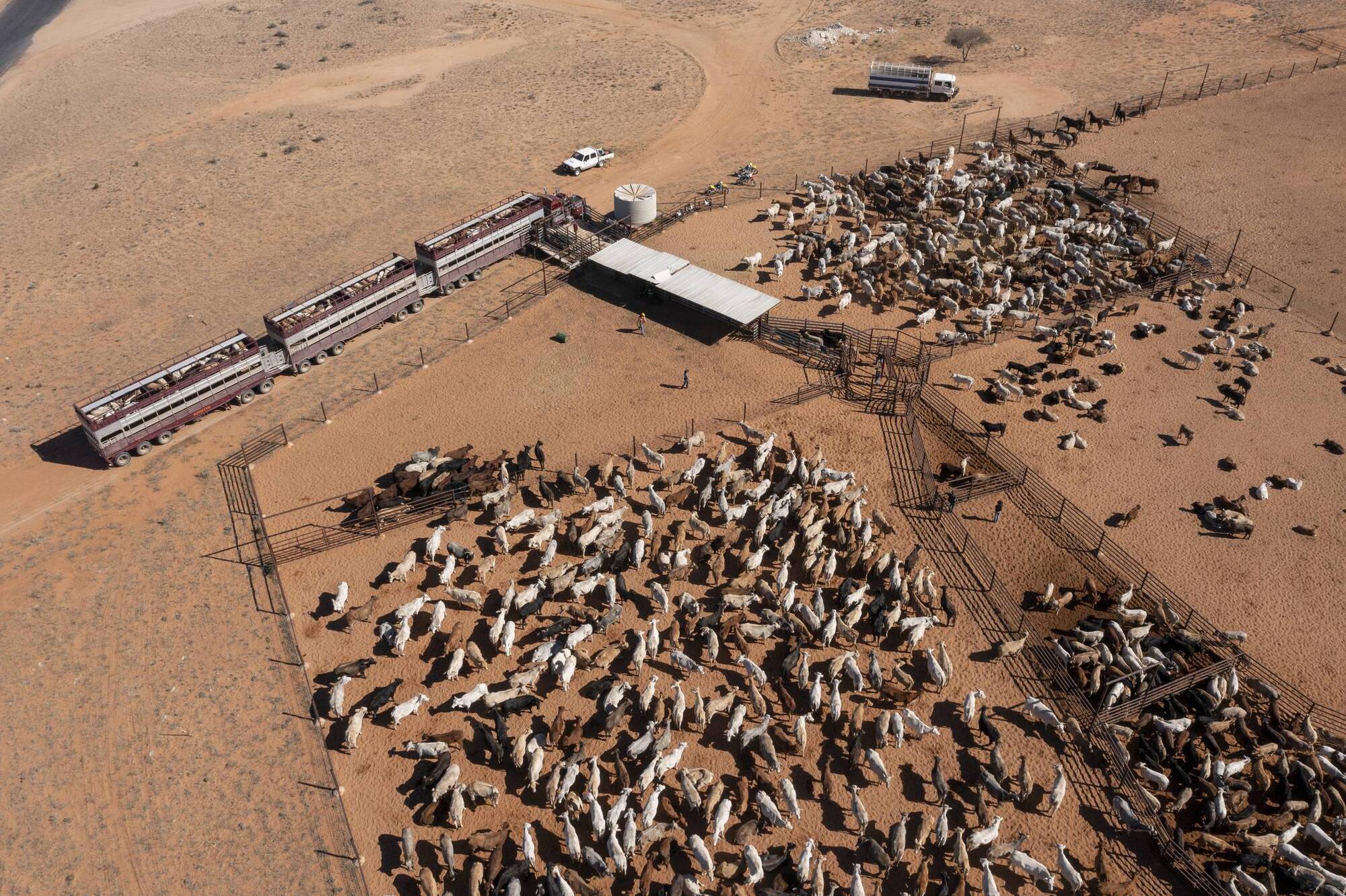
Beef cattle being loaded onto road trains in far western Queensland, Australia. Picture: John Carnemolla
Yet another leading meat-exporting nation looking for a big slice of the lucrative EU market has stalled one of the trade deals Brussels is anxious to conclude, as it seeks new partners to reduce trading dependence on China and on Russia.
Trade talks with Australia were halted last week by a dispute over meat quotas.
Australia is in the top two globally for both beef and sheepmeat exports. So it was perhaps not surprising that it could not agree how much of its meat exports will be allowed enter the EU tariff-free.
The EU is reported to have increased its initial offer of an annual beef quota of 24,000 tonnes, but this and the EU sheep meat offer fell far short of what Australia could accept.
EU leaders can turn to their farming populations and say they are putting their interests high on the agenda in the trade negotiations.
However, they may also have their eye on the new legal challenge against the UK government's trade deal with Australia which "has blithely thrown both British farmers and the Paris Agreement under the bus in its futile bid for positive post-Brexit headlines", according to Global Feedback, the UK and Netherlands based environmental lobby group.
The UK's trade agreement came into force on May 31, allowing 20,616 tonnes of Australian beef per year to enter the UK without tariffs, growing to 110,000 tonnes by 2033. Already, June imports were 384 tonnes, compared to an average of 103 tonnes from 2018 to 2022.
June figures show that up to now, only 0.4% of the UK’s beef imports came from Australia, compared to 68% from Ireland, long established as the UK's main source of imported beef, by a large margin.
However, Australian beef production is on an upward curve, with the cattle population set to increase 4% this year, taking total beef production to 2.2m tonnes in 2023, from slaughterings of 6.95m head.
A spokesperson for the Rinehart-owned beef company, a big Australian producer, envisaged getting 5% to 10% of their production into the UK. But it will take time for exporters to take advantage of the increased trade access to the UK.
The UK, up to now, was only Australia's 27th biggest export market, taking only 741 tonnes of beef and veal in 2022 (compared to 214,000 tonnes to Japan, Australia's biggest beef customer).
Environmentalists say Australia’s biggest cattle farmer has suggested the country's beef exports to the UK could rise tenfold.
But the fundamental issue in the legal challenge by Global Feedback is whether the UK government acted lawfully in deciding not to assess the relative carbon intensities of beef produced in the UK and Australia, for the stated reason that available evidence was inconclusive.
The legal challenge adds credence to the often-stated fear of EU farmers that Brussels will ignore environmental considerations in its rush to conclude trade deals with global regions where farming has a much higher carbon footprint.
A similar outcome in the EU may be feared by farmers and politicians in Ireland. Agriculture Minister Charlie McConalogue has urged the European Commission to minimise the additional beef and sheepmeat access to be offered to Australia.
More than a year ago, IFA President Tim Cullinan said the UK-Australia trade deal set a "perilous precedent" by undermining a very important market for Irish beef exports.
Every extra tonne of meat from Australia entering the UK will make business tougher for Irish exporters.
Global Feedback says a report for the UK government in 2021 found that the carbon footprint of Australian beef was 50% higher than for UK beef.
Farmers fear that agricultural emissions and deforestation will be glossed over in the EU's rush to conclude trade deals with South America’s Mercosur and with Australia, as it seeks new allies to reduce economic dependencies on China, and to replace its dependency on Russia.
Australia also wants trade deals, in order to reduce its economic dependence on China. And the EU wants better access to Australia’s vast mineral resources, vital for renewable energy industries and the green transition.
Negotiations will continue in August.