Poisoned eagles flew from Munster
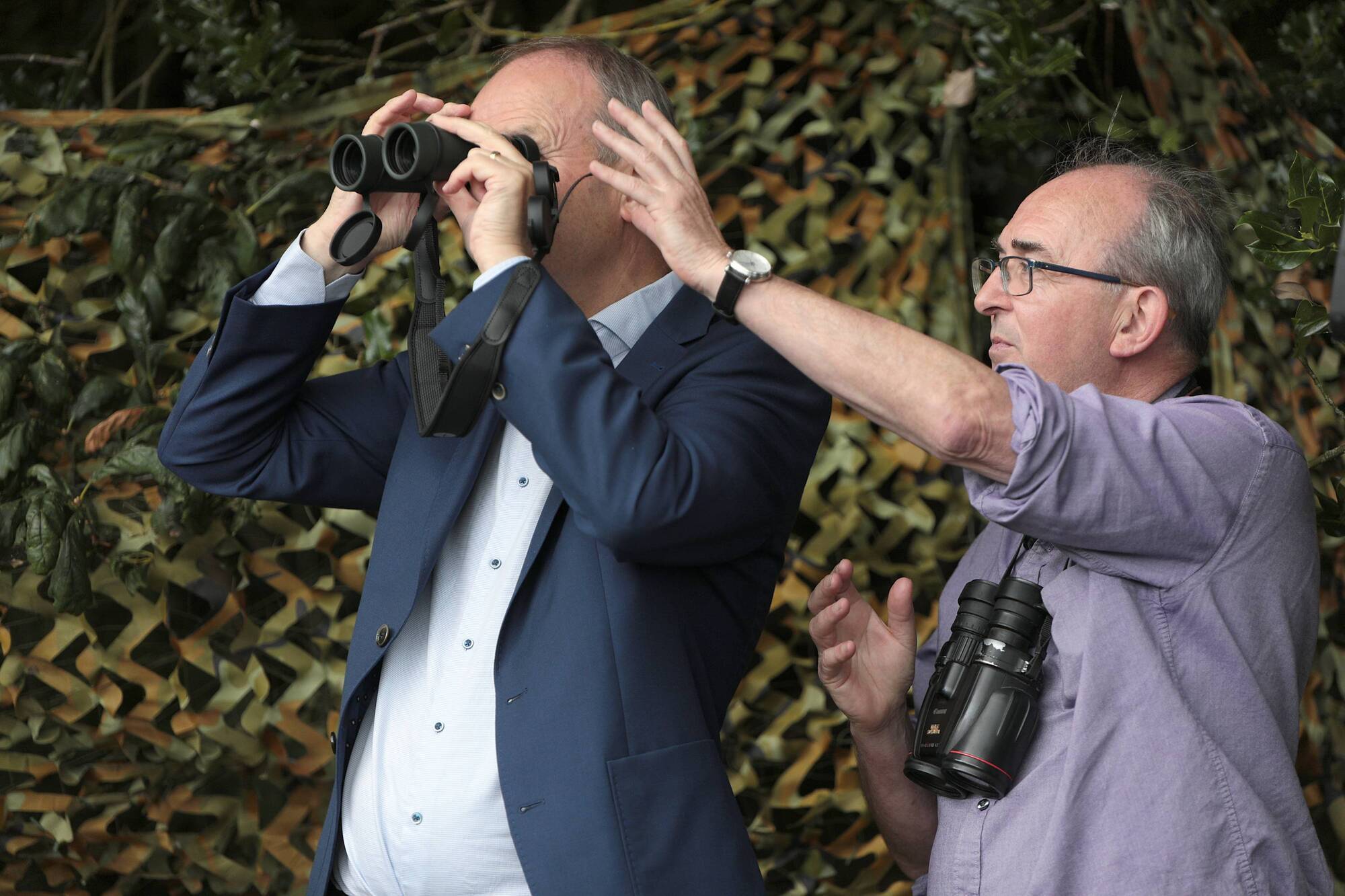
One of the birds had been released by the then Taoiseach Micheál Martin last August on the Shannon Estuary.
Poisoned eagles flew from Munster

One of the birds had been released by the then Taoiseach Micheál Martin last August on the Shannon Estuary. Picture: Valerie O'Sullivan

A pair of young white-tailed eagles found poisoned in Northern Ireland are believed to have travelled north from Munster.

The birds were re-introduced in recent years by the National Parks and Wildlife Service of the Department of Housing, Local Government and Heritage.


They were found dead on a hill farm in the Glenhead Road area of Ballymena, Co Antrim, on May 15, with the cause of death being later confirmed by the Police Service for Northern Ireland (PSNI).

One of the birds had been released by the then Taoiseach Micheál Martin last August on the Shannon Estuary.

Mr Martin said he was deeply saddened and shocked to learn of the death of the white-tailed eagles. He had closely followed the reintroduction programme for a number of years.

“These are an iconic species, and the work of the NPWS in reintroducing them is something I, and the Government, am proud to support.

“There have been great successes in the programme over recent years, so to learn of a poisoning like this is very disappointing,” he said.

PSNI Rural and Wildlife Crime Superintendent Johnston McDowell said the illegal killing of these beautiful birds in a popular rural area was "disgraceful".

The Royal Society for Protection of Birds (RSPB) is offering a £5,000 reward for information leading to the prosecution of those involved in the poisoning.

One of the young white-tailed eagles found dead had been brought in as a chick in 2022 from Norway under phase two of the NPWS-managed re-introduction programme.

He was fitted with a satellite tag so his movements could be followed. After being released, the young eagle spent months on the Shannon Estuary before starting to travel around the country.

The eagle crossed into Northern Ireland from south Donegal on May 1 and was found dead just two weeks later, alongside an untagged young eagle.

Mr Ó ‘Donnchú said the origin of the second dead eagle is unknown, but NPWS staff believe it most likely fledged from a nest in Munster in 2021.

“Investigations by the PSNI recently revealed that both young eagles had died as a result of ingesting an insecticide called Bendiocarb.

“It is not known how the eagles ingested this substance, but it was possibly from eating carrion (a dead animal) or other bait laced with the insecticide.

“According to the substance classification and labelling approved by the European Union, Bendiocarb is fatal if swallowed, is toxic in contact with skin and is toxic if inhaled.

“It is acutely toxic to many animals, particularly to birds, fish and some invertebrates such as bees and earthworms. Its use has been illegal in Scotland since 2005.

“Despite their toxicity, Bendiocarb, Carbofuran and other poisons continue to be used to target wildlife.

“Earlier this year, a white-tailed eagle was found poisoned by the illegal insecticide Carbofuran in Co Cavan,” he said.

White-tailed eagles are a protected species under the Wildlife Act. These birds were persecuted to extinction by the early 1900s.

But they are making a successful comeback due to the NPWS reintroduction programme started in 2007.

Some landowners may have, in the past, commonly used poisons to deliberately control crows and foxes, especially around lambing time.

The NPWS has issued a reminder that using poisonous substances to control foxes and crows is illegal and has been since 2010.

It said the potential for positive economic benefits from the re-introduction of the eagles had been demonstrated in Mountshannon, Co. Clare.

Thousands of visitors were attracted to the area after the first breeding pair in Ireland in over a century nested within sight of the village in 2012.

Sadly, one of the eagles died of avian Influenza in 2018. However, there is good news from Mountshannon as the widowed male has paired up with a female released in 2020.

The pair hatched two chicks this spring, and they are due to fly the nest later this month. They were recently ringed, and one was also fitted with a satellite transmitter.

Almost all chicks released by the project have been satellite-tagged since 2020. This enables the project to follow the movements of the eagles as they disperse and establish in new areas and to determine the locations of any birds which might be in trouble.

x

More in this section

Farming

Newsletter

Keep up-to-date with all the latest developments in Farming with our weekly newsletter.

Cookie Policy Privacy Policy Brand Safety FAQ Help Contact Us Terms and Conditions

© Examiner Echo Group Limited