Almost total adoption of measures required for 25% emissions cut
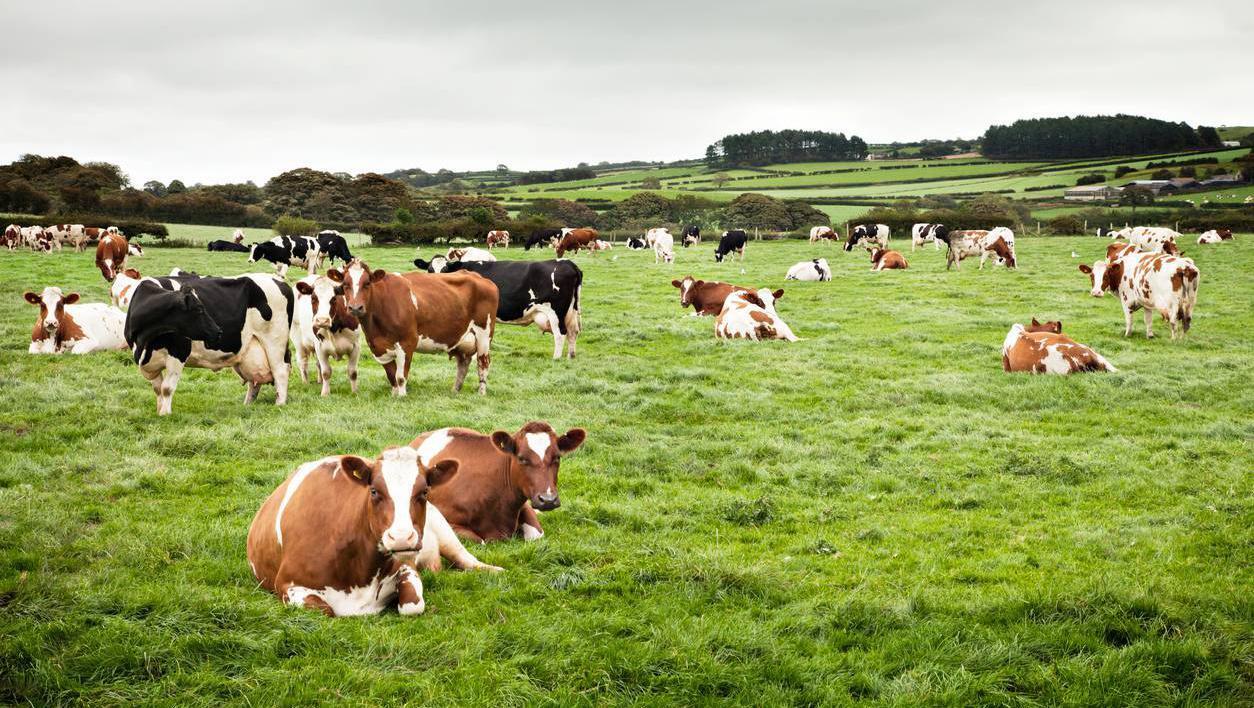
Teagasc has published its latest Marginal Abatement Cost Curve (MACC), which assists farmers and the agriculture sector in reducing greenhouse gas emissions.
Almost total adoption of measures required for 25% emissions cut

On Wednesday, Teagasc published its latest Marginal Abatement Cost Curve (MACC), which assists farmers and the agriculture sector in reducing greenhouse gas emissions.

Agricultural emissions targets will require a “very high” level of adoption of mitigation measures, as much as 100% adoption, to succeed, say Teagasc.

Under the emission reduction targets set out by the Government last year, agriculture emissions must be down 25% by the year 2030, from 2018 levels.

The sector has to reduce emissions to 17.25m tonnes of carbon dioxide equivalent (MtCO2eq).

On Wednesday, Teagasc published its latest Marginal Abatement Cost Curve (MACC), which assists farmers and the agriculture sector in reducing greenhouse gas emissions.

Three scenarios

The research looked at three scenarios, with differing levels of agricultural activity based on projected livestock numbers out to 2030.

These three scenarios were further analysed through two different pathways: Pathway one assumed a high level of uptake of mitigation measures among farmers, while pathway two assumed a very high level of uptake.

High adoption rates mean that all straight urea and 65% of the CAN spread would need to be switched for protected urea, the amount of nitrogen spread reduced by 20%, half the nitrate-based fertiliser swapped for ammonium-based compounds, and the finishing age of cattle reduced by two months. 

It would also require methane-inhibiting additives to be fed to 40% of cows during grazing, and 45% during housed periods.

The requirements for the “very high” category are even more stringent, requiring a 30% reduction in nitrogen spread, almost all (95%) of the CAN spread to the swapped for protected urea, 65% of nitrate-based fertiliser switched for ammonium-based compounds, the finishing age to be reduced by three months and methane-inhibiting additives to be fed to half of all grazing cows and almost two-thirds of all housed cows.

'No one measure will give big reduction'

Teagasc said the MACC shows that this can be achieved under the first scenario — which is considered the base or most likely scenario and is used by the Environmental Protection Agency (EPA) — but only if there is a “very high” level of adoption.

This scenario predicts an 8% growth rate in dairy cow numbers relative to 2022 and a 29% reduction in suckler cow numbers by 2030. However, this scenario predicts greenhouse gas emissions of 21.9 metric tonnes by 2030, which is still well above the levels needed.

Teagasc research officer Gary Lanigan warned that there was “no one measure that will give you a big reduction”, adding that a range of measures will be required to meet 2030 targets as well as very high adoption rates.

Diversification

Diversification into organic farming, forestry or particularly feedstock/grass production for biomethane production could also significantly reduce emissions by 2030. It was also suggested that manure management through additives and aeration as well as biomethane and extended grazing could reduce manure methane emissions.

In terms of reducing use of nitrogen fertilisers, Teagasc said that farmers should consider using reduced-nitrogen fertiliser or an altered fertiliser formulation - either protected urea or ammonium-based compound fertilisers.

Switching from calcium ammonium nitrate to protected urea or an ammonium-based compound would also reduce emissions by 553 ktCO2eq. Reduced crude protein in animal feed concentrates will also contribute to reduced nitrogen loading in soils.

All these measures are assuming a very high adoption rate.

Should the agriculture sector get the very high levels of adoption Teagasc are seeking, emissions could be reduced to 17 MtCO2eq.

Professor Frank O Mara, Teagasc Director, said the MACC shows there is a technology pathway for the agriculture sector to meet its obligation “but it requires a very high uptake of the currently available mitigation measures and future technologies to achieve that”.

x

More in this section

Farming

Newsletter

Stay ahead of the season. Sign up for insights, expert advice and stories shaping Irish agriculture.

Cookie Policy Privacy Policy Brand Safety FAQ Help Contact Us Terms and Conditions

© Examiner Echo Group Limited