Documentary to expose 'animal welfare issues' during calf live export journey
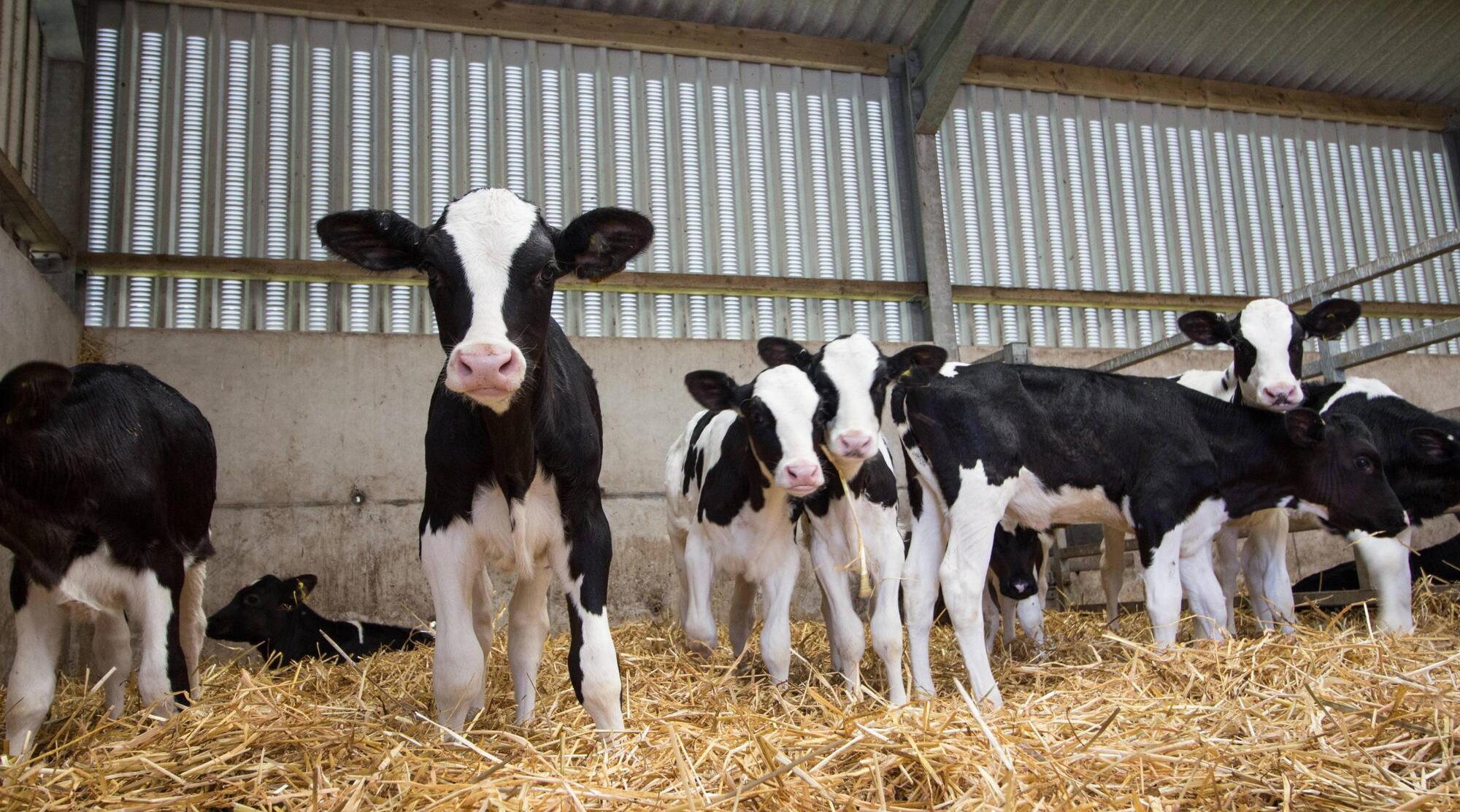
Picture: iStock
"Animal welfare issues at marts" and "breaches of regulations on the transport of animals in mainland Europe" have been exposed in a documentary to be aired on Monday night.
RTÉ Investigates has followed the export journey of bull calves born in Ireland and destined for other markets, uncovering the alleged ill-treatment of these animals, with footage of calves being kicked, thrown, pulled around in marts and during the export process.
The documentary - 'Milking It: Dairy's Dirty Secret' is to be broadcast on Monday night on RTÉ One, and follows the journey of male calves from dairy herds during the live export process, "from the farm to the mart, from the mart to the truck, on the ferry, to a transfer facility in France, and on the journey across the continent to veal farms in Poland, Spain, and France".
Around 200,000 dairy bull calves are exported each year from Ireland.
The removal of milk quotas in 2015 saw the dairy industry grow massively in Ireland, with a large increase in dairy cows, thus an increase in calves being born.
Male and female calves born on dairy farms can meet a different fate.
While heifers may stay on the farm, many of those live exported from Ireland for veal or sold for very little through the marts are usually dairy bull calves, which are seen by some as the unwanted by-product of the dairy industry, of lower value as they do not produce milk and not worthwhile economically for farmers to fatten for beef.
In Monday's documentary, RTÉ's Fran McNulty said that the team carried out undercover filming throughout a 61-hour journey of calves being live exported from Co Wicklow - with "calves bawling" during sea transport as they "cannot be fed aboard the ship" leading to over "21 hours without milk" for the hundreds of young animals aboard.
The show will also show what happened to the calves upon arrival in France where the truck full of calves leaves the ferry, with "breaches" of EU regulations "on animal feed and rest times exposed", RTÉ said, with "no checks of animals" made by the driver of the truck on the "tired and weary" calves as they were brought to a veal farm in Spain.
The IFA has said that an investigation that is "swift, thorough, and robust" must be carried out "into incidents of mistreatment of animals at marts and during transport" uncovered in the documentary.
"IFA and our farmer members have a zero tolerance approach to the mistreatment of animals," the association said in a statement on Monday.
"Sales at public auction and the transport of animals are governed by regulations and these must be adhered to.
"Anybody who has evidence of wrongdoing should bring it to the attention of the authorities immediately."
The IFA added that it “was not asked to contribute to the RTÉ Investigates programme so we have not been shown the footage obtained by RTÉ”, and will not make further comment until the programme airs.
Issues around the fate of dairy bull calves were under the spotlight earlier this year during the spring calving season when a record number of category V calves were slaughtered in Irish factories.
Category V calves are those slaughtered from the day of birth until the day they reach the age of eight months.
In the week ending March 5, there were a record 4,546 of these calves slaughtered.
Minister of State at the Department of Agriculture, Food and the Marine Pippa Hackett had described the figure as "unacceptable".
"The dairy sector must take responsibility for its unwanted calves," Ms Hackett said.
"This has a detrimental impact, not only on the animals, but on the public perception of farming."
The IFA has said that dairy farmers must be of the view that the dairy calves born from their herd are their responsibility, whether they are heifer calves they will retain as replacements, or male and female calves which will be fattened on or off the farm or exported.
The Calf Stakeholder Forum is working to encourage the further development of outlets for calves from the dairy herd, by improving the viability of dairy calf-to-beef systems, for example.
The forum is also working on bringing an end from next year the slaughtering of young dairy bull calves.
"The IFA and our dairy committee has clearly stated that every farmer has to take responsibility for all the animals born on their farm,” Mr Maher previously told the .
"The development of sexed semen has certainly been an advance in trying to reduce the number of animals that are available for sale of this type at the wrong time of year.
"The real problem here is not so much the numbers, it’s the time of the year they’re all born together. Because farmers have got so good at their job, in concentrating the calving period in that four to six-week period, the supply is just so strong at that point in time it does cause difficulties.
"There’s no doubt the labour availability on farms is certainly putting huge pressure on farmers in accessing some labour to assist them with the four to six weeks busy period of which that calf rearing period fits into."