'Some co-ops won't survive' nitrates stocking rate cut - Cahill
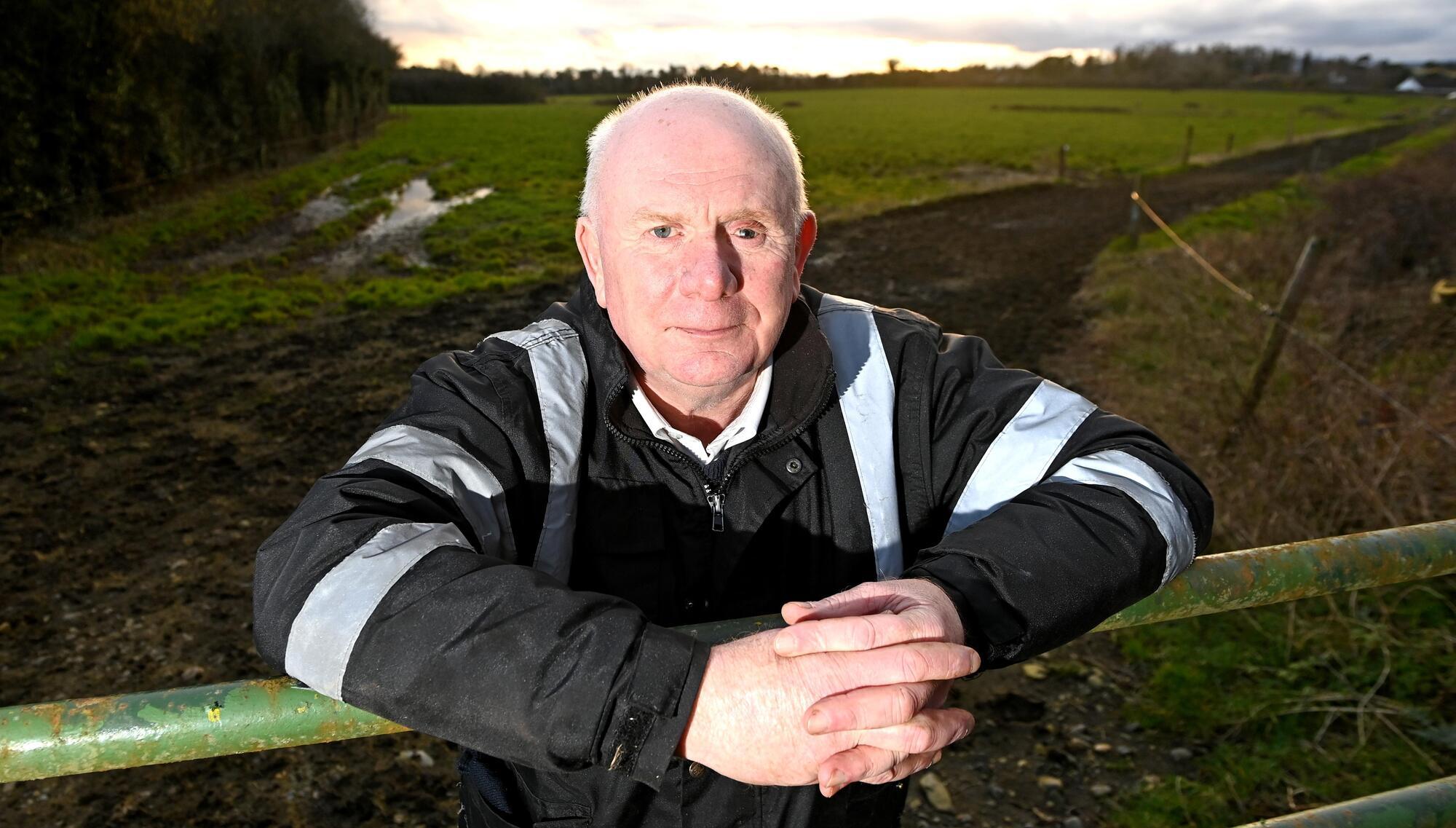
Jackie Cahill said the reduction in maximum stocking rate "would be devastating", and the "future of some processing co-ops will be threatened" with a reduced milk pool expected. Picture: Eddie O'Hare
Fianna Fáil TD Jackie Cahill has warned that "some of our co-ops won't survive" a cut to stocking rate in the nitrates derogation.
Dairying is the "driving economic force" of rural Ireland, Mr Cahill said, "and without our vibrant dairy industry", it would be a "seriously poorer place".
The Oireachtas joint committee on agriculture, food and the marine held a session this week with Government officials on the derogation and nitrates rules.
The Environmental Protection Agency last week published its report - Water Quality Monitoring Report on Nitrogen and Phosphorus Concentrations in Irish Waters 2022 - which shows that nitrate concentrations "remain too high in rivers, groundwater, and estuaries in the south-east, south-west and midlands and eastern regions".
While negotiations are continuing, the EPA’s report has gone to the commission.
The report is part of the interim review process of the Nitrates Action Programme.
The review was required by the European Commission as part of granting Ireland’s nitrates derogation.
The report outlines the regions that could be required to reduce their organic nitrogen stocking rate to 220kg per hectare from 250kg in 2024 under the derogation, as a result of the effect of agriculture on water quality in these areas.
This would likely see a reduction in herd numbers.
Mr Cahill told the committee meeting that he is farming in derogation, and that the 250kg stocking rate is "hugely important to the economic viability of my own business".
"Negotiations have been going on a while at this stage, I feel that there's a view a reduction in our derogation level is inevitable, I think there's a defeated attitude by the department," Mr Cahill said.
"We have taken on new measures in the last 12 to 18 months which are putting extra onus on derogation farmers but will definitely bear fruit going forward.
"It's a very few short years ago since we were at the abolition of quotas, and serious incentives were given to both farmers and processors to increase production."
To say the sky was the limit "would have been an understatement", according to the Tipperary TD.
"Production increased rapidly, and there was a huge investment into processing facilities and huge investment at farm level too to cater for the increased cow numbers," he said.
"If it comes to pass that we fail to secure the 250kg per hectare of organic nitrogen, it's going to have a very serious impact on our processing industry.
"It will add very significantly to the cost of processing milk and that will impact on every dairy farm.
"You can do estimates on what it will add to the cost but I would say conservatively, with the banding that has been introduced this year and if we have a reduction in the organic limit, you're talking probably about 2c to 3c per litre of an impact on the cost of processing which would seriously impact on all farmers' income."
He said the reduction in maximum stocking rate "would be devastating", and the "future of some processing co-ops will be threatened" with a reduced milk pool expected.
"Some of our co-ops won't survive if we have significant spare capacity there," he warned.
Mr Cahill stressed that Ireland has a "very sustainable pattern of milk production", and the steps that have been taken to improve water quality recently "will show dividends going forward".
"I think the core of our argument with the commission in Brussels has to be that we are taking steps here, we are modifying our practices, those practices are starting to bear fruit, they will impact on water quality going forward," he said.
"It takes a significant amount of time for changes in practices to impact on water quality and to show a significant return in water quality."
Due to the level of concern over the nitrates derogation, farmers are organising a protest to be held in Bandon in Co Cork on Thursday evening, around 7pm.
Farmers across Co Cork are being urged to attend the protest in large numbers, with members of all farm organisations, from all farming backgrounds, and those in the wider industry being called on to support the cause.
Mr Cahill said that with the average age of dairy farmers in Ireland being 59, there is a need to "attract young people" into the industy - and "they have to see a career path and progression".
"Thankfully the next generation is starting to farm with me, and if I tell him next week we're going to have to reduce cow numbers by 10%, 15%, 20%, I would dread to see what his reaction would be because no young person likes to take a step backwards and it's going to have a huge psychological impact on our industry," he said.
At the Teagasc Moorepark open day this week, Minister for Agriculture Charlie McConalogue committed to looking at Macra's succession scheme proposal strongly, and that one of his key objectives is to ensure young farmers can get into farming.
"Macra welcomes the minister's commitment to strongly look at the Macra succession proposal, given all of the noise at the moment around possible reductions in herd sizes, it is heartening to see a bit of light at the end of the tunnel," Macra president Elaine Houlihan said.
"We keep concentrating on the sustainability of the sector in relation to its environmental sustainability, with little thought about who is actually going to farm into the future.
"Without new entrants into the industry being supported, it will not matter what measures are put in place as there will be no industry."
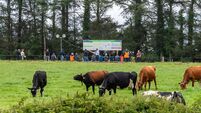
Thousands of dairy farmers attended the Moorepark open day in Fermoy.
Speaking at the event, Teagasc director Frank O'Mara said that dairy farmers had a good year in 2022, but there are challenges this year with the adjustment in the price of milk.
"There are huge levels of engagement from farmers with the available technologies on display to help them to maximise their competitiveness while at the same time to reduce their emissions, protect water bodies and improve biodiversity on their farms," he said.
"On this farm here in Moorepark, there have been over 4km of new hedgerows planted in recent years and three hectares of woodlands.
"Nationally, farmers reduced their nitrogen fertiliser use by 14% last year, and farmers are adopting the technologies to further reduce chemical nitrogen by incorporating white and red clover into their farming systems and by using low emission slurry spreading techniques to optimise the efficient use of nutrients in animal manures."