Galway growers issue a 'save our summer' plea for consumers to support local
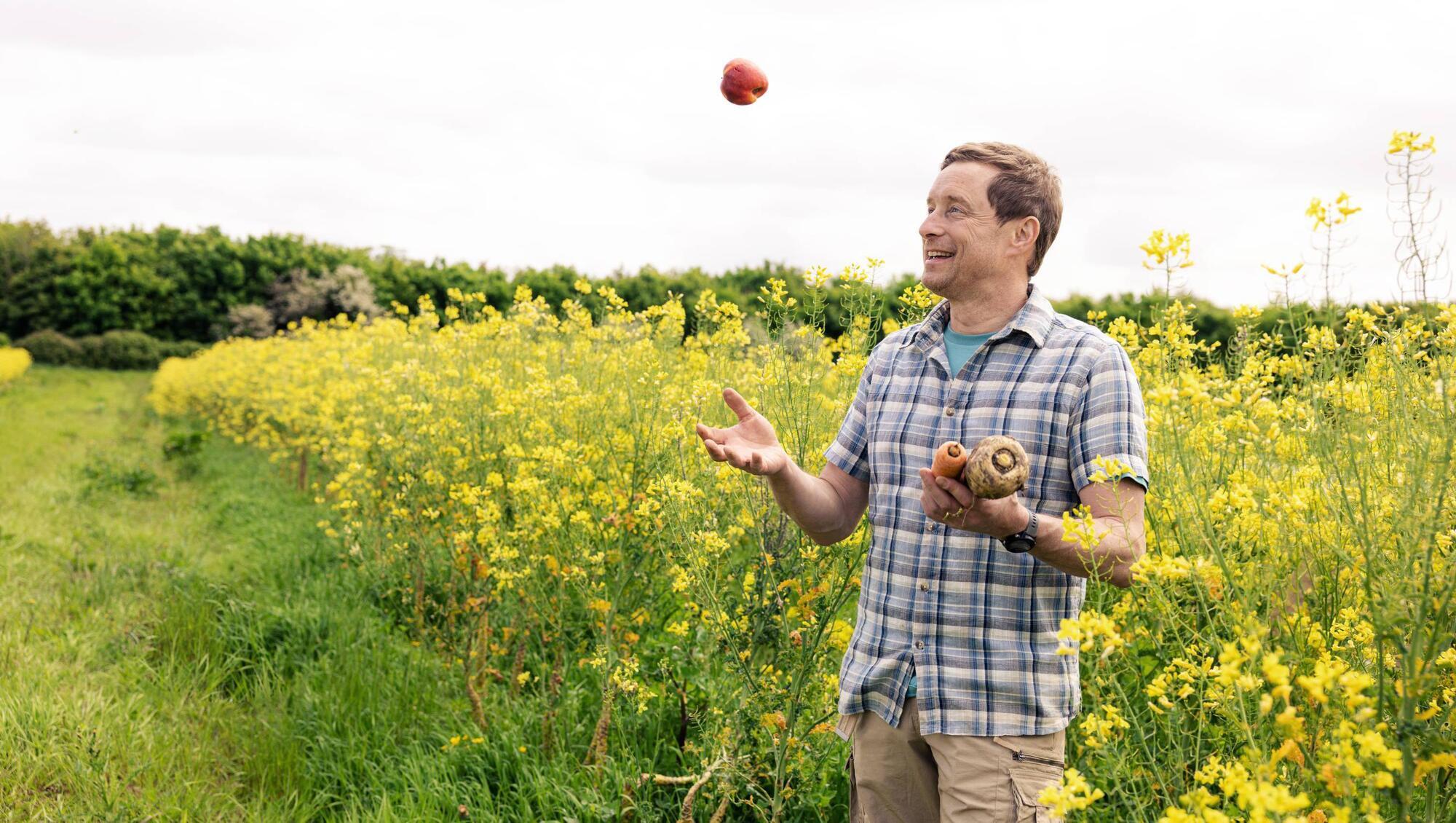
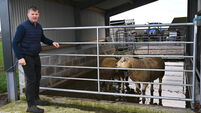
The Keavey's said that with growers unable to compete on price as supermarkets stock their shelves with cheaper produce imported from abroad, their farm and the eight other growers its business supports now form part of just 1% of farms in Ireland to still be using their land to harvest vegetables. Picture: Kirsty Lyons
A Co Galway organic family-run farm has issued a "save our summer" plea urging consumers to continue supporting local food producers over the coming months.
Summer marks the point in the year when the output of organic Irish fruit and vegetables from Green Earth Organics, a 28-acre farm growing 20 different crops in Corrandulla run by husband and wife team Jenny and Kenneth Keavey, is at its peak.
From the beginning of June to the end of August, the farm alone will yield over half a tonne of salad leaves (4,000 bags); more than 2.5 tonnes of cherry tomatoes (10,000 punnets); and over 10 tonnes of broccoli, to name but a few.
They run a home delivery service, and while they used to supply produce to supermarkets, they no longer do.
The Keavey's farm originally belonged to Kenneth’s grandfather Martin Keavey.
The couple put the farm into conversion for organic status in 2004 and it was subsequently certified 100% organic by the Irish Organic Association in 2006.
They made their first vegetable box deliveries locally in May 2006, before expanding their business to offer nationwide deliveries to customers from 2015 onwards, with a customer base of more than 3,000 households all over Ireland now.
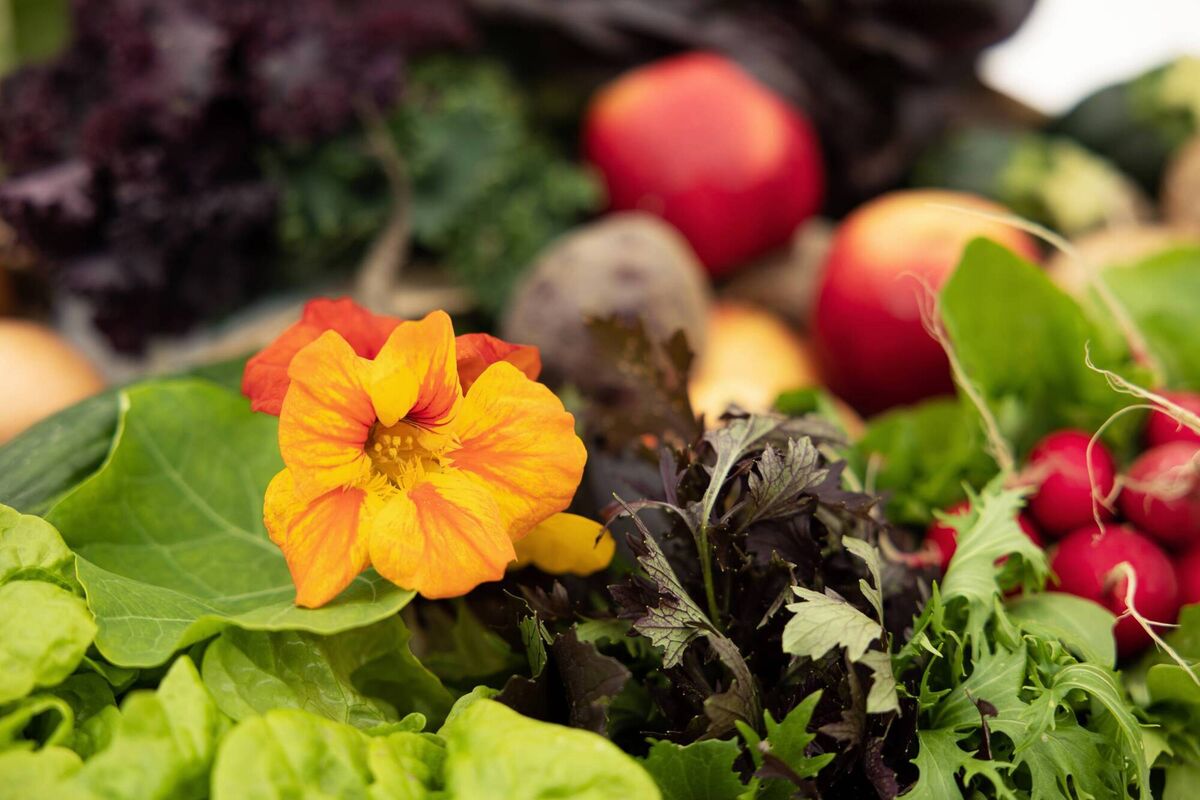
It is also peak season for the eight small-scale organic growers from seven different counties on the island who supply the Keavey's produce delivery business each week with leeks, scallions, potatoes, and apples, among many other vegetables and fruits.
However, despite all the bountiful summer harvests, it is during the summer time that many of their regular customers break their routine with cooking and head away on holiday, and cancel their weekly orders.
By mid-June, they said that this can lead to a drop off in online orders by as much as 25%.
Every year this leaves the farm - which employs 40 local full and part-time staff during the busy summer season - in a tough situation; with the prospect of having no option but to put the leftover surplus that they don't have customers for - and which has taken months to grow - on the compost pile.
Greenhouse gas emissions from food waste have been identified as one of the largest contributors to climate change and globally it is estimated that 1.4bn hectares of land is used to grow food that is subsequently discarded.
Locally, the Environmental Protection Agency estimates that Ireland alone generated 770,300 tonnes of food waste in 2020.
The farm has issued a 'save our summer' plea in a bid to shine a light on the plight of their farm and others, and encourage shoppers to continue supporting local.
This includes increasing awareness of the bigger problem: the demise of the country’s indigenous vegetable-growing industry as a whole.
The Keavey's said that with growers unable to compete on price as supermarkets stock their shelves with cheaper produce imported from abroad, their farm and the eight other growers its business supports now form part of just 1% of farms in Ireland to still be using their land to harvest vegetables.
Kenneth Keavey said that it is hard to assess harvest needs a year in advance, and in the last two years there has been "much volatility", and that the farm is "not sure what way is up anymore".
"Our best-laid plans were made back in November and now we are harvesting the fruits of our labour. The summer downturn can often leave us with nowhere to turn but to put the produce back into the ground as compost," he said.
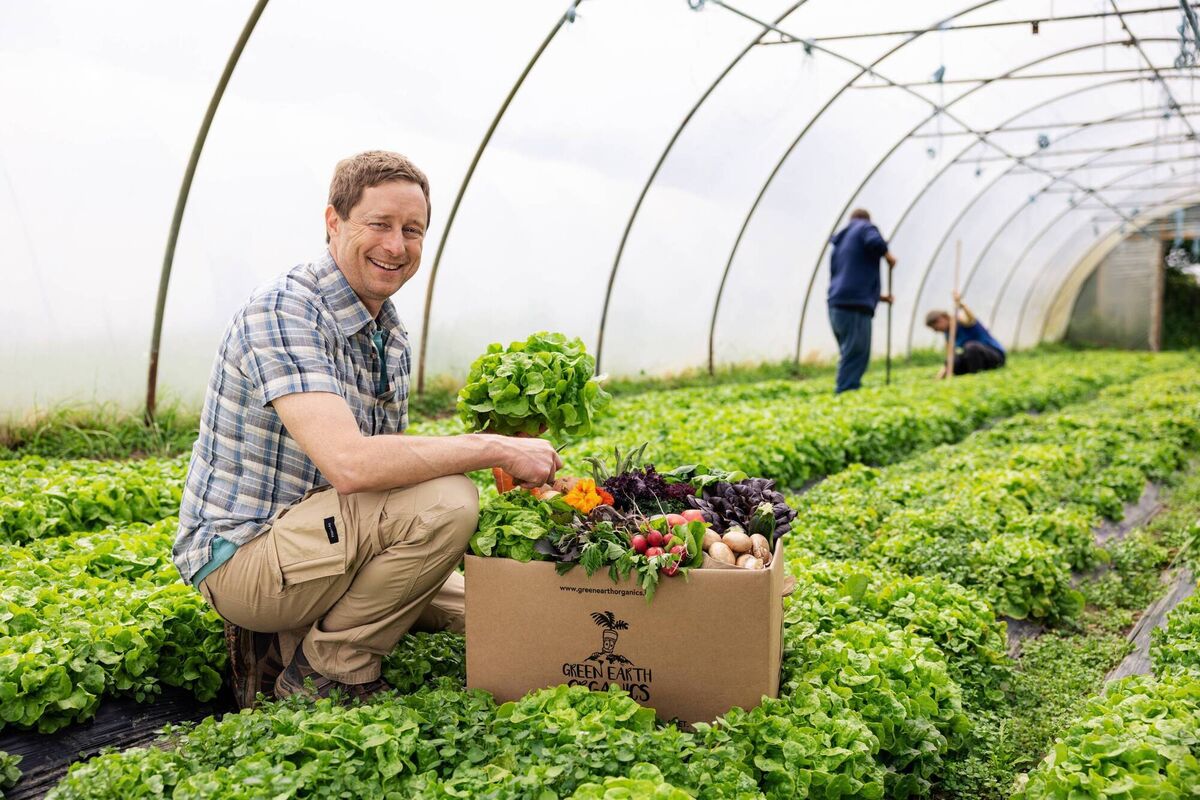
Mr Keavey told the that last year he was left "devastated, because we built up quite a good customer base over Covid because of our home deliveries, and then people last year disappeared; July and August were a wipe-out, and they are critical months".
"You've planned for this level of custom and all of a sudden then you don't have it," he said.
"We’re going into this summer not really sure what’s going to happen; we’ve ploughed along anyway as if things are going to be grand, but we know it’s probably not going to be – we don’t know what to expect this year because it’s been so unusual for the last four years."
Like any farming business, Mr Keavey said, "it's very difficult to make any sort of profit".
"If we break even, we’re reasonably pleased with ourselves after the year," he said.
"The two months of July and August, if we have tonnes of cherry tomatoes and we can't sell them at the price they need to get because we have to discount them because we won't have enough people to buy them, that affects the overall performance of the farm in a year.
"You can only sustain that for so long before you have to start going 'well this isn't working anymore'."
If there aren't the customers to buy the produce over the summers months, then it is "counter-productive", Mr Keavey said, "because you have the best weather, the greatest chance to get farm work done, you have great harvest, and then it's just the market... it disappears from under you".
Teagasc has estimated that the area of field vegetable production in Ireland is to decrease by 7% in 2023.
In recent years, a significant number of primary producers in the vegetable sector and other horticultural sectors have ceased trading, and this is expected to continue.
Input price inflation in the horticulture sector in Ireland has taken a firm hold; it has its roots in Brexit, the covid pandemic, and more recently the illegal Russian invasion of Ukraine.
Mr Keavey said it is concerning that "supermarkets won't even move to the tune of a few cents on a head of cabbage or celery and that just seems wrong to me; it is wrong fundamentally".
"The cost of living crisis at the moment is one of the things foremost in people's minds so there is that aspect when it comes to food, but I don't think loss-leading and devaluation of food produce by the supermarket helps any primary producer in this country," he said.
While cheap prices for fruit and veg on the shelves can be of benefit to the consumer in the short-term, "in the long-term, the indigenous industry will suffer as a result".
"It's short-term gains with a long-term cost; I think if things were priced more fairly, then there might be more value put on fresh food and that would be a mindset change which could be very beneficial to farmers," Mr Keavey said.
He added that the horticultural industry in Ireland is small, "and yet it produces quite a bit of food" for the population.
"Having fresh food producers is something that is good and when the skillset is gone and the infrastructure is dismantled, it is very difficult to put it back in place," Mr Keavey said.
"It takes years to build up the ability to commercially grow vegetables - like any industry, it takes time and experience and it would be sad to see that disappear.
"If it does, where do we turn then?"
The Oireachtas Joint Committee on Agriculture, Food and the Marine will meet this evening to discuss consolidation in horticultural grower numbers with representatives of the Irish Farmers' Association.
Ahead of the meeting, committee chairman Jackie Cahill said that the Irish fruit and vegetable sector is currently worth in excess of €500m and is anticipated to grow by 30% in the coming years.
"However, the horticultural sector faces many challenges, including the rising cost of production and downward pressure on prices by the retailer," Mr Cahill said.
"These and other cost factors have resulted in the consolidation of growers over the past decade.
"The committee looks forward to discussing these challenges and the changes needed to save and protect this vital agri-food sector with farmer representatives."