Beef prices stabilise but leaders are going to have take action to protect their members
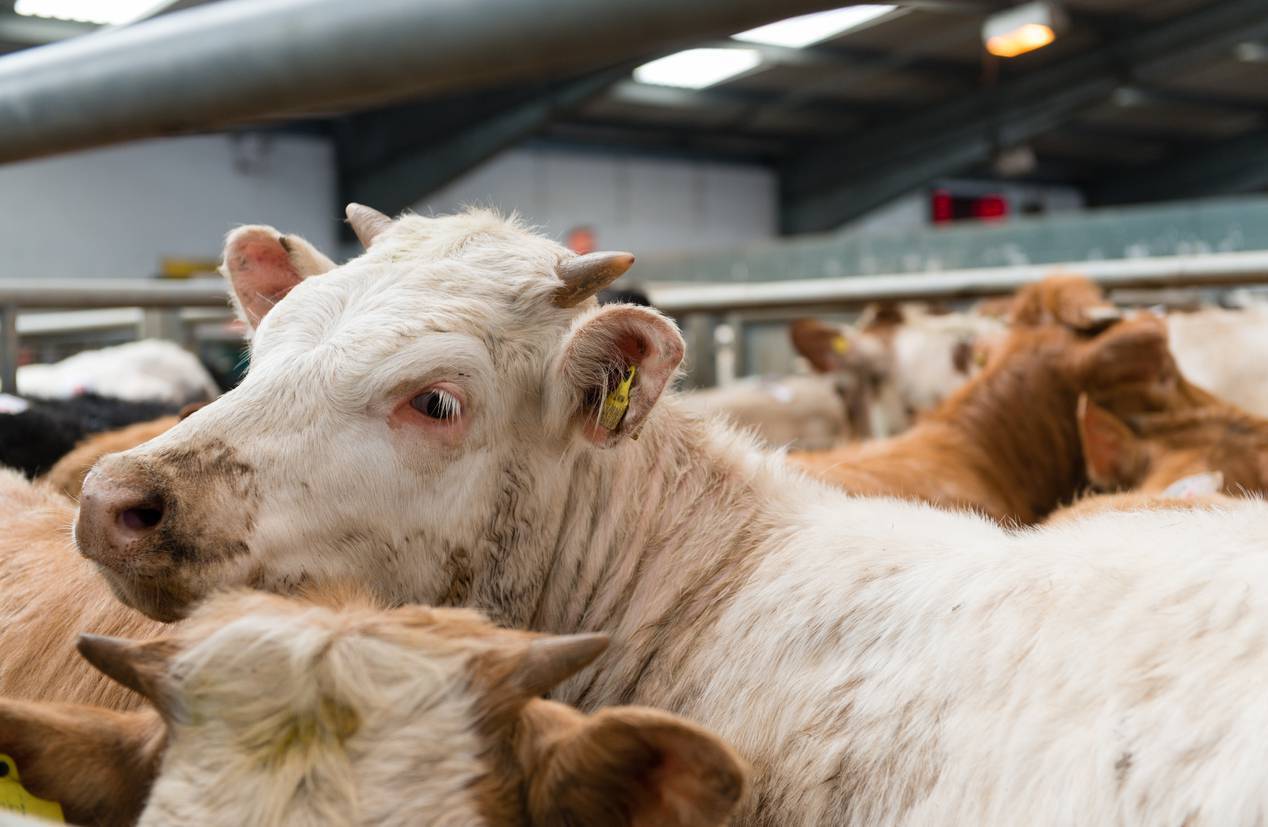
The belief is that the factories have been relying on feedlot supplies to make up their weekly requirement and reduce the price paid to direct farmer suppliers for several weeks past.
After consecutive weeks of a downturn, beef finishers are taking some hope for the future from the stabilising of the prices for the prime cattle at the factories for this week.
The processors have quoted unchanged prices for both steers and heifers as the changeover in supply from the feed lots to grass-finished advances another notch.
Feedlots and contract finished cattle are believed to have been the main source of supply to the processors over recent weeks with estimates that overall year-to-date feedlot cattle could account for up to 25% of the intake.
"The belief is that the factories have been relying on feedlot supplies to make up their weekly requirement and reduce the price paid to direct farmer suppliers for several weeks past," summed up one close observer who argues that the 'ordinary farmer finishers' have lost any negotiating power to put pressure on the processors for price.
"The whole pattern of the trade is changing and the farmer-finisher has definitely lost the control. Our leaders are going to have to realise this and take action to protect their members who are being forced out," he added.
But the clouds over the trade for manufacturing beef have darkened and that is a concern for all finishers trying to measure the trend of the trade movement on prices for the coming months.
The quoted cow prices for this week have taken a severe hit with the return to suppliers for R-grade cows now back by around 60 cents/kg on the Spring price. If the traditional belief of cattlemen that the trend of cow prices is an advance guide on the prime beef trade still holds, the Autumn finishers will be keeping a close eye on those hovering clouds over the cow trade.
The steer price remains on a base of 490 cents/kg. Some suppliers are reporting getting 495 cents/kg, but it is not generally available. The pattern of trade for the heifers is broadly similar on a base of 495 cents/kg with some deals at up to 500 cents/kg being achieved.
As mentioned, the cow trade has taken another hit with R-grade cow prices slipping to 440-445 cents/kg this week and it is not long ago that the good R-grade cows were making 500-505 cents/kg. The young bull price is continuing to run par with the equivalent steer grade.
Intake at the factories for last week came to 32,445 head which was almost identical to the corresponding week last year. Similarly, there was little difference for the categories from 2022. Last week's kill included 10,885 steers, 8,534 heifers, 8,701 cows and 3,646 young bulls.