How much forest is needed to sequester global emissions?
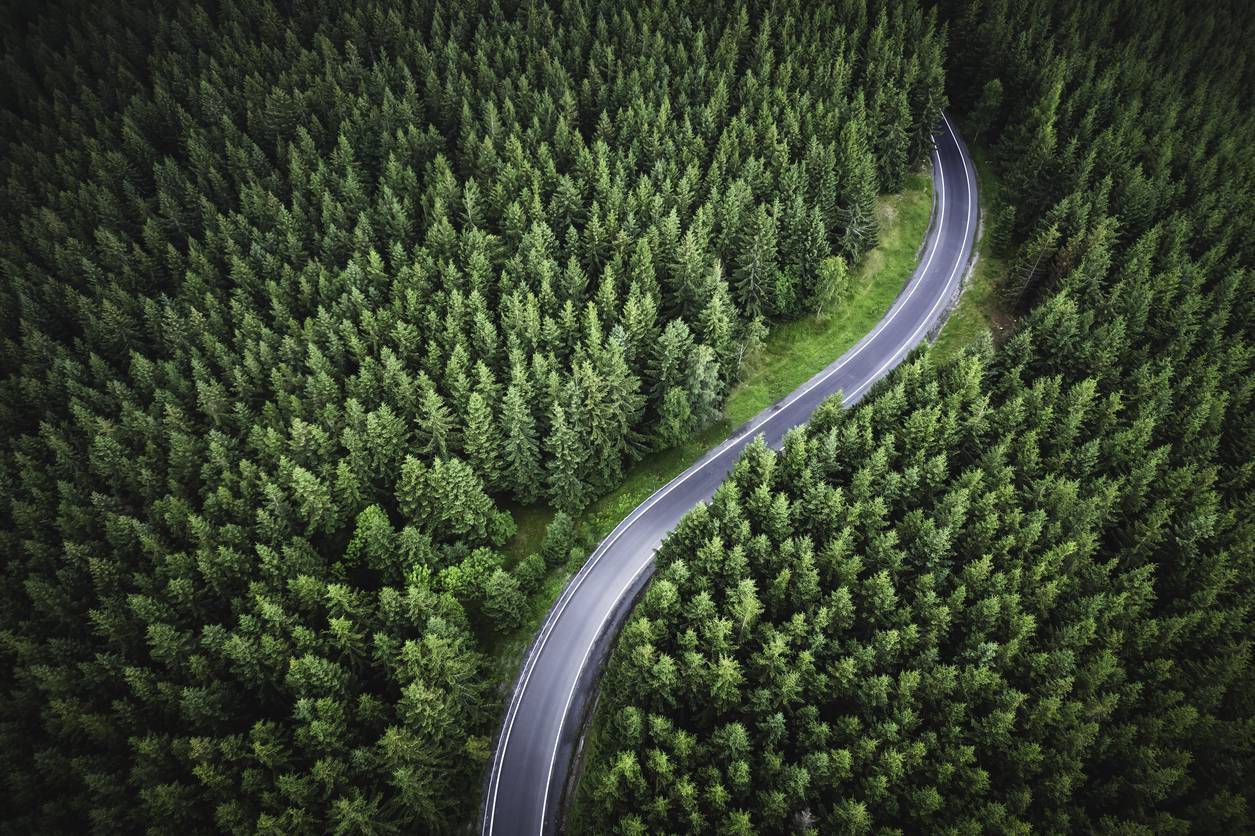
An area of forest larger than Germany, France, and Spain together, allowed to fully grow, would be needed to compensate for one single year of global carbon dioxide emissions, according to the EU's Joint Research Centre science and knowledge service.
An area of forest larger than Germany, France, and Spain together, allowed to fully grow, would be needed to compensate for one single year of global carbon dioxide emissions, according to the EU's Joint Research Centre science and knowledge service.
Forests naturally absorb atmospheric carbon dioxide and store it in their biomass, playing a large role, along with strong reductions in emissions, in International policy frameworks such as the UN Framework Convention for Climate Change, the Paris Agreement, and the EU’s European Green Deal.
Working with experts at the ETH Zürich university in Switzerland, JRC scientists have calculated that the climate mitigation potential of forestry is limited, even if logging is stopped in order to increase the amount of carbon that can be stored in trees.
An end to logging would only increase global forest carbon by about 15%, equating to about four years of current manmade carbon emissions (at the 2019 carbon emissions rate from fossil fuel).
They concluded that carbon uptake by forests should instead be used only to compensate for the emissions of sectors which cannot be decarbonised completely, such as agriculture.
The researchers also warned that planting new forests for their carbon-capturing potential can have negative social and ecological impacts, and substantial costs.
And afforestation strategies are complicated by the strong competition for land to expand agriculture and urban areas, in line with the projected population increase in the coming decades.
Even if this competition for land were somehow to be overcome, storing enough carbon in trees to mitigate climate change in a meaningful way would require massive amounts of land.
In Ireland, sequestration of carbon in planted forests is calculated to average 6.9 tonnes of carbon dioxide equivalents per hectare for conifer species annually, and 2.3 tonnes for planted broadleaf forests.
Carbon sequestration by forests is influenced by a range of factors including species, soil type, site conditions and management practices. When forests are young, the sequestration rate is low, but as the trees mature, their ability to sequester carbon dioxide increases.
The national forest estate has reached 808,848 hectares in 2022,or 11.6% of total land area. The afforestation target is 8,000 hectares per year. But planting has slowed, falling to 2,434 hectares planted in 2020, 2,016 hectares in 2021, 2,273 in 2023, and 441 hectares planted in 2023 to date.
To incentivise planting, a €1.3bn 2023-2027 Forestry Programme will replace the previous programme which expired at the end of 2022.
However, it is subject to State Aid approval from the EU Commission, and to an ongoing Strategic Environmental Assessment and Appropriate Assessment process.
Having officially received details of the programme in April, the Commission will decide if the aid proposed under the new Programme is compatible with EU rules.
In the meantime, interim afforestation, forest road and ash dieback reconstitution and underplanting schemes (RUS) are in place to incentivise forest development. Landowners with valid licences issued before the end of 2022 can avail of these schemes. These licences include 797 approved afforestation licences totalling 5,819 hectares. From these, to date in 2023, over 1,692 hectares have been approved for planting, along with 39,721 m of forest road, and 74 hectares in the interim RUS scheme.
The De Minimis aid for these approvals cannot exceed €200,00 over any three fiscal years to any individual or company.