It's getting dry very quick - how to handle supercharged growth
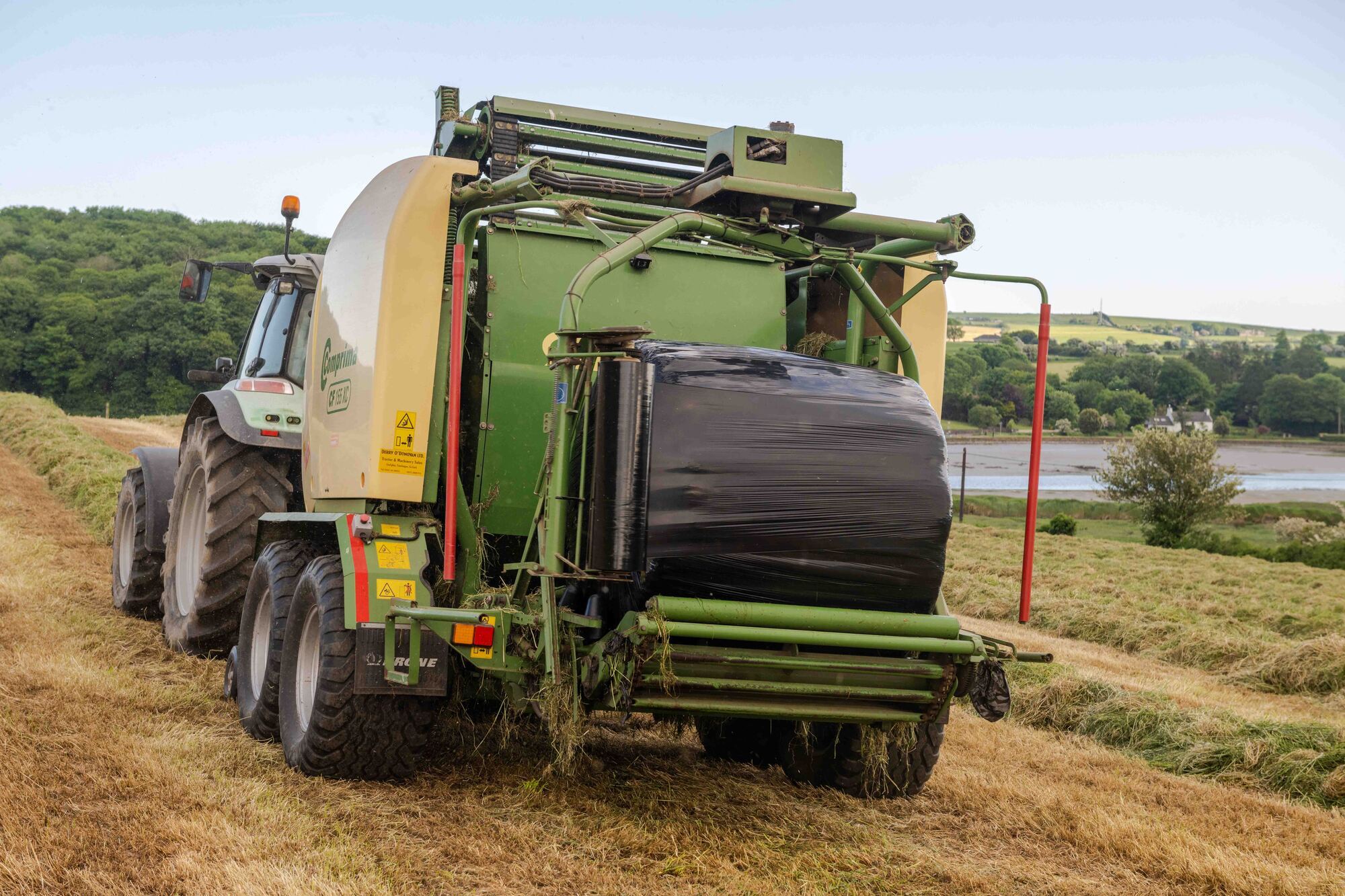
On the hottest day of the year so far, Richard McCarthy, who farms dairy with his brother Michael, bales silage on his farm in Timoleague, West Cork. Richard uses a Deutz-Fahr Agrotron K610 tractor and Krone Comprina CF 155 XC baler. Picture: Andy Gibson.
It looks like late May and Early June of this year will be very similar to 2022, when it got dry very fast.
The rain has disappeared very quickly and ground is drying up rapidly. Grass growth has been supercharged in the last two weeks or so and grass quality has changed significantly.
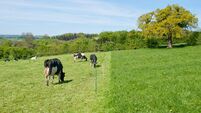
Some grass has gone well beyond being appropriate for grazing in a matter of days and has had a detrimental effect on animal performance. These high growth rates won’t be for long, putting the brakes on if the roots can't access sufficient nutrients and moisture.
Dairy herds are reporting a further drop off in yields and butter fats have dropped due to lower fibre digestion rates.
This is all related to a drop off in energy and protein in the stronger grass, resulting in depressed intakes of total feed. Cows and cattle are happy out, thrown out in the sunshine, but they are not eating sufficient dry matter to maintain performance.
Milk urea levels remain very low in herds and this must be considered when feeding concentrates and when applying nitrogen to grazing swards. Low urea in milk indicates that the herd are either not getting enough protein or insufficient energy to digest the protein they are consuming.
Nitrogen is protein, so poor uptake of nutrients by the sward leads to low protein grass. An extra kg of a 15% meal will supply 130g of extra protein, which will support approximately 1.5 litres of milk production. Protein also encourages better intake of all feed offered.
I can't stress enough the importance of having a plan for if we don’t get rain soon and grass growth drops off. Begin stretching available grass once you see growths tailing off.
Be prepared to house or feed selected groups of stock outdoors. For dairy herds, look at increasing concentrates and/or offering a quality forage to improve total intakes.
For sucklers, weanlings, replacements or stores, there is no panic just yet, but be prepared to start introducing some forage and then concentrates at a later date, if necessary.
For cattle destined for slaughter later in the year, introducing concentrates earlier and finishing them earlier will help to take the pressure of grass and silage supplies in a few months' time.
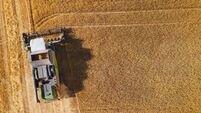
Most now have first cut silage safely in their pit or bales.
Reports around the country suggest that cuts were not as bulky as hoped as fertiliser was applied later than intended and at lower rates which both have significantly hit yields.
When looking at a fertiliser plan for second cut most will be including slurry. Try to apply it in duller and cooler conditions where possible so that it doesn’t form a crust on the surface and some can get into the ground.
Also consider your source of artificial fertiliser. Over the past five years, farmers have seen huge benefits from using liquid nitrogen as it doesn’t require rain to wash it in. It gets to work straight away as it can get to the moisture that is still present and can influence grass growth in silage and grazing ground as soon as possible.
The added benefits include the ability to apply slurry a few hours after the liquid, without risking nitrogen loss in the slurry.
Each year I recommend that we review calving events on our farms.
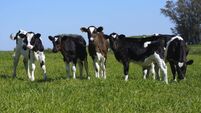
It may only be a short time ago since the spring cows finished calving, but now is perhaps the best time to make a few notes on what to keep an eye on for next year. Start by listing the calf losses and their cause.
Were most of the losses at calving? This could indicate that sire selection needs to be done more carefully, with attention being paid to easy calving sires for heifers and smaller cows. Were heifers big enough at calving?
Obviously, you will be using the same calving boxes each year for calving. There may be a build-up of bacteria or viruses that contribute to calf scour in these boxes. Ideally, calving boxes should be cleaned out and disinfected between each calving.
However, in the spring, during the calving season on a busy farm, this is a virtual impossibility. Maybe having two calving boxes or more will allow each to be cleaned out while the others are being used.
Getting new calves and their mothers out of the calving boxes as soon as they can be moved comfortably is always a good idea. While indoors, calves under cows should be penned where possible with those of a similar age.
Now that all stock are outside, there is an opportunity to improve calving boxes if required for next season.
If you had issues this spring, then investigations should go further. Having collected the relevant information, you now need to research what may have caused issues to occur on your farm. Discuss your findings with your vet who will have been involved in trying to deal with the issues on your farm.
Discuss with him or her, the possibility of blood testing a cross-section of cows for disease and mineral/Vitamin profiles.
Look at getting your silage tested to establish a mineral profile of your farm to cross-reference with any bloods you might do.
- Brian Reidy is an independent ruminant nutritionist at Premier Farm Nutrition.