Low emission slurry spreading and dairy equipment schemes open for applications
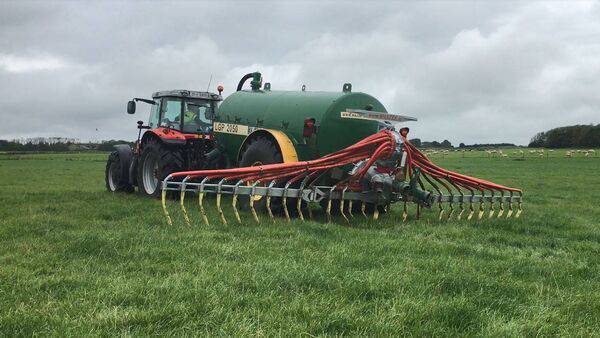
For LESS, the maximum amount of investment eligible for grant aid under the scheme is €40,000 per holding.
The Low Emission Slurry Spreading (LESS) Scheme and the Dairy Equipment Scheme have opened for applications.
They are the fifth and sixth schemes to open under the new Targeted Agricultural Modernisation Scheme (TAMS 3).
TAMS provides funding for capital investments on farms and will be in place for five years with a budget of €370m.
The remaining four TAMS schemes will open on a phased basis during tranche 1 which is expected to close on June 16.
For LESS, the maximum amount of investment eligible for grant aid under the scheme is €40,000 per holding.
The list of eligible investments includes:
- Mobile slurry tank with attachments such as trailing shoe with macerator, and shallow injection with macerator;
- Retrofit trailing shoe attachment with macerator to existing tanker, new or retrofit inlet choppers, and flow meters;
- Umbilical system including base pump, hose reel and fittings, lay flat hose and fittings, trailing shoe or shallow injection attachments, as well as flow meter and retrofit trailing shoe attachment to existing umbilical system;
- Hydraulic motor to substitute PTO shaft is also available.
The list of eligible investments under the dairy scheme include:
- Milk storage and cooling;
- Water heating;
- Backup PTO generator;
- Milk recording equipment;
- Milking machine;
- Auto washer for milking machine.
Grant aid will be paid at the rate of 40% up to the applicable maximum investment ceiling of €90,000 per holding.
Minister for Agriculture Charlie McConalogue said that the LESS Scheme "highlights continued support to assist farmers to undertake the necessary investment to upgrade equipment to meet their environmental commitments".
"It was taken up hugely by farmers under the previous TAMS and I expect significant interest now also," Mr McConalogue said.
Meanwhile, the launch of the Dairy Equipment Scheme will "encourage dairy farmers, especially young farmers and new entrants to dairying, with support in meeting capital costs in meeting modern herd management, energy saving, and animal welfare standards required to compete in the sector".
"It is also heavily focused on environmental investments required on dairy farms. We’ve also increased the grant limit to €90,000 for the eligible farmers," Mr McConalogue added.