It's first-cut time - Remember quality beats quantity when it comes to silage
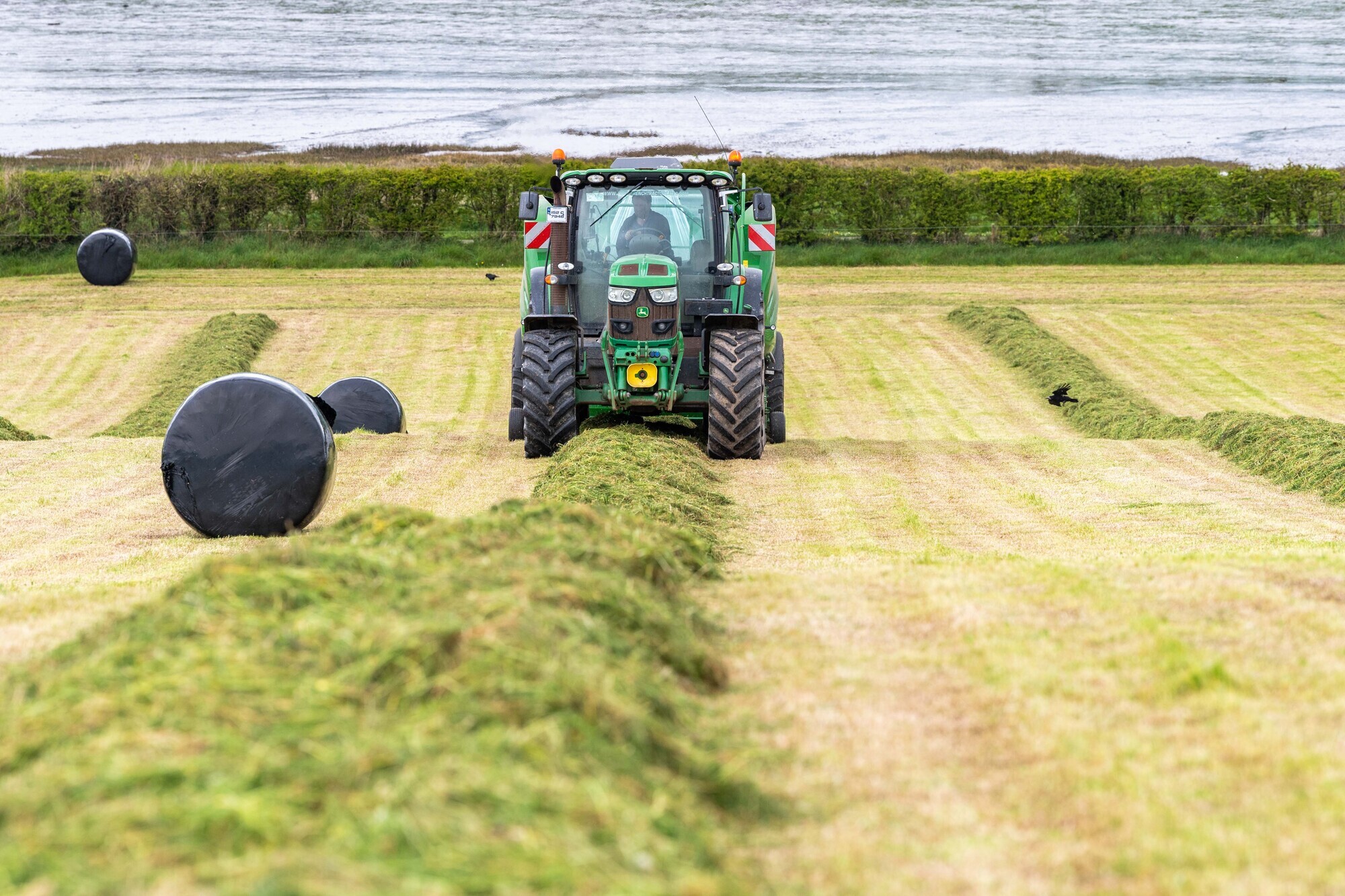
Richard Fleming of Fleming Agricultural Contractors LTD was one of the first to start silage-making this year for Timoleague-based dairy farmer Finbarr Griffin. He was using a brand new Fuzion 4 baler and a John Deere 6150R tractor when this picture was taken at the end of April. Picture: Andy Gibson
Quite a bit of silage has been cut over the last week or so. Quality from these cuts will be fantastic once they are ensiled well.
Having tested some crops for nitrate levels over the last week, if the nitrogen applied was not excessive, then crops were fit to cut and should have no problem preserving if handled correctly.
Some heavier crops of grass growing since last autumn had even lodged and needed to be taken out before the base starts to deteriorate.
Sugars were also very good in grass that I tested, but in reality, all early cut silages would benefit from an additive as they will not have been exposed to a lot of good sunshine.
The weather continues to be very unsettled and is slowing down the silage-making progress, grab any window of opportunity to achieve quality feeding for next winter. It always amazes me each year to chat to anyone who attends Balmoral Show up north.
When I asked them if they saw any after grass, post first-cut emerging at the other side of the border, they remark that there were lots of fields of it.
So why are those, particularly in Munster and south Leinster, 200 miles further south, only thinking of cutting later in May or even into June?
While many beef and dairy producers are still considering holding on for a big first cut of silage, the aim of producing top-quality feeding must not be ignored.
Obviously, you need a full pit to get through next winter, but you also need to consider what quality you have and its impact on animal performance. The amount of silage you are carrying over from last winter should also be taken into consideration when deciding when to take your cut of silage.
Hands up who harvested a very low volume dry cut of second-cut in 2022, or maybe got no sccond cut? It must be worth considering taking the first cut soon in order to get the second cut growing as fast as possible.
The decision to take a first cut earlier in May also results in you being able to take a third cut if you require it. This would result in optimising the amount of top-quality grass ensiled per acre available.
As I mentioned earlier, I have been testing grass pre-cutting.
With the mobile NIR spectroscopy, it allows me to assess the Nitrates, Digestibility, Protein, Dry Matter and Sugar content of grass in the sward pre-cutting.
Sugar content and digestibility as you would expect for May are excellent and there is great potential for a lot or silages with a high DMD.
Earlier and lighter cuts will always be better quality once the sward is relatively young, fresh and has had sufficient nutrients applied to it.
Top-quality silage will mean less concentrates being required for next winter. It Is also worth noting that early cuts of young grass will have a higher crude protein percentage. This will mean cheaper concentrates with a lower protein content will be required next winter for all groups.
A high-energy silage with 15-16% protein would mean weanlings may need little or no concentrates, just needing mineral supplementation.
Well-preserved silage does not just happen, however. Fertiliser volume and application date, along with cutting time and date, determine preservation every bit as much as pit management. Aim to cut the sward when dry and grass should, where possible, never be on the ground for more than 24 hours.
Over-wilting, as many have learned in the last few years, is not a good idea. Dry silages do not always feed out well, as they are very hard to manage in the pit.
Good pit management at ensiling is critical and needs a lot of care and attention, as filling pits too fast will result in poor consolidation and too much air in the pit, causing spoilage. Pits should be sealed as soon as possible once rolled sufficiently.
As I mentioned above, the use of an additive is also worth considering, particularly if you are ensiling young leafy material.
Additives which prevent silage from heating at feed-out will optimise the amount of silage eaten by stock and the feed value they extract from it.
Silage additives are designed to enhance the natural fermentation rate and speed up the pH drop resulting in a more stable clamp. Remember that an additive will help make good grass into good silage; it will NOT make bad grass into good silage! An additive will also only work if it is applied correctly!
- Brian Reidy is an independent ruminant nutritionist at Premier Farm Nutrition.