Don’t be SCEPtical about SCEP
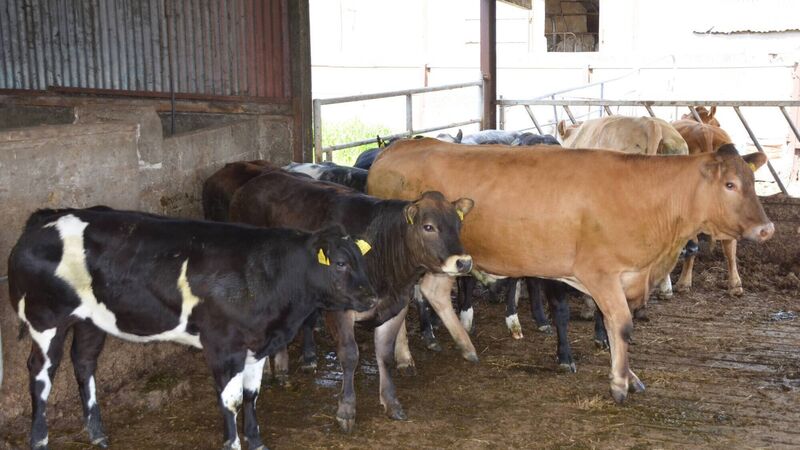
Whilst the new scheme is broadly similar to BDGP, it does have a few additional requirements, writes Teagasc drystock adviser John Galvin.
With so many new schemes to be discussed, it leaves little time for the important issues, such as the weather and GAA, to be covered in any great detail.
The SCEP (Suckler Carbon Efficiency Programme) is the replacement for the BDGP (Beef Data and Genomics Programme) that had been running since 2015, with approximately 24,000 suckler farmers participating. Applications are open until May 22.
Whilst it is broadly similar to BDGP, it does have a few additional requirements.
One is that the applicant must be a Bord Bia-approved member of the Sustainable Beef & Lamb Assurance Scheme (SBLAS) by October 16, 2023, and have continued participation for the duration of the SCEP participation.
There seems to be some negative discourse amongst farmers about joining SBLAS, particularly among the suckler weanling producers, mainly as a result of the additional record keeping involved along with the on-farm Bord Bia audit coupled with the lack of financial incentive for a non-factory finishing farmer.
Although SBLAS is seen as a Bord Bia standard, they are not solely responsible for it. It is an industry-led standard overseen by a Technical Advisory Committee comprised of various stakeholders such as the Bord Bia, DAFM, Teagasc, Food Safety Authority Ireland, and Animal Health Ireland.
I would encourage farmers to apply to join SBLAS, as the only additional records required for an audit are records of their own farm feed, which won’t apply to most suckler and beef farmers in Galway and the Animal Health Plan, which is not very onerous. Most records are already required under cross-compliance.
For the outdoor part of the visit, the auditor will be looking at Housing facilities, Animal handling facilities, Health & safety aspects of the farm, Animal tag check(random), Farm signage, Farm chemical store, Animal remedies store, Footwear disinfection point, Farm Safety Statement and First aid kit The indoor segment of the audit is where all the paperwork and records are checked and verified.
The key elements to this are; an up-to-date herd and/or flock register, animal movement records, animal passports, knackery receipts, animal remedy prescriptions, animal remedy purchase receipts, animal remedy usage records, up-to-date animal health plan, animal feed purchase receipts, own farm feeds record if applicable, pesticide usage records if applicable, Farm Safety Risk Assessment, Farmyard sketch showing bait points, Waste plastic Collection receipts.
All of these receipts are required to be inputted into the SBLAS Farm Book.
For new applicants, the previous six months' records are required, while members renewing their membership records since last audit (18 months approx.) are required. An auditor will make contact and organise a day and time of mutual agreement. A farm pack will be sent out in the post with record books and templates for filling out the records along with a checklist to help prepare for the audit.
Whilst all of this may same quite onerous, and yes, it is not something a farmer will pull together the morning of the audit, most of these records are required in the event of a Department of Agriculture Cross Compliance inspection, which means by joining SBLAS it will leave the record-keeping for your farm in a very good place.
The important message is to keep all purchase receipts safely and get into the habit of writing things down in a notebook/diary/phone especially when it comes to animal remedies. Help can be sought with inputting data.
Furthermore, joining the Suckler Cow scheme (SCEP) may generate additional grant income of a possible €3,000 (20 cow suckler herd) – don’t leave this behind by not joining SBLAS.
Joining SBLAS should be seen in a similar light as putting a car in for the NCT - if you pass, happy days; if you fail, you get a period to make repairs for a retest, but you are not put off the road or fined.
Anecdotal evidence shows that over 70% of farmers pass the SBLAS audit with no issues, and for those with issues, there is a ‘closeout’ period of one month to make adjustments or rectify records and then become certified. If you intend remaining in suckling for the next five years, then join SCEP and book your Bord Bia audit - it is a no-brainer.