Delay in forestry programme approval 'has taken a toll on the sector'
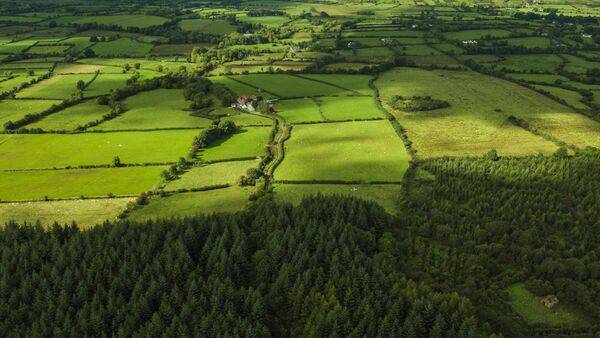
The Interim Afforestation Scheme (via general de minimis) is open but only to farmers that hold a valid technical approval as of December 31, 2022, who had not commenced work on planting.
The delay in getting approval for a new forestry programme "has taken its toll on the sector", according to the Irish Farmers' Association, "as farmers that do not hold technical approval cannot apply to plant".
Ireland's Forestry Programme 2023 to 2027 has been formally submitted to the European Commission for state aid approval, "but the waiting game continues", IFA national farm forestry chairman Jason Fleming said this week.
"Farmers that want to plant and avail of the new grants and premiums cannot make an application at present and will continue to be excluded from planting until state aid approval has been granted," Mr Fleming said.
"The negotiations that have taken place between the Department of Agriculture and the commission over the last number of months before the application was formally submitted will hopefully mean that approval of the programme will progress speedily."
The Interim Afforestation Scheme (via general de minimis) is open but only to farmers that hold a valid technical approval as of December 31, 2022, who had not commenced work on planting.
According to the department, over 1,500 hectares have been approved under the interim scheme, with almost 600 hectares newly established.
"The level of planting taking place under the interim scheme is encouraging but we need the programme to be approved without delay and the afforestation scheme to be open to all farmers," Mr Fleming added.
In November 2022, funding in excess of €1.3bn was announced for the new forestry programme.
The funding package saw premium rates for farmers increase by between 46% to 66% depending on the forest type established, and the duration of the premium payment extended to 20 years.
Other stakeholders in Ireland's forest sector have expressed concerns about plans for tree planting under the new programme.
The programme envisages large areas of native woodland and Ireland’s forest sector wants to ensure there is the right amount of commercial tree species in the mix.
Industry experts have stated that "if we don’t get our act together on tree planting, we will destroy this industry down the road", and that "all the investment and successful businesses will go into decline for lack of wood in the future".
John Murray who chairs the Irish Timber Council said that it is disappointing to see the afforestation figures dropping from the highs of 20,000 hectares per annum in the 1990s to the lows of 2,000 hectares per annum presently.
"Timber is the only structural product used in a building that isn’t mined from the ground and Irish timber is fully renewable as it comes from new-growth forests," Mr Murray said.
"Our industry is based on all the good work of previous generations driving planting programmes to enable Ireland to have a sawmill sector of international scale, however, future growth is now in jeopardy due to the low afforestation figures."
Mark McAuley, Ibec’s director of Forest Industries Ireland added that mixed commercial forests "are the backbone of the Irish forestry model".
"It is through commercial forestry that we have reached 12% forest cover in Ireland and a 300m tonne carbon sink," Mr McAuley said.
"We don’t want forestry to become a small niche activity from where it stands right now which is a €2.3bn industry employing 12,000 in rural areas."