Study reveals countries furthest from self-sufficiency - how does Ireland fare?
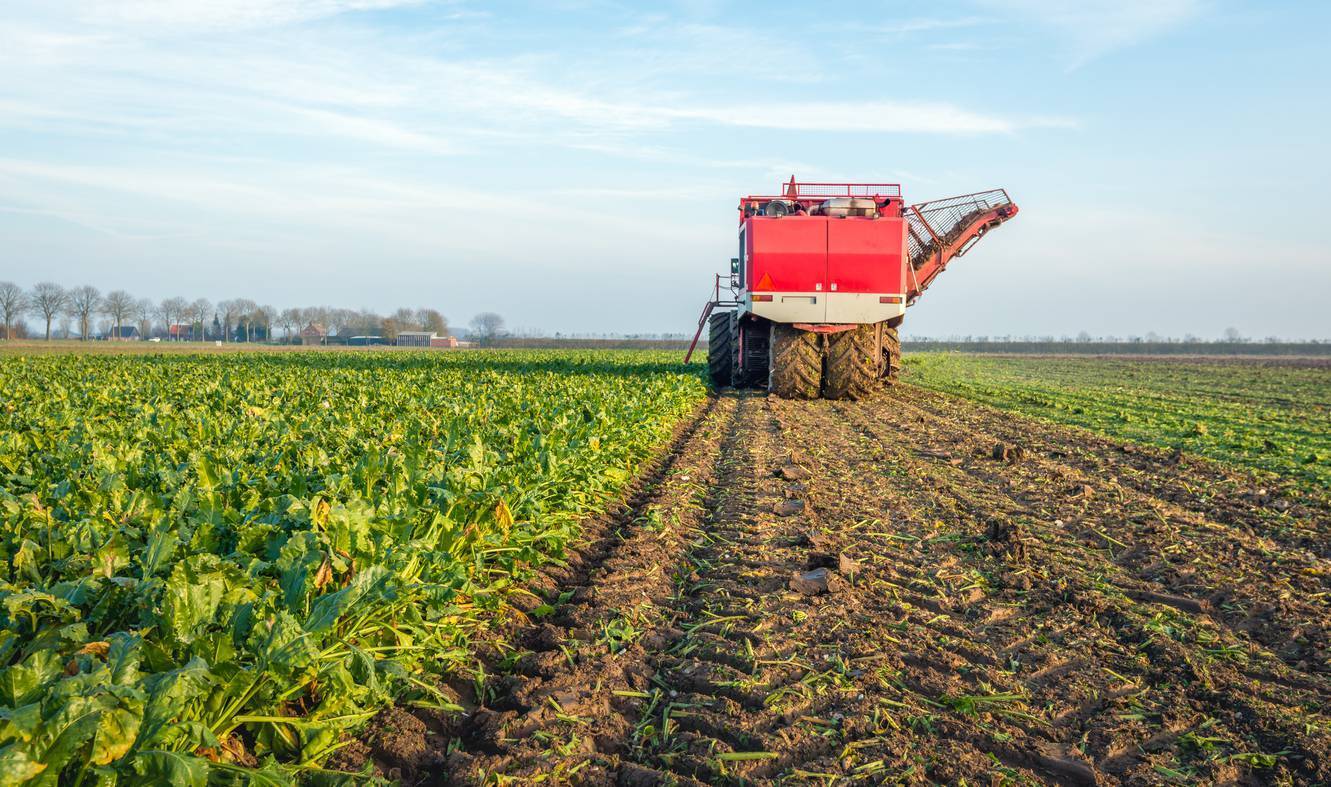
Harvesting of sugar beets in a field in the Netherlands.
A new study at Leiden University in the Netherlands has shown why each country looking after its own food needs could never be put forward as part of the climate action solution.
Nationally-produced food would reduce the carbon footprint of many crops, partly because of less transportation.
However, some very large countries cannot feed themselves. Researchers examined for all countries whether a healthy diet can be achieved with only nationally produced food.
"We find that around half of the global population lives in countries which would not be able to rely on national production alone," said Nicolas Navarre, lead author of their paper, which has been published in the sustainability journal.
For example, the Netherlands itself, being a small country with limited space and a high population density, is heavily dependent on trade for its food.
However, the biggest countries among those most dependent on food imports include Egypt (needing 734% or more than seven times its land area, to be self-sustainable); Papua New Guinea (509%); the Democratic Republic of Congo (434%); Pakistan (421%); the Phillipines (361%); India (293%); Nigeria (241%); Myanmar (204%); Indonesia (200%); and Ethiopia (181%).
In Europe, Norway would need 123% of its land area to be self-sufficient, the Netherlands would need 120%, Switzerland 119%, and Belgium 113%.
Among the most self-sufficient countries, Argentina could feed itself with just 5.5% of its land.
The US and Canada only need 12-13%, Sweden is also at 13%. Ireland is at 14.56%, Finland at 18%. Austria, Denmark, France, and Poland are in the 40 to 50% bracket.
Germany is at 54%; the Czech Republic, the UK, Spain, and Portugal are all in the 60s. But Italy needs 96% of its land area to be food self-sufficient.
Nicolas Navarre said: "With improvements to crop yields, reductions in food waste, and changes in consumption patterns, 90% of people could live in countries that don’t need to trade for food."
The biggest change in consumption would be to eat less meat, because becoming self-sufficient means that we can’t rely on other countries to make feed for cattle. "All the soy and grains we now import from countries like Brazil, Russia and Ukraine have to be nationally grown, which is impossible."
Cutting down on food waste also reduces the space needed to produce food.
So, should we eat less meat and cut all trading ties with other countries to become fully self-sustainable?
"No", said Navarre, "Just like being fully dependent on trade makes you vulnerable, being fully independent does the same thing. If some local disaster or disease hit a country, global trade would function as a safety net for food security".
"We wanted to show how dependent on trade countries have become", Navarre said. "Countries should explore pathways to shift more towards independency. By producing a little more of our diet nationally, we’ll rely less on others. That way, the store shelves stay stocked, even if another pandemic hit."
Recently, both Covid-19 and the war in Ukraine created extreme spikes in food waste, and massive food shortages around the world.