Could bamboo offer a solution to parasitic risk in sheep?
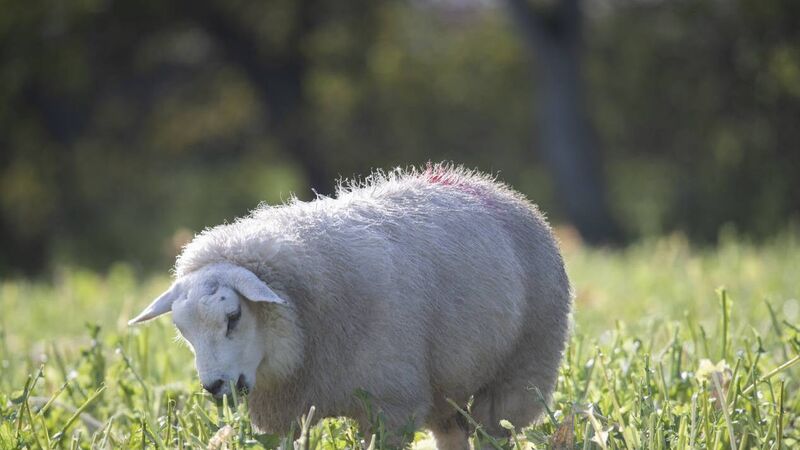
Studies are showing multi-species swards could reduce the risk of parasitic infection in livestock.
A Japanese scientific study not only appears to back up claims multi-species swards could reduce the risk of parasitic infection in livestock – but also suggests bamboo shoots could be particularly beneficial for sheep.
In the study of 87 shearlings, researchers at Mie and Torrori Universities found that faecal egg counts decreased after grazing on the semi-natural pasture. The eggs per gram detected from the dung decreased from mean of 920 after grazing on the improved to 220after grazing on the semi-natural pastures
However, while body weight increased after grazing on the semi-natural pasture, white blood counts, hematocrit, and glucose decreased
The study published in Veterinary and Animal Science involved two groups of Suffolk/Poll Dorset cross sheep moved between ‘improved’ and ‘semi-natural’ pastures, grazing on each plot for one month.
The researchers examined the relationships between infection and nutrition, foraging behaviour, and animal performance.
The ‘improved’ pasture included orchard grass, Kentucky blue grass, and white clover, while, in addition, the semi-natural pasture also included Cerastium fontanum, Sasa kurilensis, Agrostis gigantea, Equisetum arvense, Leucanthemum sp., Juncus effusus, Geum japonicum, Cirsium kamtschaticum, Achillea millefolium, Phleum sp.
Discussing the results, the authors, Yo Yoshihara, Chiharu Saiga, Takehiro Tamura, and Toshihiko Kingugasa, explained that bamboo appeared to have a particularly strong anthelmintic effect.
“The semi-natural pasture had diverse plant species, though it contained less crude protein, and nematode larvae were rarely observed on bamboo. Consequently, faecal egg per gram decreased after grazing on the semi-natural pasture.
“White blood counts, hematocrit, and glucose also decreased and body weight increased after grazing on this pasture. Principal component and correlation analyses revealed a significant relationship between GIN infection and behaviour, but not between nutrition and either behaviour or infection.
“As parasitized animals may become more aggressive feeders to compensate for their reduced nutritional uptake, grazing sheep on semi-natural pastures may facilitate more stable performance due to the lower risk of nematode infection from wild plants,” the study concluded.