Pollinator robots in the future for glasshouse growing
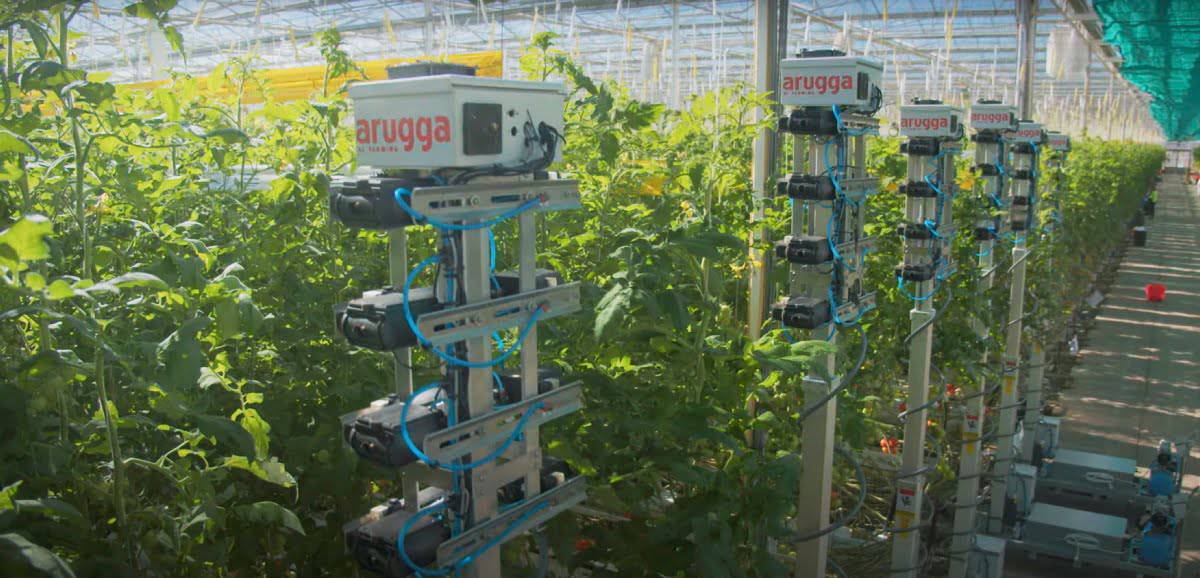
Arruga, a company based in Israel, is one of the most advanced makers of robotic pollinators.
If humans rely more on food from greenhouses in the future, pollination robots will probably play a vital role.
They are already being used in tomato greenhouses. Tomato plants are self-pollinating, but help is needed to get the pollen to drop onto the female part of the tomato flower.

In nature, this is the job of bees and other pollinators, which knock the pollen loose when they visit the flowers for nectar.
Now, on the most advanced farms, this is done by automated robots which ride on tracks between rows of tomato plants. They photograph each tomato flower, and use their built-in artificial intelligence to instantly determine each flower’s readiness to be pollinated.
In this way, pollination of one hectare with 3.5 robots can be achieved. But reducing that to one robot per hectare is the target of Arruga, a company based in Israel which is one of the most advanced makers of robotic pollinators.
It may conjure up a horrible dystopian vision for those who blame agriculture for the loss of natural pollinators. However, they may be glad to know that Arruga's little robots at least have the potential to reduce the shipping of bee livestock over long distances for pollination work on enormous farms.
Many beekeepers rent out their bee colonies for "pollination services", for example, in the USA. Growers pay for them because there are not enough pollinators in the wild to ensure pollination in big crop acreages.
However, some warn that millions of bees in transit over thousands of miles may breed disease, and that they are exposed to toxic chemicals on the crops they pollinate.
With tomatoes being the most widely produced greenhouse crop in the world. there is huge market potential for companies like Arruga.
it is working to empower its robots to take on additional tasks, such as detecting pests and diseases in crops, treating distressed plants, or applying plant production products.
Along with tomatoes, other plants that require similar types of pollination include blueberries and potatoes.
The company works with growers worldwide, including Australia, Finland, and the USA.
Arugga has also commercialised a ground robot for pollination in tomato greenhouses, but which can also adjust plants, prune them, and detect pests and diseases. Automation of these labour-intensive tasks is becoming more important, as labour shortages emerge.
The ground robot (called Polly) drives itself between rows of tomato plants in greenhouses.
Arruga isn't the only company in the automated pollination field.
In Singapore, Polybee has developed pollination drones for greenhouse crops such as strawberries and tomatoes.
Many researchers worldwide are working on tiny robots that can do the work of pollinating insects.